


Why This Question Creates So Much Confusion
Most people treat this as a religious question and stop there. It is not, or at least not only that.
Here is the thing: you are dealing with three separate systems that do not communicate with each other.
- Religious frameworks define what is permitted within a faith.
- Civil law defines what the state legally recognizes.
- Real-world execution often requires satisfying both systems at once.
Each system answers the question differently. A marriage can be valid under civil law and rejected by a religious authority. It can be recognized within a community and carries zero legal weight. These are not the same thing, and treating them as interchangeable is where most couples run into problems.
The Legal Reality: Civil Law Does Not Care About Religion
From a legal standpoint, the answer is clear. In most countries, two adults can marry through a civil process regardless of religion. Once properly registered and documented, that marriage becomes legally valid for immigration, taxation, financial rights, and cross-border use.
USCIS (U.S. Citizenship and Immigration Services) is explicit about this:
Religion is not part of that evaluation. Legal registration is.
That means a Muslim-Christian marriage can be fully recognized by the government, accepted for spousal visa applications, and used for official documentation, even if the mosque, church, or family has not given their blessing.
That is not a loophole. That is how civil law works.
What Islam Actually Allows
A Muslim man marrying a Christian woman
This is generally permitted under Islamic jurisprudence. The Qur'an (5:5) includes Christian women within the category of Ahl al-Kitab: People of the Book. That's where the permission comes from.
The permission is not unconditional. Traditional interpretations often carry expectations around household structure, the religious upbringing of children, and how Islamic practice is maintained within the marriage. Permission in principle does not always translate to acceptance in practice, particularly within traditional communities.
A Muslim woman marrying a Christian man
Traditional Islamic jurisprudence does not permit this unless the man converts to Islam. This position comes from Qur'an 2:221. Most traditional communities hold it. Worth knowing before assuming otherwise.
Some contemporary scholars offer different readings. Cultural practice varies. But if you are navigating a traditional family or religious community, this is the position most will hold. It is worth naming directly rather than glossing over.
What Christianity Says
Christianity doesn't have one answer here. It depends entirely on the denomination, the church, and sometimes the individual pastor or priest. A frequently cited reference is 2 Corinthians 6:14:
Many denominations interpret this as discouraging interfaith marriage. Others allow it with conditions such as premarital counseling or agreements about raising children in the faith. Some churches will officiate an interfaith marriage. Many will not.
You will need to ask your specific church directly. There is no shortcut here.
Where Legal and Religious Systems Diverge
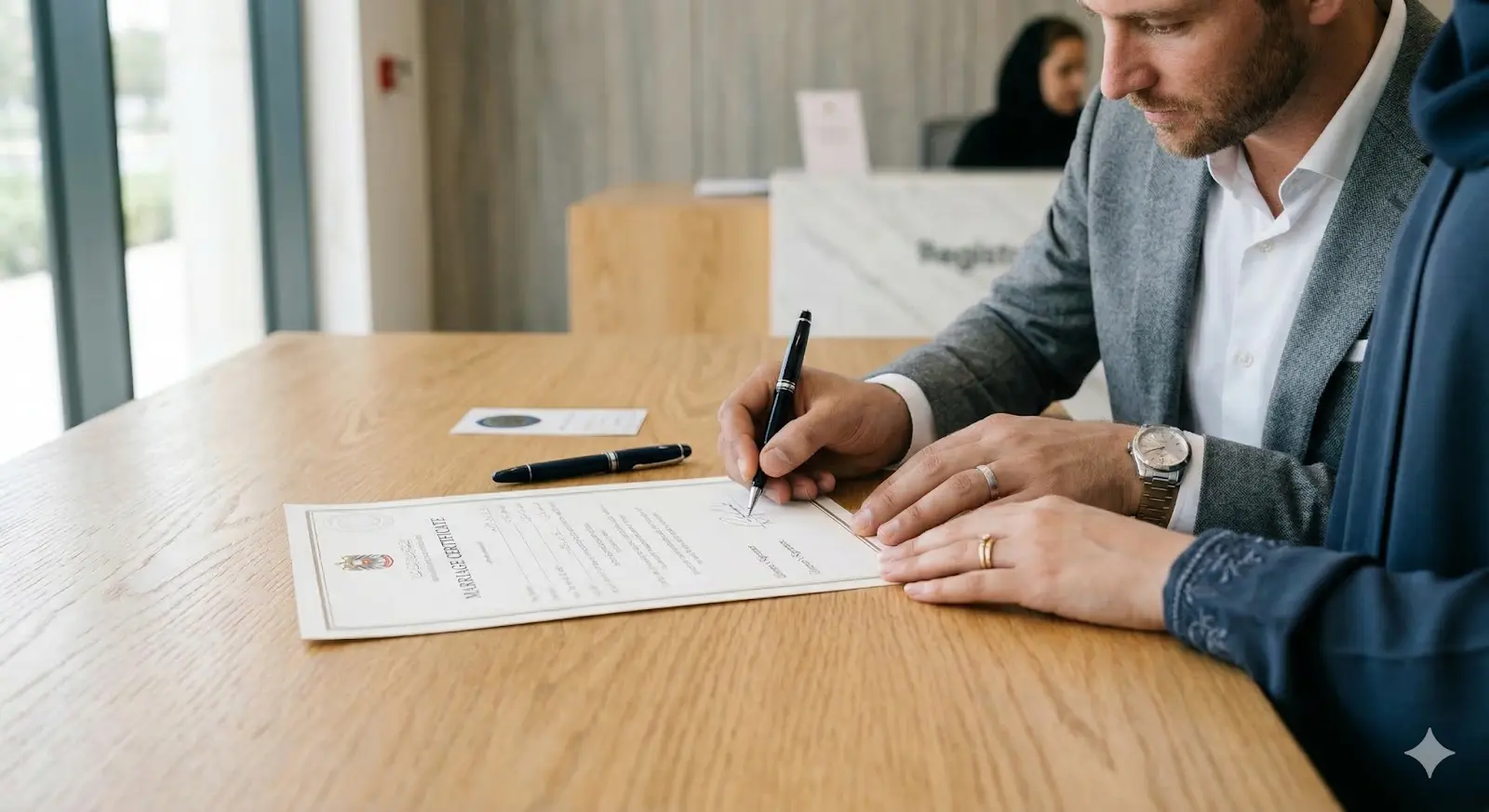
Religious approval and legal validity are not interchangeable. A marriage can satisfy one and fail the other. That is not an edge case. It is common.
The bottom line: if your marriage needs to work across borders, for immigration, or in any official context, religious recognition alone will not get you there. You need civil validity and proper documentation.
What Couples Actually Do in Practice
Most couples do not choose between religions. They choose between systems and decide which one should come first.
Some prioritize religious alignment. One partner converts, they find a scholar who allows the marriage, or they move forward knowing the community may not fully accept it.
Others separate the two entirely. They complete a civil marriage to secure legal validity, especially when visa timelines or immigration deadlines matter, and then address the religious aspect separately on their own timeline.
There is no single right path. But legal clarity usually comes first because everything else becomes harder to formalize without it. You can always add a religious ceremony later. You cannot fix an immigration delay caused by missing paperwork after the fact.
Immigration and Cross-Border Recognition
For USCIS and most immigration authorities, the criteria are clear. The marriage must be legally valid, properly documented, and genuine. Religion is not part of the evaluation.
But legal validity alone is not always enough for international use. Depending on where you need the certificate to be recognized, you may also need:
- An apostille: official State Department authentication required by most Hague Convention countries for immigration, foreign marriage registration, or legal proceedings
- Embassy authentication: for countries outside the Hague Convention, including China, UAE, and Vietnam
- Certified translations: if submitting to authorities in a non-English-speaking country
Skipping these steps is one of the most common reasons a valid marriage still causes delays in a visa application. The marriage itself may be fine. The documentation trail is not.
What Typically Goes Wrong
Most complications do not come from restrictions. They come from assumptions.
You assume that a marriage valid at home will be recognized everywhere. It will not, not automatically, not without the right paperwork. Here is what actually causes problems:
- A marriage is valid in one country but not documented for international use.
- A religious ceremony without civil registration, leaving no legal record.
- Missing apostille documentation, causing delays in visa applications or foreign registration.
- Unresolved expectations about religious practice after the wedding.
These issues rarely surface on the wedding day. They appear when you need the marriage to do something official: a visa renewal, a name change, a joint account in a new country.
A Practical Way to Move Forward
At some point, the question stops being whether Muslims and Christians can marry. It becomes how to do this in a way that holds up across systems.
For most couples, that starts with getting the legal piece right: a properly documented civil marriage with the authentication your specific situation requires.
The Bottom Line
Muslims and Christians can marry. That part is settled.
The harder question is which system you are trying to satisfy, and whether you have prepared for it correctly.
- Legal systems focus on registration and documentation. Religious recognition does not substitute for it.
- Religious systems focus on doctrine and interpretation. Legal registration does not substitute for that either.
- Real-world decisions usually require navigating both, and knowing which one needs to come first in your situation.
Once you separate them clearly, the path becomes predictable. Start with legal validity. Document it properly for wherever you will need to use it. Then decide how and whether to incorporate a religious dimension, on your timeline, not a bureaucratic one.
Frequently Asked Questions
Do we need family or parental approval to get legally married?
Not legally, as long as both of you are adults. Civil law does not require parental or family consent for adults to marry. Religiously, it is a different matter. Islamic jurisprudence does include the concept of a wali, a guardian whose approval is part of the nikah process. But that is a religious requirement, not a legal one. Your civil marriage remains valid regardless of whether your families approve.
Can we have both a nikah and a civil marriage ceremony?
Yes, and many couples do exactly this. Civil marriage establishes your legal status. The nikah fulfills the religious requirement within the Islamic faith. They serve different purposes, and neither cancels the other out. Some couples do both on the same day, while others separate them. The order does not affect the validity of either.
What if our home country does not recognise interfaith marriages?
Some countries, particularly those where religious law governs civil matters, do not legally recognise interfaith marriages performed domestically. In those cases, getting married in a country with a civil marriage system and ensuring the certificate is properly authenticated is often the practical solution. The marriage may not be registerable back home, but it can still be legally valid and usable for immigration, travel, and international documentation purposes.
Do we need to declare our religion on a marriage licence application?
In most civil marriage systems, no. A marriage licence application asks for basic personal information such as names, dates of birth, nationality, and sometimes residency status. Religion is not a required field in civil marriage processes. The state is not evaluating your faith. It is only evaluating whether you meet the legal requirements to marry.
Can children from a Muslim-Christian marriage be raised in both faiths?
Legally, yes. Civil law does not dictate how you raise your children religiously. From an Islamic perspective, traditional jurisprudence holds that children of a Muslim father should be raised Muslim. From a Christian perspective, views vary by denomination. This is one of the most common sources of tension in interfaith marriages, and having an honest conversation about it before getting married is worth it.
If one of us converts, does that affect our existing civil marriage?
No. A civil marriage is a legal contract. Conversion changes your religious status, not your legal marital status. The marriage certificate remains valid. That said, conversion can affect how your marriage is viewed within a religious community or under religious law, which is a separate consideration from the legal one.
Let us handle the paperwork.
Getting married is complicated. Courtly simplifies the process and provides everything necessary to get married online, including providing a licensed officiant who can perform a remote ceremony.
Get Married

Get married online.
Getting married is complicated. Courtly simplifies the process and provides everything necessary to get married online.

