

Yes, you can get married online legally, but only if the ceremony is performed under a jurisdiction that authorizes remote marriage and every formal requirement is met. Utah is the primary U.S. state allowing fully remote ceremonies, where the officiant is physically present in Utah and the couple appears by live video. The resulting marriage certificate is a real government document, but immigration agencies and foreign countries may require additional proof (post-wedding in-person meeting, apostille, translations) before they accept it. Legal validity, domestic recognition, and international recognition are three separate questions, and each deserves its own analysis.
Direct Answer
Yes. You can legally get married online in 2026 if your marriage is performed under a jurisdiction that authorizes remote marriage ceremonies and all legal requirements are satisfied. In the United States, Utah currently provides the most established process, allowing couples anywhere in the world to marry by live video while the officiant is physically located in Utah. However, legal validity, USCIS immigration recognition, and recognition by foreign governments are separate legal issues that should each be verified before relying on the marriage certificate.
Online Marriage at a Glance
Question | Quick Answer |
|---|---|
Can you legally marry online? | Yes, under certain jurisdictions like Utah. |
Do both people have to be together? | No. Both may join remotely by live video. |
Is it recognized in every country? | No. Each country has its own rules. |
Does USCIS recognize it? | Usually yes if valid where celebrated and additional immigration requirements are met. |
Do you receive a real marriage certificate? | Yes. The county issues an official government certificate. |
Can you apply from another country? | Yes. Many international couples do. |
Can You Get Married Online Legally?
Yes. You can get married online legally when the ceremony is performed under a jurisdiction that authorizes remote solemnization and the couple satisfies all legal requirements. In the United States, Utah’s remote-appearance marriage framework is the clearest path: the officiant is physically present in Utah, both partners appear by live video, two adult witnesses participate, and the county records the marriage and issues an official certificate.
But “legally valid” is only the first layer. For immigration, federal benefits, or use in another country, the marriage certificate alone may not be enough. Couples often need additional proof that the relationship is genuine, that they met in person after the ceremony (for immigration purposes), or that the document has been properly legalized for foreign use.
This distinction matters because some older Q&A pages on the internet flatly say online marriage is not recognized in the U.S. That was arguably oversimplified even when it was written. The current answer is more nuanced, and the rest of this guide explains why.
Start your online marriage through a fully remote process with a U.S. marriage certificate.
What Is Online Marriage?
Online marriage is a legally solemnized marriage ceremony conducted through live video (or another remote-appearance method) instead of having both partners physically present with the officiant. It is not the same as streaming a wedding on Zoom for distant relatives to watch.
A legal online marriage must satisfy the marriage law of the jurisdiction where it is solemnized: valid license, authorized officiant, required declarations of intent, proper witnesses, and official recording that results in a government-issued marriage certificate. A livestreamed celebration without those elements is symbolic, not legal.
Three terms that often cause confusion:
Online marriage license application. Many states let you start paperwork online. That does not mean the ceremony can happen online.
Virtual wedding. Sometimes means a legal remote ceremony, sometimes means a decorative Zoom party. Context matters.
Online marriage. In this article, it means a ceremony that is both remote and legally binding under the jurisdiction’s marriage law.
What Makes an Online Marriage Legally Valid?

Think of legality as a checklist, not a yes-or-no question. A legal online marriage generally requires:
A jurisdiction that authorizes remote ceremonies. Not every state or country allows it.
A valid marriage license. Issued by the proper government office before the ceremony.
Eligible parties. Both people must be legally free to marry (no undissolved prior marriage, meet age requirements, etc.).
Identity verification. Government-issued IDs or passports confirmed before the ceremony.
An authorized officiant. The officiant must have legal authority to solemnize marriages in the relevant jurisdiction.
Declarations of intent. Both parties must voluntarily state they intend to marry.
Witnesses. Utah, for example, requires at least two witnesses age 18 or older.
Officiant submission and recording. The officiant must file the ceremony details with the issuing authority.
An official marriage certificate. The government issues the certificate, not the officiant or a private company.
Under Utah Code, a marriage is considered solemnized when the parties have a valid license, each party willingly declares intent, required affidavits are filed, the officiant pronounces them married, and at least two witnesses age 18 or older witness the declarations and pronouncement.
How Online Marriage Works in Utah
Utah is the most relevant U.S. jurisdiction for couples asking whether you can get married online legally. Here is how the process works.
Step 1: Apply for a marriage license online. Utah County accepts online applications. There is no waiting period, but the license must be used within 32 days of issuance. The base license price is $50 plus a $20 state-required fee for counties with an online application system.
Step 2: Verify identity. Applicants use a smartphone to capture government ID images and a face photo for identity verification.
Step 3: Schedule the ceremony. The ceremony is a live video session, not a pre-recorded submission.
Step 4: Attend the live video ceremony. Both applicants and two adult witnesses must appear by live video. The couple and witnesses do not need to be in the same physical location. The officiant must be physically present in Utah during the ceremony.
Step 5: Declarations and pronouncement. Both parties declare their intent to marry, and the officiant pronounces them married.
Step 6: Officiant submits ceremony details. After submission, the marriage is entered into county records.
Step 7: Receive the certificate. Utah County provides a digital certified copy within minutes by email, with a paper certified copy mailed the next business day.
Step 8: Order apostille or authentication if needed. Couples planning to use the certificate abroad should begin legalization early.
One detail most guides skip: Utah law treats a marriage license as used within Utah if the officiant is physically present in Utah at the time of solemnization. The officiant’s location, not the couple’s location, establishes jurisdiction.
Compare Courtly packages for end-to-end help with the license, officiant, witnesses, and certificate delivery.
Direct County Process vs. Online Marriage Service
Couples can apply through Utah County directly or use a service that coordinates the steps. The government issues the license and certificate either way. A service like Courtly manages the process end-to-end, including the Utah County marriage license, certified officiant, optional witnesses, ceremony recording, and delivery of the U.S. marriage certificate. Courtly also offers document legalization, visa consultation, and U.S. name-change kits.
Whether you go direct or use a service, verify that the marriage license and certificate are issued by the relevant government authority. That is what makes the marriage legally valid.
How Long Does an Online Marriage Take?
Step | Typical Time |
|---|---|
Marriage license application | 15–30 minutes |
Identity verification | Usually same day |
Ceremony scheduling | Same day to several days |
Video ceremony | Around 20 minutes |
Digital certificate | Often within minutes |
Paper certificate | Usually mailed next business day |
Apostille (optional) | Days to several weeks |
How Much Does an Online Marriage Cost?
Expense | Typical Cost |
|---|---|
Utah marriage license | Approximately $70 |
Ceremony service | Varies |
Apostille | Additional fee |
Certified translations | If required |
Immigration attorney | Optional |
Is an Online Marriage Recognized in Other U.S. States?
Generally, yes. Under the “place of celebration” rule, a marriage that is valid where it was celebrated is usually recognized elsewhere. This principle is well-established in U.S. law.
For federal purposes, 1 U.S.C. § 7 says an individual is considered married if the marriage is between two individuals and valid in the state where it was entered into. A Congressional Research Service analysis confirms that under the general validation rule, a marriage satisfying the requirements of the state where it was celebrated will usually be held valid elsewhere.
That said, avoid the shortcut claim that online marriages are “recognized in all 50 states” without qualification. Specific administrative agencies, courts, or benefit programs may have their own procedural requirements. A Utah marriage certificate is strong evidence, but couples should verify with the specific entity that needs to accept it.
Does USCIS Recognize Online Marriage?
This is the question behind the question for many people searching whether you can get married online legally. The short answer: USCIS can recognize an online marriage, but immigration law adds layers that go beyond state marriage validity.
The Place-of-Celebration Rule
USCIS generally determines a marriage’s legal validity based on the law of the place where it was celebrated. If Utah law says the marriage is valid, USCIS starts from that position.
The Proxy Marriage Complication
Here is where it gets tricky. USCIS does not recognize proxy marriages unless the marriage has been consummated. The Department of State’s Foreign Affairs Manual states that parties to a proxy marriage are not defined as spouses under INA 101(a)(35) unless the marriage has been consummated.
Because an online marriage involves partners in different locations, USCIS may treat it similarly to a proxy marriage for immigration purposes. That means couples need to prove they were physically together after the ceremony.
The 2025 Policy Update
On October 17, 2025, USCIS issued Policy Alert PA-2025-23, which clarified that virtual marriages are subject to the same requirements as other spousal cases, including the place-of-celebration rule. This update did not ban online marriages for immigration. It formalized that virtual marriages are not treated as a special category, just subject to the same scrutiny.
What Evidence Should You Prepare?
Immigration attorneys and practitioners consistently emphasize preparing thorough documentation. Godoy Law Office recommends evidence such as written third-party testimony, airline tickets, hotel receipts, photos together, shared bills, and apartment leases.
A practical immigration evidence checklist:
Official marriage certificate
Ceremony recording (if available)
Proof of officiant’s physical location in Utah
Travel records showing post-wedding in-person meeting (passport stamps, boarding passes, hotel receipts)
Photos together after the ceremony date
Joint financial records, shared residence proof, insurance documents
Correspondence history showing a genuine relationship
Affidavits from friends and family
Practitioners on Reddit report that some couples have filed I-130 petitions based on Utah online marriages without immediate Requests for Evidence, while others faced questions about the place of celebration, particularly when both spouses were outside the U.S. during the ceremony. One widely discussed 2025 Reddit thread described an I-130 denial where USCIS questioned whether the marriage’s place of celebration was truly Utah. The poster later updated that the case was approved after an attorney filed a motion.
The takeaway: an online marriage certificate opens the door, but immigration approval depends on eligibility, bona fides, admissibility, sponsorship, and agency review. Marriage does not automatically mean a green card.
Explore Courtly’s visa consultation for guidance on immigration evidence planning.
Does Meeting Before the Wedding Count for USCIS?
No, not for the proxy-marriage consummation analysis. This is one of the most commonly misunderstood points in online marriage discussions.
Older USCIS adjudication guidance states that consummation can occur only after the ceremony, not before. Multiple Reddit discussions show couples asking whether prior visits, shared children, or living together before the online ceremony satisfy the requirement. Community replies consistently warn that USCIS wants proof of physical togetherness after the wedding date.
If you are using an online marriage for a U.S. spousal visa or green card, do not assume that meeting before the wedding is enough. Plan and document an in-person visit after the ceremony before filing, unless a qualified immigration attorney confirms otherwise based on your specific facts.
The term “consummation” can feel awkward, but in practice, couples document post-wedding togetherness with ordinary evidence: travel records, passport stamps, hotel receipts, photos, and affidavits. USCIS is looking for proof of physical co-presence, not intimate details.
Will Another Country Recognize an Online U.S. Marriage?
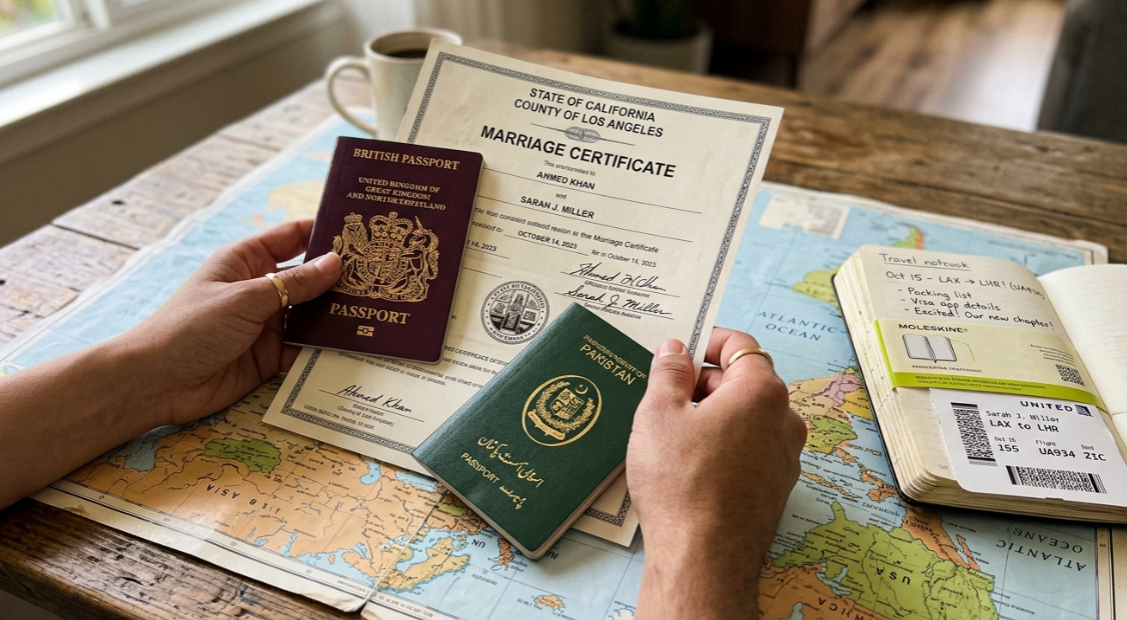
Maybe. This is the hardest question for international couples to answer, and the most honest response is: it depends on the country.
A U.S. online marriage can be fully valid under Utah state law and still face problems abroad. Some countries require physical presence for marriage ceremonies. Others demand local civil registration before recognizing foreign marriages. Same-sex marriages performed online in the U.S. will not be recognized in countries where same-sex marriage is illegal.
Utah law itself acknowledges this reality. The statute requires a warning that an online marriage solemnized in Utah may be invalid in the country where the parties reside when the parties are not physically present in Utah. Utah County’s marriage application page displays this warning in English, Spanish, Mandarin Chinese, Tagalog, Portuguese, and French.
Reddit users have reported foreign-recognition friction, including a discussion about a Utah online marriage allegedly not being recognized in France due to local physical-presence rules.
For international couples, practical steps include:
Check destination-country marriage recognition rules before the ceremony
Consult the relevant embassy or consulate
Get an apostille or authentication for the certificate
Arrange certified translations if needed
Consider whether a local civil ceremony may also be required
Hire a local family-law attorney if the stakes are high
Browse country-specific guidance to understand recognition considerations for your situation.
Apostille, Authentication, and Legalization
If your online marriage certificate will be used outside the United States, you will likely need an apostille or authentication certificate. These are related but different from each other, and both are different from marriage recognition.
Apostille. A certificate that verifies the origin, signature, and seal of a public document (like a marriage certificate) for use in countries that participate in the 1961 Hague Apostille Convention. Utah’s Authentications Office issues apostilles for documents like marriage certificates.
Authentication certificate. Used when the destination country is not part of the Hague Convention. This may require embassy or consular legalization. USAGov explains that the destination country determines which process applies.
Legalization. A broader term for the process of making documents acceptable for foreign use, which may involve both government certification and embassy verification.
Here is the critical nuance most guides miss: an apostille proves the document is genuine. It does not force a foreign country to recognize the underlying marriage. A country can accept that your Utah marriage certificate is a real, properly issued government document and still refuse to register the marriage under local law.
For a deeper breakdown of the differences, read about apostille vs. authentication and how each process works.
Online Marriage vs. Proxy Marriage vs. Virtual Wedding
These terms are used inconsistently across state law, immigration law, and everyday conversation. Understanding the differences matters, especially for immigration.
Term | What it means | Key consideration |
|---|---|---|
Online marriage | Ceremony completed remotely by live video under a jurisdiction that allows it | Must comply with jurisdiction rules; may need extra recognition steps |
Remote-appearance marriage | Legal term for when parties appear by live video instead of in person with the officiant | Officiant location and live participation matter |
Proxy marriage | One or both parties represented by a stand-in, not personally present | USCIS generally requires post-ceremony consummation |
Double proxy marriage | Both parties represented by proxies, neither personally present | Limited availability; Montana allows this in certain military or residency contexts |
Virtual wedding | Can mean a legal remote ceremony or a symbolic livestreamed celebration | Not necessarily legal unless formal requirements are met |
The practical difference: in a Utah remote-appearance marriage, both partners personally appear and speak by live video. In a traditional proxy marriage, someone else stands in. USCIS may still apply proxy-marriage rules to online ceremonies because the spouses were physically apart, but the legal mechanism is different.
For a full comparison, see the guide on proxy weddings, online marriage, and virtual weddings.
Who Commonly Uses Legal Online Marriage?
Getting married online legally appeals to several groups, each with different priorities.
International couples. When local marriage rules, documentation requirements, or travel barriers make in-person marriage difficult, a U.S. online marriage provides a legal path without both partners needing to travel.
Same-sex couples. Couples in countries where same-sex marriage is not legal often use Utah online marriage to obtain a valid U.S. marriage certificate. USCIS applies the place-of-celebration rule to same-sex marriages the same way it applies to opposite-sex marriages, meaning a valid Utah marriage is recognized for U.S. immigration regardless of where the couple lives. Foreign recognition, however, remains country-specific. Explore Courtly’s resources for LGBTQ+ couples for more on this use case.
Military couples. Deployment schedules and station changes make in-person ceremonies logistically painful. Remote marriage solves the timing problem. Montana proxy marriage is a related but distinct option sometimes used in military contexts.
Long-distance couples. Some couples want to be legally married now and hold a celebration later. Online marriage separates the legal paperwork from the party.
Immigration-focused couples. A marriage certificate can establish the qualifying relationship for a spousal petition. But as immigration attorney Michael Ashoori emphasized in a LinkedIn post, marriage to a U.S. citizen does not automatically mean a green card. Eligibility, bona fide evidence, admissibility, and income sponsorship all matter separately.
Destination wedding couples. Some couples use online marriage for the legal side and then hold a religious or cultural ceremony wherever they choose.
When Online Marriage May Not Be Enough
Online marriage is a real legal tool, not a magic solution. There are situations where it will not solve the problem on its own.
The destination country refuses to recognize remote ceremonies. Some countries require physical presence for a valid marriage, regardless of what U.S. law says.
A foreign civil registry demands local registration. The Utah certificate may need to be supplemented with a local process.
Same-sex marriage needs recognition in a non-recognizing country. The certificate is valid in the U.S. but may carry no legal weight (or worse, create risk) elsewhere.
USCIS needs post-wedding meeting proof and the couple has not met after the ceremony. Filing without this evidence is risky.
A prior divorce is not final. Utah law declares marriages void when either party has an existing spouse from whom they have not been divorced.
The couple cannot prove the relationship is genuine. A certificate alone does not satisfy USCIS’s bona fide marriage standard.
The intended use requires documents the couple has not obtained. Apostille, authentication, certified translation, or a validity letter may all be necessary depending on the use case.
Utah County has prepared a “letter of validity” describing remote-appearance ceremonies and their legal basis under Utah marriage law, which some couples use to explain the concept to foreign authorities unfamiliar with the process.
Why You May See Conflicting Answers Online
If you search whether you can get married online legally, you will find pages that say “no” just as confidently as pages that say “yes.” The top Justia result, for example, contains lawyer answers stating that the U.S. does not recognize online virtual marriages. That conflicts with current Utah law and USCIS’s more nuanced framework.
Several factors create the confusion:
Pandemic-era emergency rules changed. Some states temporarily allowed remote ceremonies during COVID-19 and then reverted. Utah’s framework is permanent.
Online marriage law is state-specific. What is true in one state is not true in another.
Terminology is inconsistent. “Proxy,” “remote appearance,” “virtual ceremony,” and “online marriage” are used interchangeably even though they have different legal meanings.
Immigration recognition and state-law validity are different questions. A marriage can be valid in Utah and still face additional scrutiny from USCIS.
Some lawyer Q&A answers are outdated or oversimplified. A 2023 answer may not reflect 2025 policy updates.
The current answer is not “no.” It is “yes, with conditions.” Those conditions depend on what you need the marriage for and where you need it recognized.
Frequently Asked Questions
Is a Zoom wedding legally binding?
A Zoom wedding is legally binding only if it satisfies the marriage law of the jurisdiction where it is solemnized. A livestreamed celebration without a valid license, authorized officiant, required declarations, witnesses, and official recording is symbolic, not a legal marriage. Utah’s remote-appearance framework is what makes an online ceremony legally valid, not the video platform.
Can both people be in different countries when getting married online?
Under Utah County’s remote-appearance rules, the couple and witnesses do not have to be in the same physical location. Both applicants and two adult witnesses must appear by live video, and the officiant must be physically in Utah. For immigration or foreign recognition, being in different countries during the ceremony may trigger additional evidence requirements.
Do you have to be a Utah resident to get married online?
Utah County’s published remote-appearance ceremony rules do not require the couple to be Utah residents. The connection to Utah is established through the officiant’s physical presence in Utah and the use of a Utah County marriage license.
Is an online marriage valid for USCIS?
It can be. USCIS applies the place-of-celebration rule, meaning a marriage valid in Utah is generally recognized. However, if the marriage is treated as a proxy or virtual marriage because the spouses were apart during the ceremony, USCIS typically requires proof of post-ceremony consummation and a bona fide marital relationship.
Does meeting before the online wedding satisfy USCIS requirements?
For the proxy-marriage consummation analysis, prior meetings generally do not count. USCIS guidance indicates consummation must occur after the ceremony. Couples should plan and document an in-person visit after the wedding date.
Will my online marriage be recognized internationally?
Not always. Utah law requires a warning that a Utah online marriage may be invalid in the country where the parties reside. Couples should check destination-country rules, obtain an apostille or authentication if needed, and consider consulting a local attorney before relying on the certificate abroad.
What is the difference between online marriage and proxy marriage?
In an online marriage (remote-appearance ceremony), both partners personally appear and speak by live video. In a proxy marriage, one or both partners are represented by a stand-in. USCIS may apply similar rules to both, but the legal mechanisms and state-law frameworks are different.
Do I need an apostille for my online marriage certificate?
You may need one if you plan to use the certificate in a country that is part of the Hague Apostille Convention. For non-Hague countries, you may need an authentication certificate or embassy legalization instead. The apostille verifies the document’s authenticity but does not guarantee the destination country will recognize the marriage.
This article provides general information, not legal advice. For immigration cases, consult a qualified immigration attorney. For foreign registration, check with the relevant embassy, consulate, or local attorney. Marriage law varies by jurisdiction and situation.
Get started with Courtly to begin your legally binding online marriage process today.
Let us handle the paperwork.
Getting married is complicated. Courtly simplifies the process and provides everything necessary to get married online, including providing a licensed officiant who can perform a remote ceremony.
Get Married

Get married online.
Getting married is complicated. Courtly simplifies the process and provides everything necessary to get married online.

