

Couples in different countries can sometimes get legally married online through a jurisdiction like Utah that allows remote appearance ceremonies. The marriage is performed under Utah law, with a licensed officiant physically in Utah, two adult witnesses, and a live video ceremony. But “legally performed” and “recognized everywhere” are not the same thing. Whether the marriage works for immigration, foreign registration, or local benefits depends on the destination country’s laws, the specific immigration agency’s rules, and proper document authentication.
Quick Answer: Can You Get Married Online While Living in Different Countries?
Yes. Couples living in different countries can legally marry online through jurisdictions such as Utah, where remote appearance marriage ceremonies are permitted. The ceremony is performed under Utah law by a licensed officiant physically located in Utah, with two adult witnesses participating by live video.
However, a legally valid Utah marriage does not automatically mean every country or immigration authority will recognize it. Recognition depends on the laws of the country where you intend to use the marriage certificate, whether document authentication (apostille or embassy legalization) is required, and any immigration-specific rules such as post-marriage consummation requirements.
Online Marriage Recognition at a Glance
Situation | Usually Allowed? | Extra Requirements |
|---|---|---|
Utah online marriage | Yes | Valid license, officiant in Utah, two witnesses |
U.S. name change | Usually Yes | Certified certificate |
U.S. spouse immigration | Sometimes | Marriage must usually be consummated afterward |
Canada sponsorship | Usually No | IRCC generally does not recognize internet marriages |
UK spouse visa | Depends | Relationship evidence and proper documentation |
Foreign registration | Depends | Apostille or embassy legalization may be required |
Who This Guide Is For
This guide is designed for couples who:
Live in different countries
Want to marry without traveling
Need a marriage certificate for immigration
Need an internationally recognized marriage
Are planning a destination wedding later
Are LGBTQ+ couples seeking a legal marriage
Need to understand apostilles and document legalization
If your goal is simply having an online ceremony, this guide explains the legal requirements. If your goal is using the marriage for immigration or foreign government purposes, you'll also learn where additional legal steps may be required.
What It Means to Get Married Online From Different Countries
Getting married online from different countries means completing a legal marriage ceremony over live video while one or both partners are physically outside the jurisdiction that issues the marriage license. This is not a symbolic Zoom toast or an online form that generates a certificate. A valid online marriage requires a government-issued license, an authorized officiant, required witnesses, and a live ceremony where the couple is formally pronounced married.
Utah is the primary jurisdiction where this happens. Utah County supports online marriage license applications and remote appearance ceremonies where participants join by video-conferencing software. The officiant must be physically present inside Utah during the ceremony.
The arrangement solves the ceremony-location problem. It does not automatically solve foreign recognition, immigration approval, or document authentication. That distinction matters more than anything else on this page.
Can Two People in Different Countries Actually Get Married Online?
Yes. But the better question is not just “can we?” It is “where does the marriage legally happen, and where do we need it to count?”
When a couple gets married online through Utah, the marriage is a Utah marriage. The officiant’s physical presence in Utah establishes the jurisdiction for using the Utah marriage license. It does not matter that one partner is calling from Tokyo and the other from Berlin. Utah has no waiting period. The license is valid for 32 days. Most applicants pay around $71.75 in government fees.
So the short answer is yes, couples in different countries can get married online through a valid jurisdiction. The longer answer involves five layers of legal reality that most wedding websites gloss over.
For a closer look at how these ceremonies hold up in court, read about online wedding legality.
If you want to understand what different service levels include, compare plans and pricing before committing to a provider.
Key Government Agencies Mentioned
Organization | Why It Matters |
|---|---|
Utah County | Issues online marriage licenses |
USCIS | Evaluates U.S. immigration petitions |
U.S. State Department | Explains foreign marriage recognition |
IRCC (Canada) | Determines Canadian immigration recognition |
UK Home Office | Reviews UK spouse visa applications |
Hague Conference on Private International Law | Governs apostilles |
How a Utah Remote Marriage Works, Step by Step
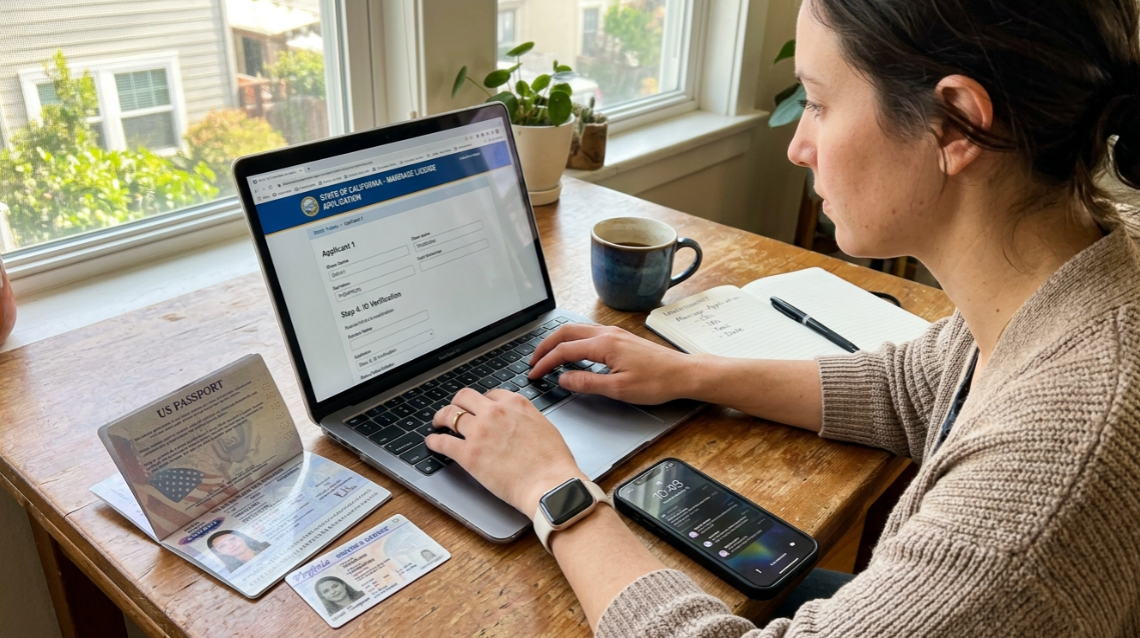
Apply for the License
Both partners submit an online application through the county system. Applicants need valid government-issued photo IDs, a smartphone to scan their ID and face, valid email addresses, and a credit or debit card. Utah County notes that most applicants pay $71.75 in fees, with international shipping charged separately.
Get Approved
There is no waiting period. Once approved, the couple has 32 days before the license expires.
Schedule the Ceremony
The couple books a time with an authorized officiant who will be physically present in Utah during the ceremony. Current Utah marriage code requires the officiant’s Utah location for a Utah license to be validly used. It also requires the officiant to warn the couple that the marriage may not be valid in the country where they reside.
Attend the Live Ceremony
The couple, at least two adult witnesses (age 18 or older), and the officiant connect through video. Everyone must see and hear each other in real time. The officiant conducts the ceremony. The couple declares their intent to marry. The officiant pronounces them married.
This is real solemnization, not a rubber stamp. Utah law lists specific elements: a valid license, willing declarations of intent, an officiant’s pronouncement, and two adult witnesses.
Receive the Certificate
After the officiant submits the finalized license, the couple can receive a digital certified copy within minutes. A physical certified copy is mailed within the next few business days.
Authenticate If Needed
Couples planning to use the certificate outside the United States will usually need an apostille or embassy legalization. The certificate proves the marriage happened. The apostille proves the certificate is genuine. Neither one forces a foreign government to accept the marriage.
Courtly handles this entire process, from the online marriage license application through certificate delivery, and provides a certified officiant with optional witnesses depending on the plan.
Typical Timeline
Step | Typical Time |
|---|---|
License application | Minutes |
Government approval | Often same day |
Ceremony scheduling | Same day to several days |
Live ceremony | 15–30 minutes |
Digital certificate | Minutes after filing |
Printed certificate | Several business days |
Apostille | Several days to several weeks |
Typical Costs
Item | Estimated Cost |
|---|---|
Utah marriage license | Around $71.75 |
Ceremony | Depends on provider |
Apostille | Varies by state |
Embassy legalization | Varies by country |
International shipping | Additional cost |
Why “Legal” and “Recognized” Are Not the Same Thing
This is where most guides about getting married online in different countries fail. They answer “is it legal?” and stop. The real question is five questions stacked on top of each other.
Layer 1: Source Legality
Was the marriage validly performed under the law of the jurisdiction that issued the license? For Utah, that means a valid license, declarations of intent, an officiant’s pronouncement, and at least two adult witnesses.
Layer 2: Ceremony Mechanics
Was there a real ceremony with live participants, or just a form submission? Utah remote appearance requires real-time video where everyone can see and hear each other simultaneously. A webpage that sells “instant online marriage certificates” without a live ceremony is not performing a valid marriage.
Layer 3: Certificate and Documentation
Does the couple have a certified marriage certificate from the issuing county? This is the document needed for name changes, tax filing, benefits enrollment, and everything that follows.
Layer 4: Foreign Recognition
Will the country where the couple lives actually accept the marriage? This is the danger zone. Utah County explicitly warns that a marriage solemnized through online remote appearance under Utah law may be invalid in the country where the parties reside. The U.S. State Department notes that whether another country recognizes a foreign marriage depends on that country’s own laws.
Layer 5: Immigration Recognition
Will the immigration agency treat the couple as legally married spouses? This is separate from general recognition. Immigration systems in the U.S., Canada, and UK each apply their own rules about remote, proxy, and virtual marriages.
A marriage can be valid where it was performed and still require extra steps, or still be rejected, where you want to use it. These five layers are not the same question asked five different ways. They are five different questions with potentially five different answers.
How Different Countries and Immigration Systems Handle Online Marriages
United States: General Domestic Use
A Utah marriage certificate is a standard U.S. marriage certificate. For domestic purposes like name changes, insurance enrollment, and tax filing, it works like any other state-issued certificate.
United States: Spouse Immigration
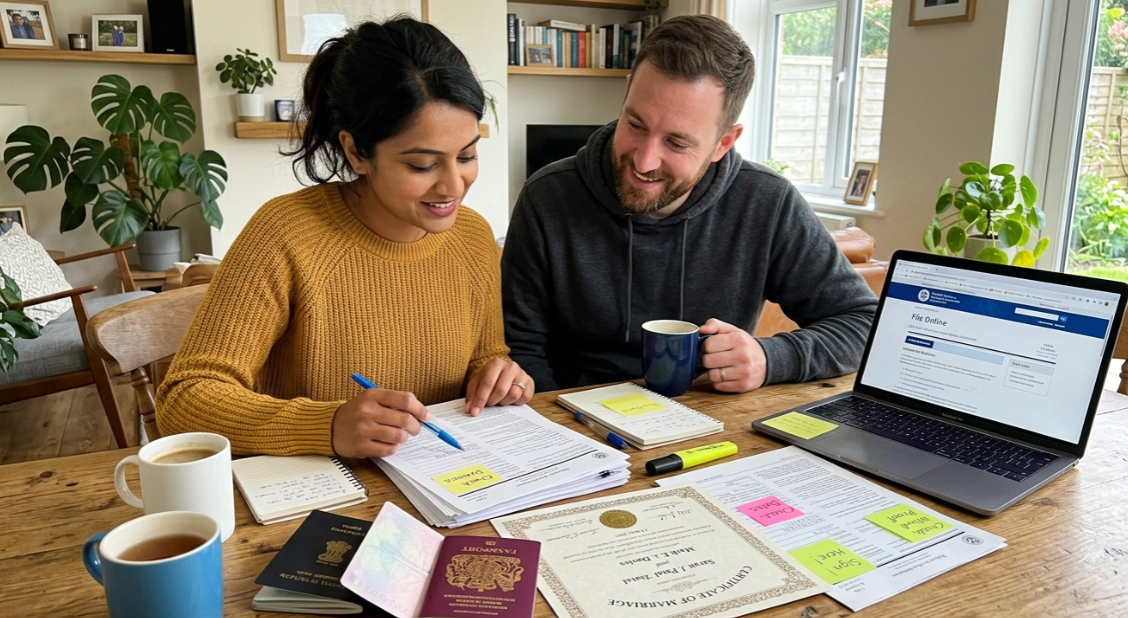
This is where complications begin. The Immigration and Nationality Act defines “spouse” to exclude a person married through a ceremony where the parties were not physically present in each other’s presence, unless the marriage has been consummated afterward. That means couples who get married online from different countries and then seek a U.S. spouse visa need to meet in person after the ceremony and document that meeting.
CitizenPath recommends gathering evidence such as airline tickets, hotel reservations, photos together, shared bills, leases, and affidavits to prove both consummation and a bona fide relationship. Immigration practitioners on LinkedIn consistently emphasize that online marriage solves the ceremony problem but does not remove evidence, admissibility, or timing requirements.
Practitioners on Reddit have shared mixed experiences. One r/USCIS thread describes a reported I-130 denial where USCIS questioned whether the ceremony location was truly “in the U.S.” when both parties were abroad. This is anecdotal, not settled policy, but it shows why proceeding without legal guidance is risky.
For couples where immigration is the goal, learn more about immigration and online marriage before choosing a route.
If a U.S. spouse visa is part of your plan, consider getting spouse visa consultation before the ceremony so you understand post-marriage evidence requirements.
Canada: Spousal Sponsorship
Canada is the clearest cautionary case. IRCC explicitly states that it does not recognize proxy, telephone, internet, or fax marriages where one or both parties were not physically present at the ceremony. The exceptions are narrow: applications received before June 10, 2015, or certain Canadian Armed Forces cases involving service-related travel restrictions where the marriage took place outside Canada and was registered where proxy marriage is legal.
If your end goal is Canadian spousal sponsorship, do not assume a Utah online marriage will be accepted. Get immigration advice specific to Canada before paying for any ceremony.
United Kingdom: Spouse Visa
The UK picture is less absolute. UK government guidance says foreign marriages are generally assessed by whether the marriage was valid where it was contracted and whether the parties had capacity under domicile law.
A poster on r/SpouseVisaUk reported an approved UK spouse visa using a Utah online marriage. They described submitting the digital certificate, a validity letter explaining the officiant’s physical location in Utah, and Zoom screenshots of the ceremony. They noted they did not obtain an apostille for that application. One person’s experience is not a guarantee, but it shows that properly documented UK applications can succeed.
Commenters on r/ukvisa have raised a different concern: that online marriages might “look fishy” to immigration officers. The consensus in those threads is that the marriage format matters less than the strength of relationship evidence. A couple with years of documented communication, shared visits, and joint plans is in a stronger position than a couple with only a certificate.
France: Physical Presence Requirement
France is a strong example of nationality-based restrictions. The French Civil Code Article 146-1 requires the physical presence of a French citizen for their marriage, even if contracted abroad. A Reddit legal-advice thread involved a French citizen who discovered France would not recognize their Utah online marriage because of this rule. The practical consequence was complications with both recognition and any future divorce.
Before marrying online, check whether your nationality law requires your physical presence at the ceremony.
Australia: General Rule With Exceptions
Australia generally recognizes overseas marriages that were valid where they happened, subject to exceptions. Australia’s Smartraveller advisory recommends confirming validity with a lawyer. Do not assume automatic acceptance or automatic rejection. The answer depends on the specific facts.
Comparison of Online Marriage Recognition
Country | Recognizes Utah Marriage? | Notes |
|---|---|---|
United States | Yes | Standard state-issued marriage certificate |
Canada | Usually No for sponsorship | Internet marriages generally not recognized by IRCC |
United Kingdom | Depends | Case-by-case review |
Australia | Usually | Subject to Australian law |
France | Depends | French citizens generally require physical presence |
Key Terms to Know
Understanding the terminology prevents expensive mistakes. Here are the terms that matter most when couples get married online from different countries.
Online marriage. A marriage ceremony conducted by video call where one or both partners may be somewhere other than the officiant. The term is broadly used by consumers but has no single legal definition. Laws use more precise language.
Remote appearance ceremony. A ceremony where participants appear by video in real time instead of being physically in the same room. Utah County uses this concept for its video-conference weddings. This is the legally precise version of “Zoom wedding.”
Proxy marriage. A marriage where one person is not personally present and a stand-in takes their place. Immigration agencies sometimes apply proxy-marriage rules to video ceremonies too, which is why the distinction matters. Learn more about proxy, online, and virtual wedding differences.
Place of celebration. The jurisdiction whose law governs the marriage’s validity. For Utah remote ceremonies, the officiant’s location in Utah establishes this. The concept is critical for every recognition and immigration question.
Marriage license vs. marriage certificate. The license comes before the ceremony and shows there is no legal barrier. The certificate comes after and proves the marriage was recorded. Couples confuse these constantly, and the confusion causes problems with document requests.
Apostille. A certificate that authenticates a public document for use in another country that is party to the Hague Apostille Convention. The Convention has 130 contracting parties. An apostille proves the document is genuine. It does not force a country to recognize the underlying marriage.
Embassy legalization. A multi-step authentication route for countries that do not accept apostilles. Practitioners on Reddit report that confusing apostille with embassy legalization is common and costly. One expat described wasting two weeks before realizing their destination required embassy legalization instead. See the key differences between apostille and authentication.
Consummation. For U.S. immigration, the post-marriage physical union required when the parties were not physically present together at the ceremony. The INA excludes such marriages from “spouse” status unless consummated.
Bona fide marriage evidence. Proof that the relationship is genuine, not just a certificate. Immigration agencies want shared finances, communication records, travel history, photos, and affidavits from people who know the couple. A certificate alone does not prove a real marriage.
Do Not Confuse
These mix-ups cause real problems:
Marriage license and marriage certificate are different documents with different purposes.
Apostille and recognition are different. An apostille authenticates the document. It does not force acceptance.
Online ceremony and instant certificate are different. A valid online marriage requires a live ceremony, not a web form.
Valid in Utah and accepted by every country are different. Utah County itself posts this warning in multiple languages.
Married for civil purposes and eligible for a spouse visa are different. Immigration agencies apply additional rules.
Biggest Mistakes Couples Make
Assuming legal equals recognized
A marriage can be legally performed but still rejected for immigration or registration.
Forgetting document authentication
Many countries require an apostille or embassy legalization before accepting a foreign marriage certificate.
Not checking immigration rules
Marriage recognition and immigration eligibility are separate legal questions.
Believing every online wedding website
Only government-authorized marriage licenses and legally solemnized ceremonies produce valid civil marriages.
Common Scenarios
Both Partners Are in Different Countries, Want a U.S. Certificate
This is the most straightforward case. If both partners meet Utah’s requirements (valid ID, no legal barriers to marriage, two witnesses, licensed officiant in Utah), they can complete a remote appearance ceremony and receive a standard Utah marriage certificate. For use abroad, an apostille or embassy legalization will likely be needed.
For couples needing their certificate prepared for foreign use, document legalization services can handle the apostille or embassy authentication.
Same-Sex Couple Cannot Marry Locally
An online U.S. marriage through Utah can provide a legal certificate for same-sex couples who cannot marry where they live. USCIS applies place-of-celebration rules for same-sex marriages the same way it applies them to opposite-sex marriages. But local recognition in the couple’s home country is a separate question. Countries that do not recognize same-sex marriage will likely not recognize a same-sex online marriage regardless of where it was performed. Learn more about LGBTQ+ online marriage options.
The Goal Is a U.S. Spouse Visa
Valid marriage is only one piece. Post-marriage physical meeting and consummation evidence may be required under the INA’s proxy-marriage language. The couple also needs to prove a bona fide relationship. Talk to an immigration attorney before choosing this route, not after.
The Goal Is Canadian Sponsorship
High risk. IRCC’s position is clear and explicit. Internet marriages where one or both parties were not physically present are generally not recognized. Do not proceed without Canadian immigration advice.
Destination Wedding Without Foreign Legal Paperwork
Some couples legally marry online through Utah and then have a destination celebration abroad. This sidesteps complex foreign marriage requirements, which the U.S. State Department notes can include residency periods, blood tests, translations, and authenticated documents. The destination event becomes the party. The Utah ceremony handles the law.
Risk Levels at a Glance
Lower risk. Using the Utah certificate for U.S. domestic purposes like name changes and tax filing, assuming all ceremony requirements were met.
Medium risk. Using the certificate in a country that generally recognizes foreign marriages but may need apostille, legalization, or local registration. The UK and Australia fall into this category depending on the facts.
High risk. Using the marriage for an immigration system that rejects internet or proxy marriages, or that requires post-ceremony physical meeting. Canada immigration and U.S. immigration without consummation evidence fall here.
Very high risk. One partner’s nationality law requires physical presence at the ceremony, or their country does not recognize same-sex or online marriage. France for French citizens is a documented example.
Checklist Before Getting Married Online From Different Countries
Confirm both partners are legally free to marry (no existing marriage, meet age requirements).
Confirm the jurisdiction allows remote appearance ceremonies.
Confirm the officiant will be physically located in the required jurisdiction during the ceremony.
Confirm witness requirements (Utah requires two adults age 18 or older).
Confirm whether the country where you live will recognize the marriage.
Confirm whether the relevant immigration agency treats this as a proxy or virtual marriage.
Confirm whether you need to meet in person after the ceremony for immigration purposes.
Confirm whether you need an apostille or embassy legalization. Read more about apostilles and how they work.
Save evidence: ceremony video or screenshots, certificate, witness names, travel records, relationship proof.
Consult a lawyer if the marriage will be used for immigration, residency, divorce, inheritance, adoption, or government benefits.
Questions to Ask Before Paying Any Online Marriage Service
Is the marriage license issued by a real government office?
Where will the officiant be physically located during the ceremony?
Are two witnesses required, and are they included or extra?
Will you receive a certified marriage certificate from the county?
Can you get an apostille or embassy legalization through the service?
What happens if you change your mind? What is refundable?
Does the service provide ceremony recording for evidence purposes?
Do you need an immigration lawyer before proceeding?
Frequently Asked Questions
Can two people in different countries get married online?
Yes, if the marriage is performed through a jurisdiction that allows remote appearance ceremonies and all legal requirements are met. Utah is the most widely used jurisdiction. But recognition abroad varies, and couples should verify acceptance before relying on the marriage for any specific purpose.
Is a Zoom wedding a real marriage?
It can be. A Utah remote appearance ceremony with a valid license, authorized officiant, two adult witnesses, and live video solemnization produces a legally valid marriage certificate. A symbolic video call without those elements does not.
Is online marriage the same as proxy marriage?
Not exactly in everyday language, but immigration agencies sometimes apply proxy-marriage rules when the parties were not physically present together at the ceremony. For U.S. immigration, the INA may require post-marriage consummation if the couple was not in each other’s physical presence during the ceremony.
Will my country recognize an online marriage?
Maybe. Recognition depends on the laws and policies of the country or agency where you use the certificate. Utah County and the U.S. State Department both caution that foreign recognition depends on local law. Some countries accept foreign marriages performed validly elsewhere. Others require physical presence or do not recognize remote ceremonies.
Do I need an apostille for my U.S. marriage certificate?
If using a U.S. marriage certificate in a country that is party to the Hague Apostille Convention, you will likely need one. If the destination country is not party to the Convention, you may need embassy legalization instead. Either way, the authentication proves the document is genuine. It does not guarantee the destination country will accept the marriage.
Can I use an online marriage for a U.S. spouse visa?
Possibly, but the couple must satisfy immigration-specific rules. If they were not physically present together at the ceremony, U.S. law may require post-marriage consummation. The couple must also prove a bona fide relationship with supporting evidence beyond the certificate itself.
Does Canada accept online marriages for immigration?
Generally no. IRCC states it does not recognize proxy, telephone, internet, or fax marriages where one or both parties were not physically present, except narrow exceptions for certain military cases or pre-2015 applications.
Is an online marriage certificate enough on its own?
Rarely. A certificate proves the marriage was recorded, but immigration applications, foreign registration, name changes, and benefits enrollment may require apostille or legalization, translations, relationship evidence, or local registration. The certificate is the starting point, not the finish line.
This article is general information, not legal advice. Marriage recognition and immigration rules vary by country and can change. If you plan to use an online marriage for immigration, residency, local registration, inheritance, divorce, adoption, or government benefits, confirm requirements with the relevant authority or a qualified lawyer.
Courtly is not a law firm and cannot guarantee recognition by every country or immigration agency. But for couples who decide a remote U.S. marriage through Utah fits their situation, Courtly handles the license process, provides a certified officiant and optional witnesses, hosts the ceremony online, records it, and delivers both digital and mailed U.S. marriage certificates, with document legalization add-ons for foreign use.
Review Courtly’s plans and pricing to see what each tier includes.
Let us handle the paperwork.
Getting married is complicated. Courtly simplifies the process and provides everything necessary to get married online, including providing a licensed officiant who can perform a remote ceremony.
Get Married

Get married online.
Getting married is complicated. Courtly simplifies the process and provides everything necessary to get married online.

