

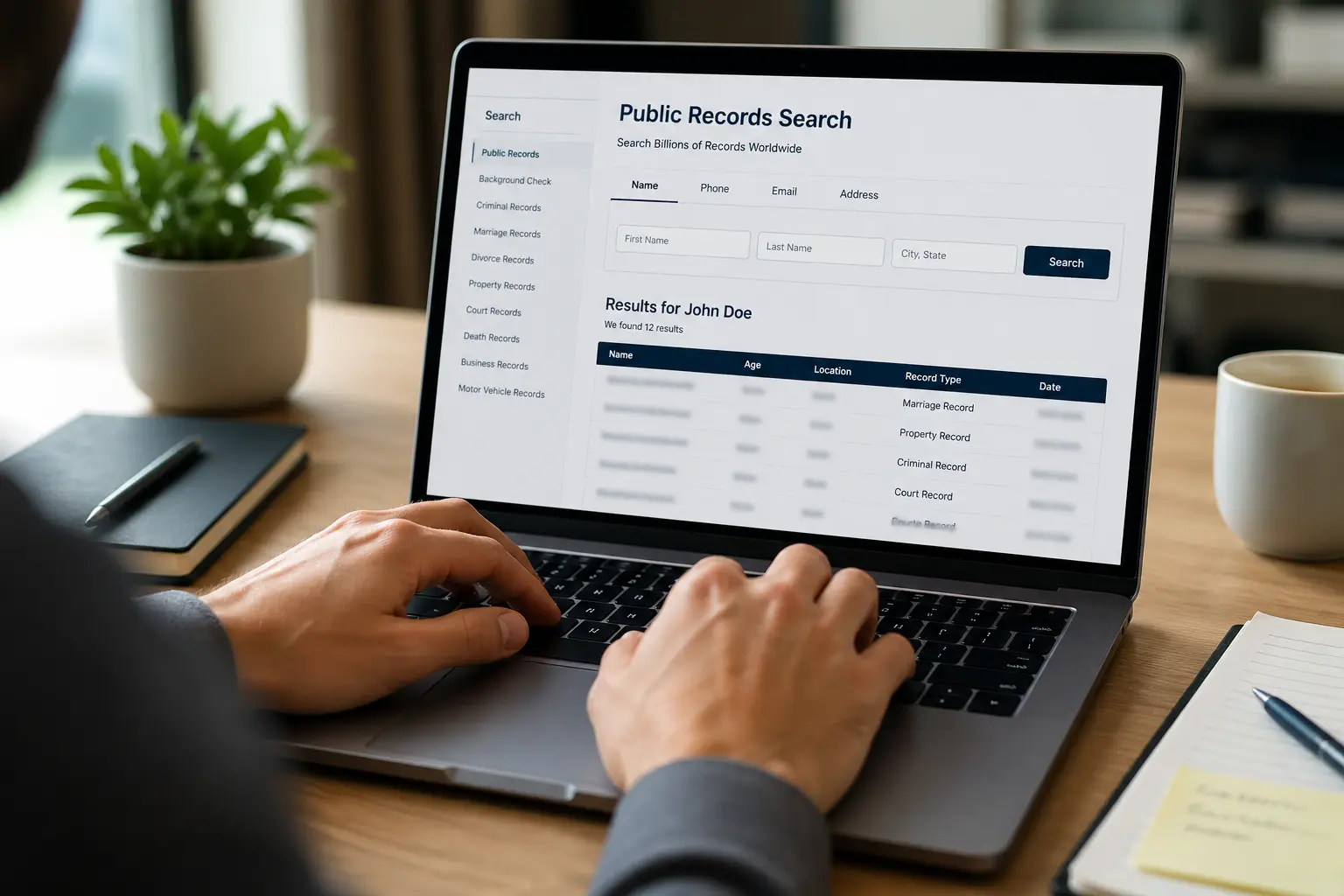
Figuring out whether someone is married is not simple.
Marriage records are managed at the county or state level, and privacy laws vary by jurisdiction. Not every record has been digitized, and not all information is publicly accessible online. That is why you will find conflicting advice depending on where you look.
Here’s the thing: verifying someone's marital status is possible, but it requires the right approach. Official records produce real answers. Cross-checking sources improves reliability. Guesswork and single-source searches do not.
This guide breaks down what actually works, what doesn’t, and how to navigate the process without relying on assumptions.
Can You Actually Find Out if Someone Is Married?
Yes, but it depends on three factors:
- Where the marriage was registered
- Whether those records are publicly accessible
- How recently the marriage took place
In the United States, you can usually access public marriage records. In other countries, access is restricted or requires formal requests. In many places, only basic information is available online. That means you can find proof in many cases, but you need to look in the right place rather than searching broadly.
How to Check if Someone Is Married Online?
The most reliable ways to check if someone is married:
1. Search Public Marriage Records
This is the most reliable method available. Marriage records are typically stored at county clerk offices, vital records departments, and local government registries. To run a search, you will need the person's full name, an approximate location, and an estimated timeframe for the marriage.
Here is where you can check marriage records:
2. Use Online Public Record Databases
These platforms pull together records from multiple sources, making them a fast and convenient starting point. They cover multiple locations and allow broad searches. The limitations are worth noting: the data is not always complete, some platforms require payment, and accuracy varies. Think of these tools as a starting point, not final proof.
3. Check Divorce Records
This step is often overlooked. If someone was previously married, divorce records can confirm past marital status and clarify whether they are currently single or remarried. Divorce records are maintained by the same county and state systems that handle marriage records, so the search process is similar.
4. Look at Social Media Carefully
Social media can surface signals, but not proof. Wedding photos, a listed marital status, or family tags might point you in a direction. The problem is that people do not always update their profiles, and some deliberately keep personal information private. Use this only as supporting context, not as a standalone verification.
5. Ask Directly When It Makes Sense
Simple, but not always reliable. Asking directly works best when you are already in communication with the person, and there is no particular reason for them to withhold the truth. If there is a meaningful incentive to conceal marital status, you will need verification from official records.
Online vs. Offline Verification at a Glance
How to Check if Someone Is Legally Married
Here is where people often get confused. Being married socially and being legally married are not the same thing.
Legal marriage requires a government-issued certificate, official registration, and recognition under a specific jurisdiction. This distinction matters in practical contexts such as immigration applications, financial decisions, and legal rights.
In cross-border relationships, this becomes more complicated. Records may exist in different countries, under different legal systems, and in different languages. Verification is still possible, but it requires searching within each country's own legal framework.
Let us be direct about what does not work:
- General Google searches
- Random people-finder tools with no verified data sources
- Hearsay or second-hand accounts
- Assumptions based on behavior or lifestyle
These approaches might surface clues, but they do not produce proof. For anything consequential, official records are the only reliable foundation.
Limits of Verification (and When to Go Further)
This is where most people get stuck.
They run a few searches, do not find anything, and assume there is no record. In many cases, that assumption is wrong.
What usually happens is this: the search is too broad, or it is relying on sources that were never meant to provide final answers.
When results are unclear, the approach needs to change, not repeat.
That means:
- Narrowing the search to a specific location instead of scanning multiple regions at once
- Cross-checking results across more than one source
- Looking at related records, such as divorce filings, instead of only searching for a marriage entry
For low-stakes situations, that level of effort may not be necessary.
But when something important depends on accuracy, immigration, financial decisions, legal matters, or entering a marriage yourself, surface-level checks are not enough.
In those cases, it makes sense to go further. That could mean working with a legal professional or using a verification service that can access sources not available in standard searches.
The key point is simple: lack of results is not confirmation. It just means the current approach has limits.
Courtly helps couples get legally recognized U.S. marriage certificates quickly and entirely online, with concierge support throughout the process. If geography, legal complexity, or a tight timeline is making things difficult, that is exactly the situation Courtly is designed to handle.
Frequently Asked Questions
Can I check if someone is married for free?
Yes, in many cases. County clerk offices and some state databases allow free searches, though results may be limited. Paid tools often provide more comprehensive data, particularly when searching across multiple regions. Start with official government portals before turning to paid services.
Are marriage records public in every country?
No. Some countries make marriage records publicly accessible, while others restrict access due to privacy laws. Even in systems where records are public, access may be limited to specific authorities or require a formal request.
How accurate are online marriage record searches?
They can be accurate, but they are rarely complete. Online databases depend on available data sources, which may not include recent records, sealed records, or records from jurisdictions that have not digitized their archives. Always verify important findings against official government records.
Can someone hide their marriage legally?
In some cases, yes. If records are sealed, located in restricted jurisdictions, or have not been digitized, they may not appear in public searches. That is why no single method guarantees complete confirmation.
What is the fastest way to verify marital status?
An online record search tool is usually the fastest option. For confirmed accuracy, though, checking official county or government records remains the most reliable method. Speed and reliability involve a tradeoff, depending on what the verification will be used for.
Can I check marriage records internationally?
Yes, but it is more complex. You will need to search within each country's own legal system. Some countries provide online access to marriage records. Others require in-person visits or formal written requests.
Do I need permission to access someone's marriage records?
Usually not for public records. However, access rules vary by jurisdiction. Some regions restrict sensitive details or require proof of purpose to access full records. When in doubt, check the specific rules for the jurisdiction you are searching in.
What if I cannot find any records at all?
A lack of results typically means one of three things: the marriage took place in a different location than expected, the records have not been digitized, or access is legally restricted. In those situations, combining multiple search methods or consulting a legal professional or specialized service is the most practical path forward.
Let us handle the paperwork.
Getting married is complicated. Courtly simplifies the process and provides everything necessary to get married online, including providing a licensed officiant who can perform a remote ceremony.
Get Married

Get married online.
Getting married is complicated. Courtly simplifies the process and provides everything necessary to get married online.

