

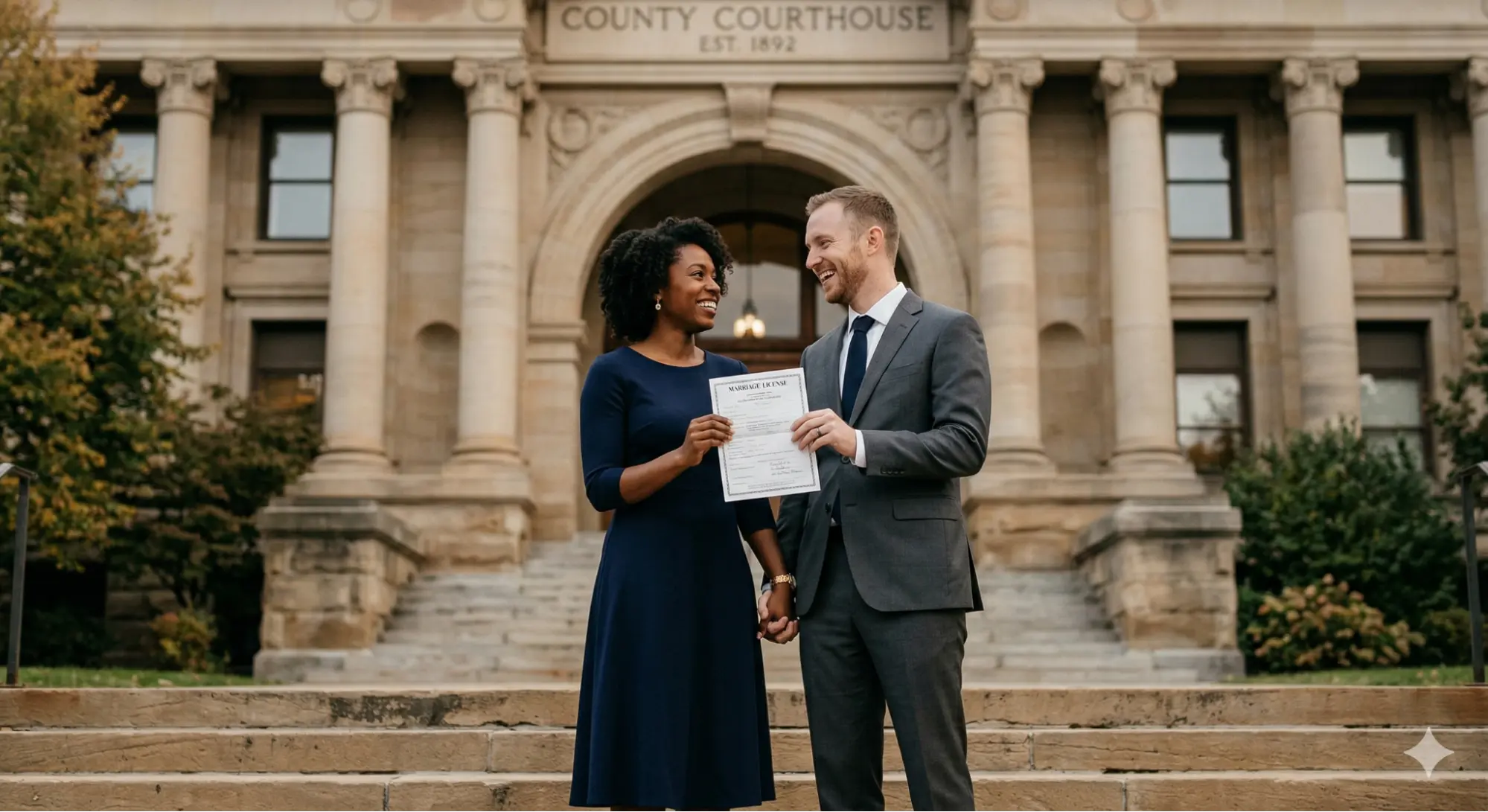
Most people assume getting married at the courthouse is the simple option. In some ways, it is. What trips people up isn't the ceremony, it's everything around it.
Different states have different rules. Some allow same-day marriage. Others require a waiting period of 24 to 72 hours. One state makes you wait six full days. Witness requirements, ID rules, appointment availability, and license expiry windows all vary by county. For international couples or anyone dealing with visa deadlines or geographic distance, those variables matter a lot.
Here's the thing: most guides treat courthouse marriage as one uniform process. It isn't. This one walks you through what actually happens, step by step, and where things go wrong.
What "Getting Married at the Courthouse" Actually Means
A courthouse marriage is a civil marriage, not a religious one. It's performed by a judge, clerk, or authorized officiant, and it's legally recognized by the government. What it's not is a traditional wedding: no venue, no catering, no ceremony beyond the legal minimum.
One thing most people miss: the courthouse doesn't handle everything in one place on one visit. In many counties, you apply for your license in one office and schedule the ceremony separately, sometimes on a different day, sometimes in a different building entirely.
So when people say 'courthouse wedding,' they're describing three separate things: the license application, the civil ceremony, and the marriage certificate you receive afterward. Understanding that separation makes the process significantly clearer.
What You Need to Get Married at the Courthouse
The requirements are straightforward but not identical everywhere. At minimum, you'll need a valid government-issued photo ID, a completed marriage license application, and payment for the license fee. Depending on your state or county, you may also need one or two witnesses, a scheduled appointment for the ceremony, and proof of divorce if either partner was previously married.
What people overlook is timing. Marriage licenses don't last indefinitely. In many states, your license becomes valid only after a mandatory waiting period and expires if you don't use it within a set timeframe. Even if you have all your documents ready, timing still matters.
Step by Step: What the Process Actually Looks Like
Step 1: Apply for a Marriage License
You'll go to your county clerk's office or, in some counties, apply online. You'll fill out an application, show valid ID for both partners, and pay the license fee. Typical cost: $30 to $100. This step is mandatory regardless of anything else. You cannot schedule a ceremony without it.
Step 2: Wait If Your State Requires It
Some states allow same-day marriage. Others require a 24- to 72-hour waiting period before the license becomes valid. This catches more couples off guard than anything else in the process. Check your state before you show up expecting to leave married.
Step 3: Schedule or Walk In for the Ceremony
Once your license is valid, you can proceed with the ceremony. Depending on your county, you'll either book an appointment in advance or walk in during set hours. In busy urban counties, appointments are often booked several days in advance, so if timing is important, it is best to call ahead and confirm availability instead of assuming a slot will be open.
Step 4: Attend the Civil Ceremony
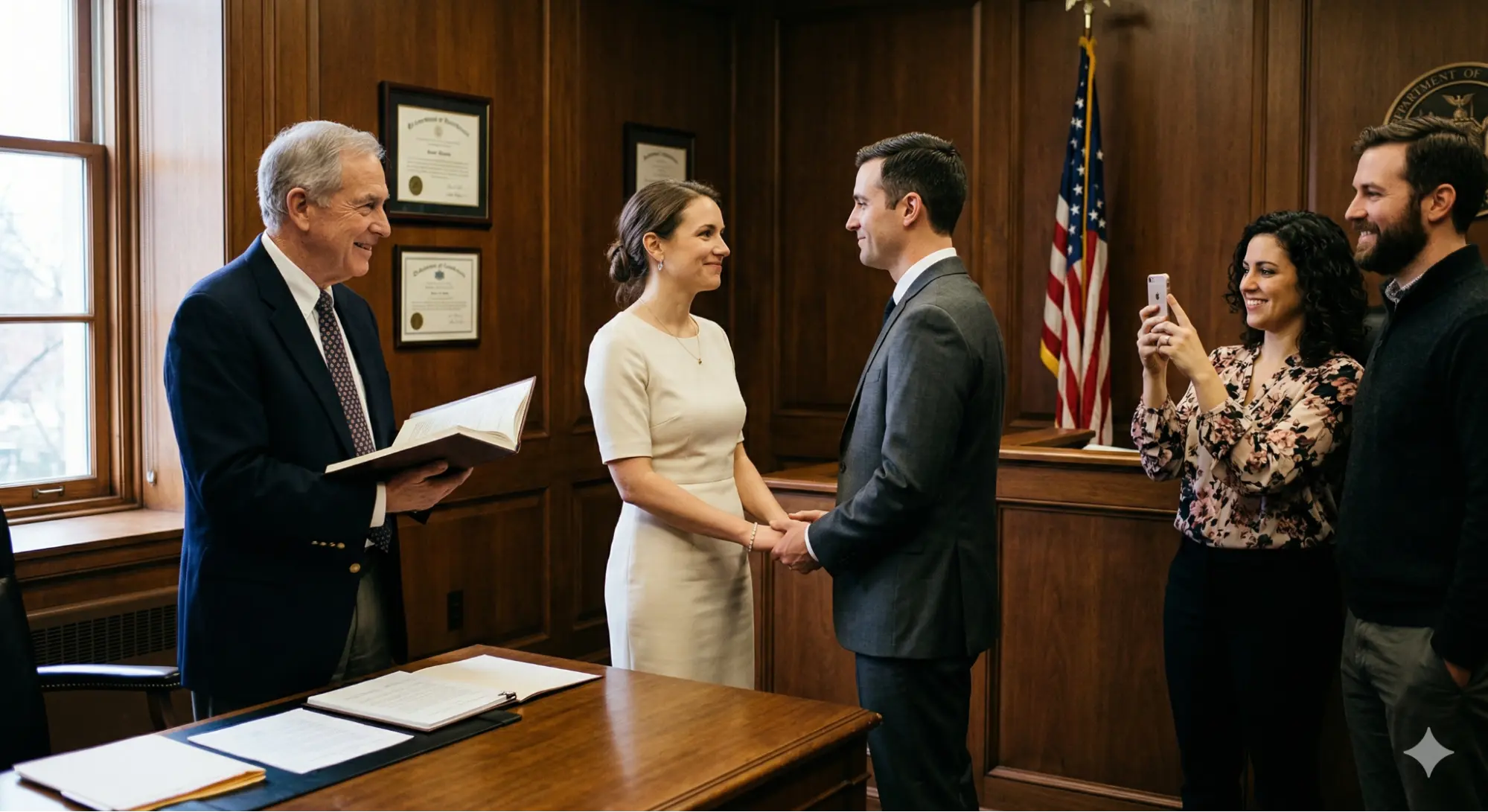
A courthouse ceremony typically runs 5 to 10 minutes and is conducted by a judge or clerk. You'll exchange vows, your witnesses (if required by your state) will sign the license, and that's the legal moment your marriage becomes official. Bring your license. Bring your witnesses if your state requires them.
Step 5: Receive Your Marriage Certificate
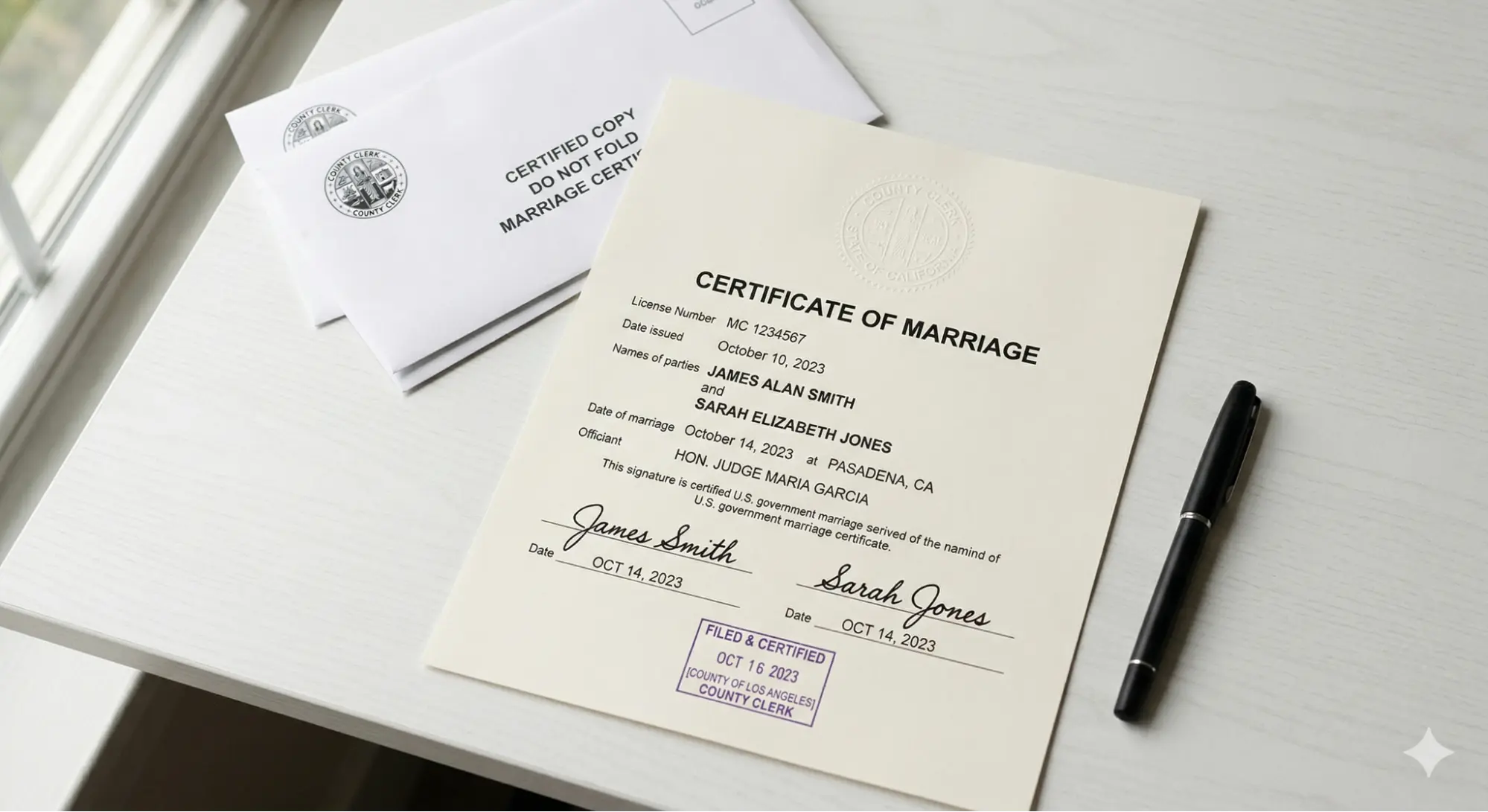
After the ceremony, your signed license is filed with the county. Your marriage certificate is the official government-issued document proving your marriage. Certified copies usually cost $10 to $25 each. Get at least three: you'll likely need them for name changes, immigration paperwork, and legal filings.
How Much Does It Cost
Courthouse marriage costs a fraction of a traditional wedding. The total varies by state. Here's a realistic breakdown:
Total typical range: $50 – $200. Some counties accept only specific payment methods: cash, card, or money order. Check before you go.
How Long Does the Process Take
Here's what the timeline looks like across different scenarios:
What affects timing: waiting periods, appointment availability, documentation issues, and county workload. If you're working against a legal deadline, a visa expiration, a deployment date, or an immigration interview, that timeline becomes critical.
Marriage License Requirements by State
The rules aren't just different from state to state, but they're different enough to change your entire plan. A couple in Nevada can walk in and walk out married the same afternoon. A couple in Wisconsin has to wait six days. A couple in Michigan gets 33 days to use their license. A couple in Georgia gets no expiration date at all. The table below covers the most populous and most-searched states, plus any with rules significant enough to affect your decision.
* Waiting period may be waivable in certain circumstances (e.g., military service, completion of a marriage prep course). Fees shown are estimates. County rates vary and may change. Verify with your county clerk before applying.
A few things worth noting. Wisconsin has the longest mandatory waiting period in the country, six full days. Washington's three-day wait cannot be waived under any circumstances, including by court order. Michigan licenses expire after 33 days, the shortest validity window of any state on this list. And Utah is currently the only state with a fully online license application and ceremony available to couples located anywhere in the world, which is the legal framework under which Courtly's online ceremony operates.
When a Courthouse Wedding Works And When It Doesn't
A courthouse marriage works when both partners are in the same location, there's no hard deadline, and your county's rules are straightforward. It's the most direct legal path to marriage in the U.S. if you're both there in person and the timing works.
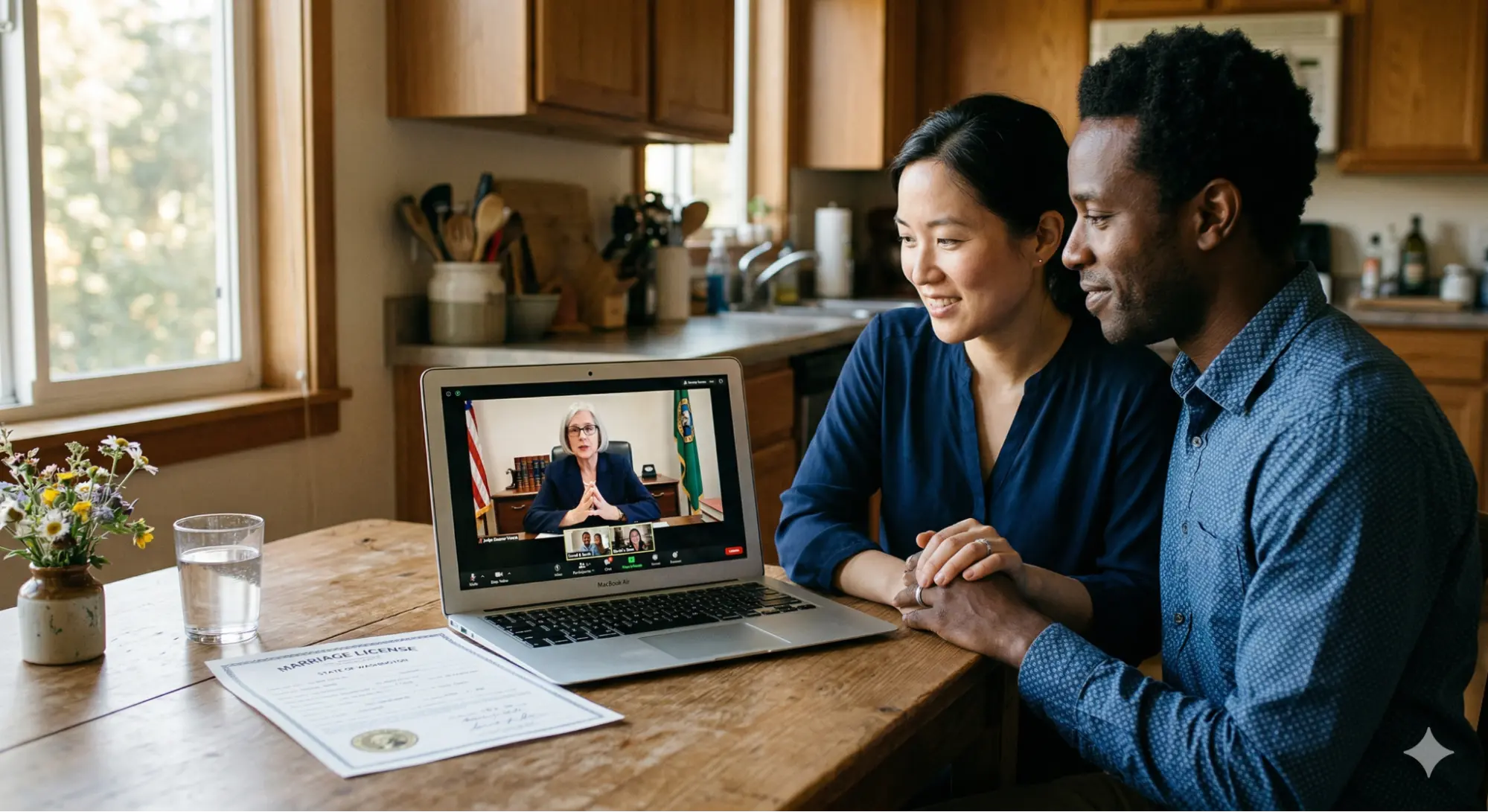
It breaks down when partners are in different countries, when local laws create delays, when visa or immigration deadlines are forcing the timeline, or when one partner is deployed. That's especially true for same-sex couples, international couples, and binational pairs navigating immigration paperwork. A courthouse that can't schedule you for two weeks is a real problem when a visa window is closing.
What to Do Next
Getting married at the courthouse is one of the most direct ways to make your marriage legally official in the U.S. The process is clear, but it's not identical everywhere, and the variables around timing and location are the part that actually trips people up.
If you're both in the same place, there's no deadline, and your county's requirements are straightforward: show up to the clerk's office, get your license, complete the ceremony, and collect your certified copies. That's it.
If geography or timing is working against you, Courtly offers several wedding packages that meet your needs.
Frequently Asked Questions
Can you get married at any courthouse in the U.S., or does it have to be your local county courthouse?
It depends on the state. Some allow you to marry in any county within the state, while others require the ceremony to take place in the same county where you obtained your license. Check your specific state's rules before showing up at a courthouse outside your county.
What happens if you miss your courthouse appointment?
You can usually reschedule, but availability may be limited, especially in busy urban counties. Missing an appointment can delay your timeline by days or weeks. If you're working against a legal deadline, that delay matters. Plan and confirm the appointment the day before.
How many certified copies of your marriage certificate do you need?
Get at least three certified copies. You will need them for a name change application, USCIS immigration filings, and other legal documentation. Photocopies are not accepted. Government agencies require certified copies with an official seal. Each copy typically costs between 10 and 25 dollars through the county.
Can you bring guests to a courthouse wedding?
Many courthouses allow a small number of guests, but space is often limited. Some locations restrict attendance entirely or allow only the required witnesses. Call ahead, don't assume.
Do you need an officiant at the courthouse, or is one provided?
At a courthouse ceremony, the officiant, typically a judge or clerk, is provided. If you're getting married outside the courthouse through a different civil ceremony, you'll need to arrange one separately. Online marriage services like Courtly include a U.S.-licensed officiant in every package.
What happens if there's a mistake on your marriage certificate?
You'll need to request a correction through the county clerk's office. The process takes time and may involve additional fees. Review all details carefully before the ceremony, including names, dates, and spellings, because fixing errors after the fact is significantly more complicated than getting it right the first time.
Is an online marriage legally valid for immigration purposes?
Yes, if it's conducted under a recognized U.S. jurisdiction. Courtly ceremonies are performed under Utah County law, and the resulting government-issued marriage certificate is accepted by USCIS for immigration filings, including Form I-130 and adjustment of status. If you need international recognition, an apostille ($50 + shipping) authenticates the certificate for use in most Hague Convention countries.
Let us handle the paperwork.
Getting married is complicated. Courtly simplifies the process and provides everything necessary to get married online, including providing a licensed officiant who can perform a remote ceremony.
Get Married

Get married online.
Getting married is complicated. Courtly simplifies the process and provides everything necessary to get married online.

