

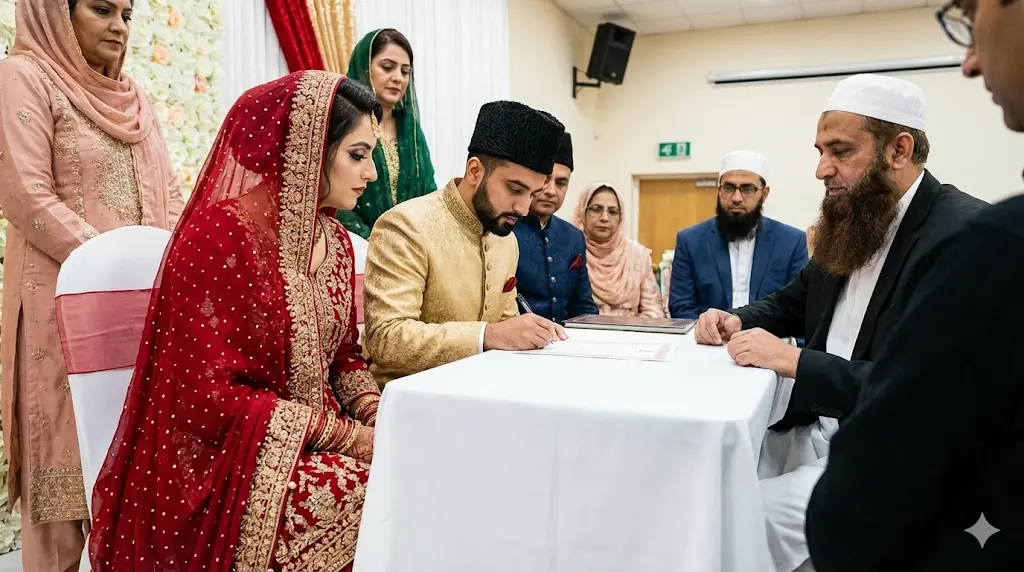
A nikah ceremony is the moment a Muslim marriage becomes real, not just socially, but spiritually and contractually.
It is simple on the surface, yet layered with meaning, culture, and lived tradition.
Two people give consent, a contract is spoken and signed in front of witnesses, and a new household is formally recognized within the Muslim community.
Across regions, the structure of the ceremony stays consistent, but the experience around it: tone, seating, language, dress, and family customs shift with culture, migration, and modern life.
This guide looks at the nikah through two lenses at once: the religious meaning embedded in the ritual and the practical experience of being in the room as a couple or guest.
What the Nikah Ceremony Means in Islam
The nikah ceremony's meaning centers on an idea that is both contractual and devotional.
In Islamic thought, marriage is not a symbolic blessing; it is a binding agreement built on consent, accountability, and mutual rights. That agreement is made audible in the ceremony so that witnesses, family, and community can hear it and affirm that it took place.
The heart of the nikah rests on a few essential elements:
- both spouses consent freely
- the mahr is defined and agreed
- the offer and acceptance are expressed clearly
- witnesses are present to confirm the contract
Even when the ceremony feels quiet or understated, these elements carry emotional weight.
The reminder delivered by the officiant, often about compassion, dignity, and responsibility frames the marriage as a moral commitment rather than a private arrangement.
In many families, that moment matters more than the reception that follows, because it marks the point at which the couple is recognized as married in faith.
Couples who plan the religious nikah before handling the civil side often talk about the ceremony as the point where the relationship finally feels settled, especially when paperwork or geography means the legal process happens later.
The emotional legitimacy begins here; the administrative side follows afterward.
The Meaning of the Nikah Ceremony
Within the ceremony itself, meaning is expressed not through symbolism or decoration, but through spoken language and public affirmation.
The ijab (offer) and qabul (acceptance) are not recited for tradition’s sake; they make the contract legally valid in a religious sense.
The mahr, similarly, is not a symbolic gift; it is the bride’s right and part of the ethical structure of the marriage.
Different cultures express these elements differently.
In some communities, the bride speaks directly. In others, her consent is confirmed separately and represented by a wali during the verbal exchange.
The ceremony remains valid as long as consent is real and uncoerced, even if the social etiquette around how it is expressed varies between regions and schools of thought.
How the Nikah Ceremony Differs From a Wedding Reception
It helps to see the nikah and the reception as two distinct moments with different purposes.
The nikah is focused, calm, and contract-driven. The reception, whether a walima, banquet, or family gathering belongs to the cultural sphere: music, photographs, greetings, and celebration.
In many modern weddings, especially in diaspora communities, couples intentionally keep the nikah intimate and short, reserving the expressive, stylistic celebration for the reception later in the day or even months afterward.
The ceremony remains the anchor, regardless of how elaborate or minimal the festivities become.
What Happens During a Muslim Nikah Ceremony
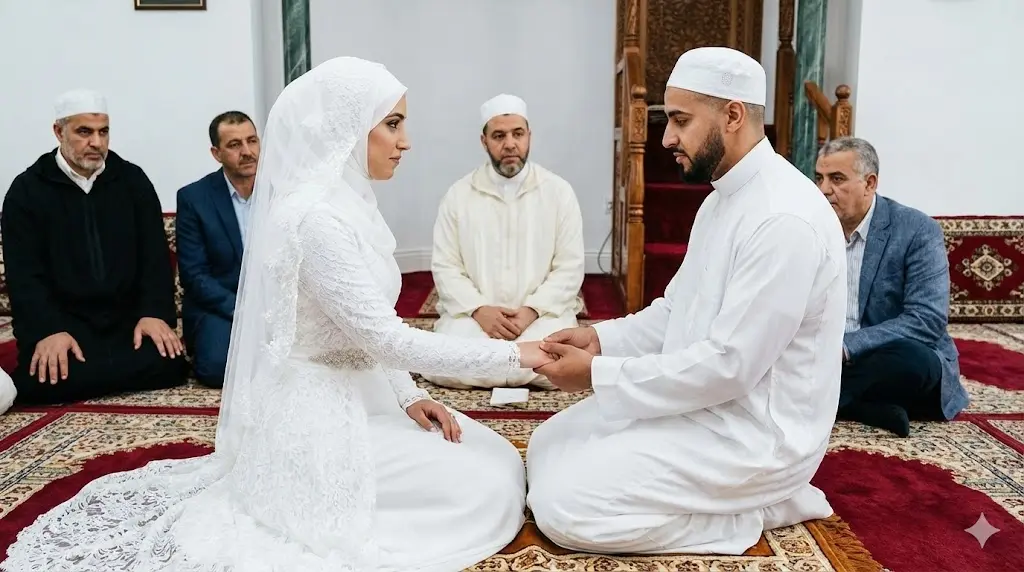
Although the meaning behind the nikah runs deep, the ceremony itself is usually straightforward. What makes one nikah feel different from another is not the structure, but the social environment around it: who is present, how elders participate, and how the officiant frames the reminder about marriage.
Before looking at regional variations, it helps to understand the core experience couples and guests can expect.
Step-by-Step Flow of the Muslim Nikah Ceremony
A typical ceremony follows a sequence like this:
- Assembly and preparation: Family members, guests, witnesses, and the officiant gather. Seating may be mixed or gender-separate depending on local custom. The officiant confirms who will sign, who will witness, and whether a wali is participating.
- Opening recitation and reminder: Verses are recited, and a brief reminder is delivered, often reflecting on mercy, partnership, and accountability within marriage. This is not a sermon; it functions as a moral orientation for the contract that follows.
- Confirmation of consent and mahr: The couple’s consent is confirmed, along with the agreed mahr. In many cultures, this moment happens with quiet focus, reflecting the seriousness of the commitment.
- Ijab and qabul (offer and acceptance): The offer is spoken and the acceptance is declared in clear terms. Some cultures repeat the response multiple times; others state it once with formal clarity. The emphasis is on intention and understanding.
- Signing the marriage contract: The contract, whether recorded on a formal document or a traditional nikahnama, is signed by the couple and witnesses. For many families, this written record becomes the lasting symbol of the day.
- Dua and congratulations: A dua is made for the couple’s future, after which relatives and friends step forward to congratulate them, often with quiet warmth rather than exuberant display.
In practice, the ceremony may last only minutes, but for the families involved, it represents generations of custom and continuity.
Roles and Responsibilities in the Nikah Ceremony
Different people hold specific roles in the ceremony, but how visible those roles are can vary between cultures.
- The bride and groom are the moral center of the event, even when the ceremony is formal or restrained. Their consent is the basis of the contract.
- The wali, in traditions where one is present, formalizes guardianship or representation, not to remove agency from the bride, but to affirm protection, family support, and continuity of responsibility.
- Witnesses ensure that the contract is public, verifiable, and not hidden or ambiguous.
- The officiant guides the process, keeps the contract valid within religious boundaries, and interprets ritual expectations into lived practice.
In many modern contexts, that role also involves balancing religious requirements with real-world circumstances, especially when couples are separated by distance or logistical constraints.
Courtly’s experienced Imam explains it this way:
In some communities, elders play a parallel role to the officiant’s spiritual authority, shaping tone, expectations, and boundaries for the ceremony through presence alone.
Variations You May See Across Cultures
Across regions, the nikah takes on the character of local culture while preserving its core.
South Asian ceremonies may emphasize visual formality and separate gathering spaces. Middle Eastern or East African nikahs may lean toward intimate, family-centered environments.
In Western diaspora contexts, couples often adapt the ceremony to shared-culture weddings, blending modest structure with contemporary aesthetics.
One difference that stands out across communities is how public emotion is expressed.
Some families treat the nikah as a quiet, dignified contract moment; others fold it into a more openly affectionate gathering with laughter, tears, and layered rituals surrounding the formal exchange.
Nikah Ceremony Dress Code and Cultural Etiquette
Many questions about the nikah have less to do with theology and more to do with social belonging: What should I wear? Where should I sit? Will I accidentally offend someone?
Dress and etiquette work together here: modesty establishes respect, while awareness of context signals cultural sensitivity.
Nikah Ceremony Dress Code for the Bride and Groom
For the couple, the nikah ceremony dress code is guided less by uniform rules and more by the intersection of modesty, culture, and personal identity.
Brides may wear abayas, traditional gowns, regional bridal attire, or simple, elegant dresses paired with a head covering in settings where that is customary.
Grooms may wear thobes, sherwanis, or suits styled in a restrained, ceremonial way.
In many ceremonies, modest design choices like full sleeves, covered silhouettes, structured fabrics do more than meet religious norms.
They reflect the tone of the event: dignified, intentional, and grounded in modest celebration rather than display.
Couples who hold a small nikah before a later reception sometimes choose attire that aligns with the quieter atmosphere of the ceremony, reserving more elaborate outfits for the celebratory gathering that follows.
Nikah Ceremony Dress Code for Guests
Guests are generally expected to follow the same spirit of modesty while adapting to the space they are entering.
The safest approach is respectful formality:
- covered shoulders and legs
- clothing that is not sheer, tight, or low-cut
- muted or elegant tones for mosque settings
- optional head coverings for women when customary
Guests who are not Muslim are not expected to mirror religious identity.
What matters is showing cultural attentiveness, especially in shared spaces, removing shoes when required, dressing conservatively in sacred environments, and letting families guide seating or movement cues.
Etiquette, Seating, and Behavior During the Ceremony
Etiquette at a nikah ceremony leans toward attentiveness rather than performance.
Phones are usually set aside, conversation softens when the contract begins, and guests follow the flow of movement rather than initiating it.
In some communities, gender-separate seating communicates comfort and familiarity rather than restriction, and guests typically follow what the families have arranged.
Participation is measured not by how active guests are, but by how present and supportive they remain, especially during the contract and dua.
Modern Adaptations of the Nikah Ceremony
Migration, distance, intercultural relationships, and administrative realities have reshaped how many couples approach their nikah.
What remains constant is that the ceremony continues to carry emotional legitimacy, even when circumstances require the legal or logistical aspects of the marriage to happen along a different timeline.
How Nikah Ceremonies Are Changing for Diaspora and Intercultural Couples
For couples living outside their home countries, the nikah often becomes the stabilizing touchpoint, a way to root the marriage in shared heritage even when locations, laws, or wedding plans are complex.
Many hold a small nikah first, then host a larger celebration months later when family can travel, or venues align.
Intercultural couples may adapt the ceremony through language choices, guest etiquette, or blended attire while preserving the structure of consent, contract, and witnesses.
In these contexts, the nikah functions not only as a religious ritual but as a bridge between families and traditions.
Nikah Ceremony and Civil Marriage Registration
In many parts of the world, the nikah and the civil marriage process operate in parallel but separate systems.
The ceremony establishes the marriage within faith and community; the civil process creates a legal record used for administration, immigration, and state recognition.
For couples separated by borders or strict local rules, Courtly’s online Nikah process gives them a way to complete a Muslim online marriage that fulfills Islamic conditions while also producing a US marriage certificate they can later register or use for civil procedures.
Couples often approach these as complementary steps rather than competing ones, especially when circumstances require flexibility, for example, when travel, documentation, or jurisdiction complicate the timing of civil registration.
How to Prepare for a Nikah Ceremony
Preparation for the nikah is as much relational as it is logistical.
What matters most is alignment: between families, expectations, cultural norms, and the emotional tone the couple wants for the day.
What Couples Should Finalize Before the Ceremony
Before the ceremony, couples typically confirm who will witness, how consent will be expressed, whether a wali will participate, and what form the mahr will take.
Venue conventions, seating expectations, and attire discussions often happen ahead of time so that the ceremony itself remains calm and uninterrupted.
Couples who plan the nikah before larger celebrations sometimes also decide how this smaller ceremony fits into the broader arc of their wedding journey, whether it stands as the primary moment of union or as the grounding commitment before a later public celebration.
What Guests Should Know Before Attending a Nikah Ceremony
Guests benefit from understanding that the nikah is not a performance space but a contract moment wrapped in culture.
Arriving on time, dressing thoughtfully, following seating guidance, and greeting the couple with warmth rather than interruption go a long way toward honoring the ceremony’s tone.
Gifts, celebration style, and social expectations often unfold later, either at the reception or in the intimate gatherings that follow the ceremony itself.
Conclusion: Nikah Ceremony Meaning in Today’s World
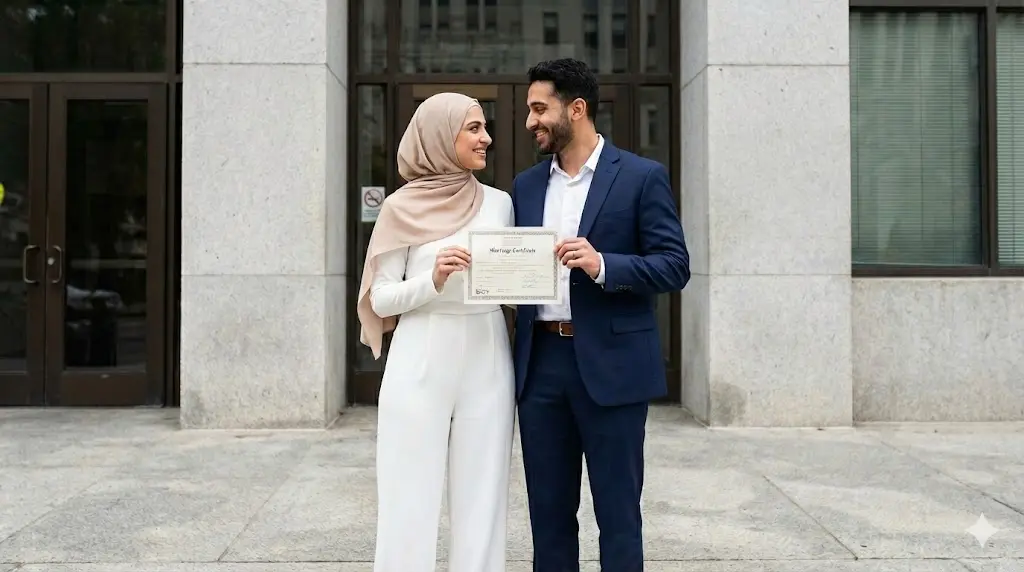
The nikah ceremony's meaning continues to hold emotional and spiritual weight across cultures, even as weddings adapt to geography, migration, and modern life.
What gives the ceremony its significance is not decoration or spectacle, but the spoken commitment, the presence of witnesses, and the shared understanding that a new household is being recognized within the Muslim community.
Whether the ceremony takes place in a mosque, a family home, or a quiet diaspora setting, the heart of the nikah remains the same: clarity of consent, dignity, accountability, and a promise made aloud with intention.
For many couples, the nikah becomes the stabilizing anchor in situations where distance, visas, or logistics make it difficult to gather everyone in one place at the same time.
In those moments, some choose to complete the legal marriage first through an online marriage process, then hold their nikah and celebrations with family when circumstances allow.
Courtly makes it possible for couples to complete a valid Muslim online marriage through a structured online Nikah experience that respects Islamic conditions while also creating a legally recognized US marriage record, giving the couple space to honor both faith and practicality without losing the meaning of the ceremony itself.
FAQs
1. Is the nikah ceremony valid if the couple signs the contract before or after the spoken ijab and qabul?
Yes. The validity of the nikah rests on clear consent, witnesses, and agreement on the mahr. The written contract records the ceremony, but the ijab and qabul must be expressed and understood, whether the signing happens immediately before or after the declaration.
2. Can a nikah ceremony take place without a large gathering or community event?
Yes. A nikah can be extremely small as long as the required conditions are present: consent, witnesses, an officiant, and agreement on the mahr. Many couples hold an intimate nikah first and celebrate later through a walima or reception.
3. Does the nikah ceremony dress code differ depending on whether the ceremony is held in a mosque or a private venue?
Often yes. Mosque settings typically expect more conservative attire and head coverings for women, while private venues may follow cultural or family-based norms. Modesty and respect remain the guiding principles in both environments.
Let us handle the paperwork.
Getting married is complicated. Courtly simplifies the process and provides everything necessary to get married online, including providing a licensed officiant who can perform a remote ceremony.
Get Married

Get married online.
Getting married is complicated. Courtly simplifies the process and provides everything necessary to get married online.

