


Getting married feels like a milestone moment, but what actually changes when you get married in real life?
Beyond rings, vows, and celebration, marriage shifts how the law, finances, benefits, property, and daily decisions recognize your relationship.
Some changes happen automatically the moment the marriage is legally recorded. Others only change if you update your documents. And a few things don’t change at all, even though many people assume they do.
For couples planning their future together, understanding what really happens when you get married helps you make clearer decisions about money, identity, responsibility, and long-term planning.
This guide focuses on the practical side of marriage in a United States context.
Laws vary across states and countries, so treat this as general information rather than individual legal advice.
14 Things That Change When You Get Married
Before diving into each point, it helps to think of marriage in three categories: things that change automatically, things that only change when you take action, and things that stay exactly the same.
The sections that follow explore each of these areas with real-world examples so you know what to expect once the marriage becomes official.
1. Your Legal Status as a Spouse
Marriage gives you a new legal status that can affect property, decision-making, and inheritance.
Many systems treat a spouse as the primary next of kin. Hospitals may turn to a spouse for medical decisions if you have not set up formal health care directives.
Courts often give spouses priority in intestacy rules when someone dies without a will, although details vary by state and country.
Marital status also interacts with property rules.
Some states follow community property concepts, where many assets and some debts acquired during marriage are viewed as shared marital property. Others follow separate property rules, where ownership and responsibility link more closely to whose name is on the asset or account.
A valid marriage certificate sits at the center of all this.
We have a detailed overview of what an online marriage certificate does, how it is issued, and how couples actually use it for everything that follows, from name updates to benefits applications.
2. Your Social Security Number: Does It Change?
Plenty of people quietly assume they get a new Social Security number when they marry. That never happens under normal circumstances.
Social Security numbers are designed to follow one person for life. Marriage, divorce, or name changes do not generate a fresh number. Only the name on your Social Security record changes if you update it after marriage.
If you change your name, you file a form with the Social Security Administration to correct the name that appears next to your existing number. The number itself stays exactly the same.
3. Your Name: Does It Automatically Change?

One of the strongest myths around marriage sits here. Getting married does not automatically change anyone’s last name.
Your marriage certificate gives you the legal right to change your name, but nothing on your IDs or bank accounts updates until you go through the steps.
Most couples who change a name follow a rough sequence:
- Update the name on file with Social Security using your marriage certificate
- Change your driver’s license or state ID once Social Security reflects the new name
- Update passport, banking, credit cards, utilities, payroll, insurance, and travel profiles
We break this process down in a dedicated name change after marriage guide, including a step-by-step timeline and checklist, so you do not miss any agencies or accounts.
You always have a choice.
Many people keep their original surname for personal, cultural, or professional reasons. Others take a partner’s name, hyphenate, or create a double last name.
The law in most places cares about consistency across formal documents, not about which specific surname you choose.
4. Your Debt: Does It All Combine?
Debt causes a lot of anxiety before a wedding.
The fear often sounds like this: one partner has loans or credit card balances and worries that marriage makes the other partner legally responsible for all of it.
Existing debt normally stays with the person who borrowed the money.
Student loans, old credit card balances, and personal loans taken before the marriage usually remain that person’s legal responsibility, as long as the other partner did not co-sign or become a joint account holder.
Things become more complex later:
- Debts opened together as joint accounts belong to both people.
- Missed payments on joint debt hurt both credit histories.
- Community property states often treat many debts taken on during the marriage as shared responsibility, even when only one person’s name appears on the account.
Clear money talks before and after the wedding help here.
Each partner should know what exists already, what will stay separate, and where they are comfortable sharing responsibility.
5. Your Tax Filing Options
Tax status is one of the first technical changes after marriage.
The IRS allows married couples to file as either married filing jointly or married filing separately.
Filing jointly can increase the standard deduction and open access to some credits. However, it also means both spouses are jointly and severally liable for any tax underpayment, interest, or penalties on that return.
Filing separately may make sense in some cases, for example, when one spouse has tax issues, large medical deductions, or specific student loan repayment arrangements.
Name changes and taxes can move on separate timelines.
The IRS simply needs the name on the tax return to match the name currently on file with Social Security, even if that remains your old name for a period while you work through the change.
We group tax status, insurance, beneficiaries, and similar tasks in a practical legal things to do after getting married checklist so couples can see the main steps in one place instead of treating each task as a surprise.
6. Rings: What Hand Does The Ring Go On When You Get Married?
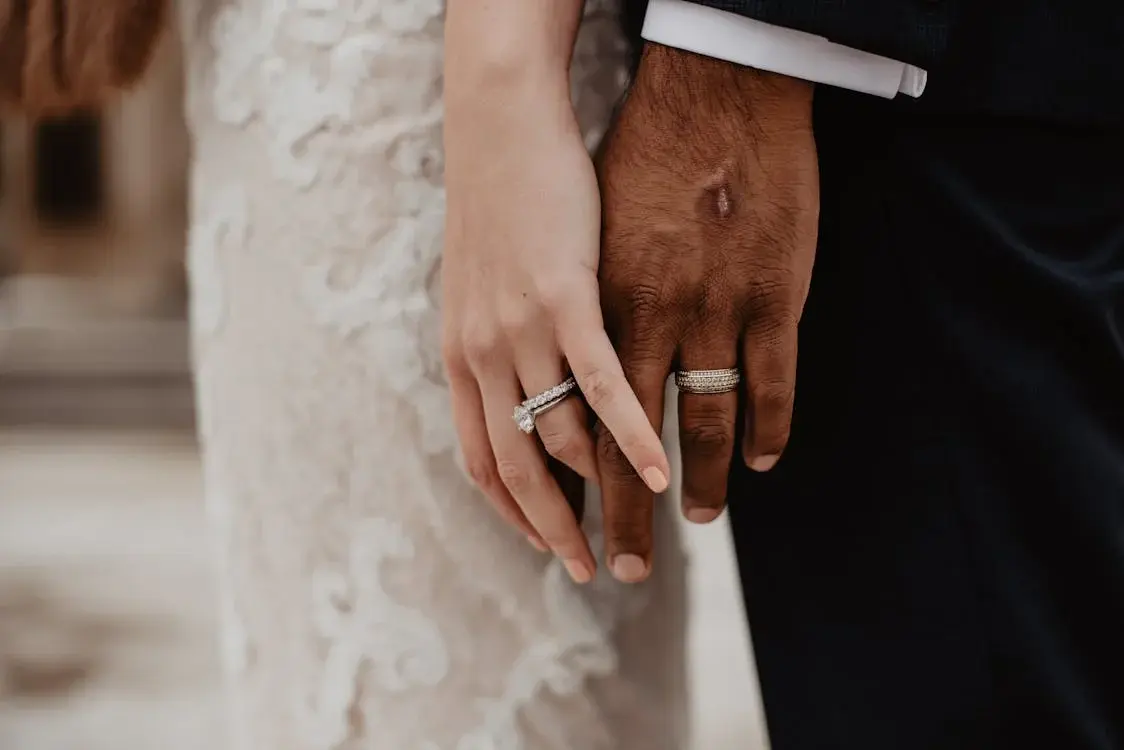
Questions about rings sit at the practical edge of tradition.
Most couples in the US wear the wedding band on the left hand, on the ring finger.
Many follow the custom of placing the wedding band closest to the heart, then stacking the engagement ring above it.
Plenty of cultures do things differently.
Some Eastern European, Latin American, and Orthodox Christian traditions move the wedding ring to the right hand. Others treat engagement rings and wedding bands in separate ways.
Practical answers sound like this:
- What hand does the ring go on when you get married in a typical US ceremony? Left hand, ring finger.
- When you get married, what hand does the ring go on if your family follows a right-hand tradition? The right ring finger usually carries the band.
- When you get married, where does the ring go if you wear both an engagement ring and a wedding band? The band sits nearer the hand, and the engagement ring rests above it.
Rings express commitment and carry plenty of emotional meaning, yet no civil law forces a specific hand or stacking order.
Couples have room to follow their culture, their families, or their own preferences.
7. Health Insurance And Workplace Benefits
Employers and government programs treat marital status as a qualifying life event.
A newly married couple often gains the option to:
- Add a spouse to an employer health plan
- Compare employer plans and decide which one offers better coverage or pricing for both
- Review life insurance, disability coverage, and beneficiary designations in light of the new family unit
Plans usually give a limited window after the wedding for changes without waiting for the next open enrollment period.
Missing that window can delay coverage adjustments for months.
8. Your Credit Profile And Joint Accounts
Credit histories remain separate after marriage. Credit reports attach to each person’s Social Security number, not to the marriage itself, and bureaus do not create a joint file for a couple.
Marriage still affects credit indirectly:
- Joint loans and joint credit cards appear on both reports
- Late payments or high balances on shared accounts can harm both scores
- Community property rules in some states can treat certain debts taken on during marriage as shared responsibility
Marrying someone with poor credit does not drag down your score automatically.
Shared financial decisions can, especially if they involve co-signing, joint accounts, or mortgages that stretch the budget.
9. Property, Assets, And Community Property Rules
Property law shifts once a couple marries, although the details depend heavily on where they live.
Common law states typically treat ownership based on whose name appears on the title or the account.
Community property states tend to treat most income and assets acquired during the marriage as jointly owned, even if they sit in one person’s name.
Separate property usually includes:
- Assets owned before the marriage
- Gifts or inheritances given to one spouse
- Some personal injury awards
Commingling can blur lines. For example, using marital funds to improve a separate property home can create claims in certain situations.
Couples with significant assets often speak with a lawyer about prenuptial or postnuptial agreements that clarify expectations.
10. Immigration And Residency Options
Marriage can interact with immigration and residency, although nothing in this space works automatically.
Many countries allow a citizen or permanent resident to sponsor a spouse for visas or residency status. Processes involve forms, evidence of a real relationship, and interviews.
A valid marriage certificate sits at the center of this, yet approval never happens just because a couple got married.
Courtly supports couples who need a legally recognized US marriage certificate that they can later present in immigration or consular processes, subject to the rules of each specific country.
Courtly also arranges a lawful online ceremony with an independent, certified officiant and then guides couples on how to retrieve their certificate from the issuing authority.
Immigration cases always deserve advice from a qualified attorney. Marriage creates an opening. It does not guarantee an outcome.
11. Inheritance, Wills, And Beneficiaries
Spouses often gain stronger inheritance rights once married.
Intestacy laws in many jurisdictions give spouses a share when someone dies without a will. Exact percentages and interactions with children or other relatives depend on local statutes.
Most couples still benefit from written wills, updated beneficiaries, and powers of attorney.
Beneficiary designations on accounts such as retirement plans, life insurance, and some investment accounts usually override whatever a will says.
That means a former partner or parent can remain the legal beneficiary until paperwork changes.
Marriage should trigger a round of estate planning decisions so that the legal picture matches the couple’s current reality.
12. Everyday Documents And IDs
Many changes only take effect once you update the paperwork.
Common updates after marriage include:
- Social Security name record, if either spouse changes their name
- Driver’s license or state ID
- Passport
- Bank and credit card accounts
- Payroll records and direct deposit instructions
- Utility accounts, leases, or titles
- Airline, hotel, and travel loyalty profiles
Name changes, address changes, and marital status changes all feed into this same cluster of tasks. The more organized you are, the smoother this phase feels.
13. Financial Planning and Long-Term Goals
Marriage changes the planning horizon.
Two individual budgets and savings plans become one shared picture, even if some accounts stay separate.
Couples suddenly have to think about:
- A shared emergency fund
- Housing plans and potential moves
- Retirement contributions and long-term investment mix
- Children, education savings, and caregiving responsibilities
- Insurance coverage that protects both people
Financial planners often encourage newly married couples to build a simple household balance sheet and cash flow view.
That document shows assets, debts, income, and regular spending in one place so both partners see the same reality.
14. When You Get Married, What Changes And What Stays The Same?
People often ask one big question in different ways: when you get married what changes?
A simple way to think about it:
Changes automatically
- Legal status as spouse
- Some inheritance rights, especially without a will
- Access to new tax filing statuses
Changes only if you take action
- Last name and the name on your IDs
- Health insurance enrollment and other benefits
- Beneficiary designations on retirement accounts and policies
- Wills, powers of attorney, and broader estate plans
Does not change
- Social Security numbers
- Existing credit histories
- Pre-marriage debts that only one person signed for
Clarity helps more than guesswork here. Marriage works best when the emotional commitment sits on top of a clear, predictable legal and financial foundation.
Conclusion: Turning Commitment Into A Clear Plan

Marriage joins two lives on paper and in practice. Feelings make that decision, yet law and money shape how it works day to day.
Couples who understand what actually changes when they get married tend to feel less blindsided later.
Legal status, taxes, insurance, property rules, and paperwork all move in a new direction. Social Security numbers, existing credit histories, and old debts usually do not.
The difference sits in where the law acts on its own and where you have to file forms and make choices.
Courtly focuses on the part that comes first: helping couples secure a valid US marriage certificate through an online ceremony, wherever they live.
Once that foundation exists, guides on marriage certificates, name changes, and legal tasks after the wedding help couples build the rest of their plan with fewer surprises.
One final note. This article shares general information, not legal, tax, or financial advice for any specific situation. Talking through your own details with a lawyer, tax professional, or financial planner turns the facts in this guide into a plan that fits the life you are building together.
FAQs
Do your bank accounts automatically become joint when you get married?
No. Marriage does not automatically turn individual bank accounts into joint accounts. Existing accounts remain in each person’s name unless you choose to open a joint account or add your spouse as a co-owner. Any account you keep separate stays legally yours.
When you get married, do both spouses have the same credit score?
No. Even after marriage, each spouse keeps their own credit report and score. Your history remains tied to your Social Security number. Scores only start to influence each other when you open joint credit, co-sign loans, or share responsibility for new accounts.
Does health insurance automatically update when you get married, or do you have to enroll your spouse?
Health insurance doesn’t change automatically when you get married. Marriage creates a “qualifying life event,” which gives you a limited enrollment window to add your spouse or switch plans. If you don’t enroll during that window, you may have to wait until open enrollment.
Let us handle the paperwork.
Getting married is complicated. Courtly simplifies the process and provides everything necessary to get married online, including providing a licensed officiant who can perform a remote ceremony.
Get Married

Get married online.
Getting married is complicated. Courtly simplifies the process and provides everything necessary to get married online.

