

People talk about citizenship through marriage as if it’s a shortcut. Others make it sound impossible.
Couples stuck between countries hear five different stories from five different people, and no one seems to agree on how the process actually works.
That confusion is usually worse than the paperwork itself.
The truth sits somewhere in the middle.
Marriage does create a pathway, but it comes with rules, timelines, and responsibilities that aren’t always obvious when you’re just trying to build a life together.
Some couples live apart, some are waiting on visas, some are figuring out where to start, and all of them want clarity without getting lost in legal jargon.

This guide gives you what most people struggle to find: a clear, human explanation of what this path really looks like, what “being eligible” means, what to prepare, and how your everyday life as a couple shapes the outcome.
No shortcuts, no scare tactics; just the information you need to move forward confidently.
What “Citizenship Through Marriage” Actually Means
People often assume that marrying a US citizen leads straight to a passport.
It doesn’t.
Citizenship through marriage is simply a faster eligibility pathway, not an automatic benefit.
You still need a lawful marriage, a green card, and time living in the US before gaining citizenship through marriage becomes possible.
Here’s what it actually means in legal terms:
- A valid marriage comes first
The marriage must be civilly recognized in the jurisdiction where it took place. Religious-only ceremonies don’t qualify for immigration.
Cross-border couples often need a marriage certificate acceptable to US immigration before even applying for citizenship through marriage becomes possible later.
- Green card status is the real gateway
A US citizen spouse files Form I-130, and the foreign spouse becomes a lawful permanent resident through adjustment of status or consular processing.
Without a green card, there is no route to getting citizenship through marriage.
- Naturalization is the final step; not marriage.
Only after becoming a permanent resident can a spouse use the “3-year rule” to apply for naturalization.
That rule has its own conditions: living together in marital union, meeting residence expectations, and passing the English/civics requirements.
This phase is separate and evaluated independently from the marriage and green card stages.
The takeaway: Citizenship through marriage works, but only when each step is followed cleanly, with no gaps in eligibility and no assumptions that marriage alone will do the job.
USCIS treats each stage separately, and skipping any step makes later citizenship impossible.
Eligibility Requirements For Citizenship Through Marriage
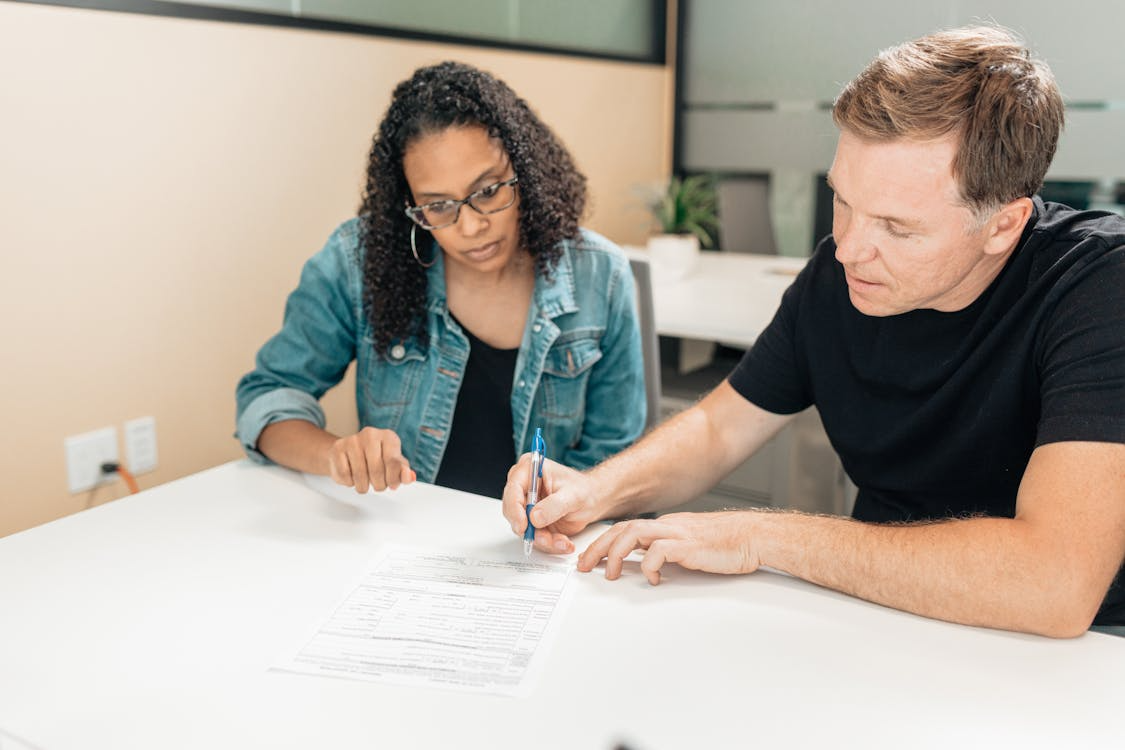
Before thinking about forms and interviews, it helps to be brutally clear on who can even use the “citizenship through marriage” route. It is not enough to be married to a US citizen; you need to meet several separate eligibility tests.
1. Valid, civilly recognized marriage
USCIS only accepts marriages that are legally valid where they took place.
That means:
- A civil marriage certificate issued by a government authority (a religious-only ceremony is not enough).
- Divorce or death certificates for all prior marriages for both spouses.
- Certified translations if any document is not in English.
Couples who live in different countries or can’t meet easily sometimes use a US jurisdiction that allows online civil marriages.
Services like Courtly help couples get a government-issued US marriage certificate remotely, which USCIS accepts as the civil proof needed to begin the immigration process.
2. Permanent resident (green card) status
You cannot skip straight to citizenship through marriage.
You first need to become a lawful permanent resident (LPR) through a marriage-based green card. That usually means:
- Your US citizen spouse files Form I-130 (Petition for Alien Relative).
- You either adjust status inside the US (Form I-485) or go through consular processing abroad (DS-260 + embassy interview).
Only once you are an LPR can you even start thinking about gaining citizenship through marriage later.
3. Three-year rule for naturalization based on marriage
The “citizenship through marriage” shortcut is really the three-year naturalization rule. To use it, you must:
- Have been a lawful permanent resident for at least 3 years.
- Have been living in marital union with the same US citizen spouse for those 3 years (no separation, divorce, or annulment in that period).
- Your spouse must have been a US citizen for those 3 years (or since they naturalized, if later).
If any of this breaks, you usually fall back to the regular 5-year rule, not the 3-year option.
4. Continuous residence and physical presence
USCIS looks at where you have actually been living:
- Continuous residence: You must have lived in the US as a green card holder for 3 years without long trips that break residence (trips of 6+ months can cause problems).
- Physical presence: You need at least 18 months (540 days) physically in the US during those 3 years.
Short vacations are fine; repeated or long absences are not.
5. Living “in marital union” with your US citizen spouse
For getting citizenship through marriage, USCIS expects:
- You and your US citizen spouse to live together in the same household, with limited exceptions (work travel, short temporary separations).
- No divorce, annulment, or legal separation before your oath ceremony.
If the marriage ends before you naturalize, you cannot use the 3-year marriage-based rule and may have to wait until you qualify under the 5-year rule.
6. Good moral character and clean record
You must show good moral character during the 3-year period (and often beyond that). USCIS looks at:
- Criminal history (DUIs, theft, violence, drug offenses, etc.).
- Fraud or misrepresentation in immigration forms.
- Failure to file or pay taxes.
- Unpaid support obligations, if ordered by a court.
Certain offenses can permanently bar naturalization; others create serious delays or require legal help.
7. English and civics requirements
Unless you qualify for an age- and time-based exemption, you must:
- Show basic English ability (reading, writing, and speaking).
- Pass a civics test covering US history and government.
There are special rules for applicants over certain ages with long-term green card residence, but most people using citizenship through marriage will still take both tests.
If you line these requirements up and they all check out, then using a marriage-based route to naturalization becomes possible.
If one of them is weak or missing, the path may still exist, but the timing and strategy change.
How Citizenship Through Marriage Works Step by Step

Once you know you’re eligible, the real question is simple: what actually happens first, second, and third?
The process from “we got married” to “I became a US citizen” is basically four stages.
Step 1: Get legally married and secure your marriage certificate
Everything starts with a civilly valid marriage. For USCIS, that means:
- You follow the local rules where the wedding happens (license, officiant, witnesses, registration).
- You get a government-issued marriage certificate, and later, certified copies.
For cross-border couples who cannot easily meet in the same country, a remote civil ceremony through a US jurisdiction that allows online marriage can be a practical way to get a certificate that USCIS will accept as proof of marriage.
Once you have that certificate, you can move to the immigration part.
Step 2: Apply for a marriage-based green card
This is where applying for citizenship through marriage actually begins, even though you are not filing the citizenship form yet.
There are two main paths:
- Inside the US (Adjustment of Status):
- US citizen spouse files Form I-130.
- Foreign spouse files Form I-485 to adjust status to permanent resident.
- You submit evidence that the relationship is real: joint lease, bank accounts, photos, messages, travel tickets, affidavits from friends and family.
- Outside the US (Consular Processing):
- US citizen files Form I-130.
- Once approved, the case is forwarded to the National Visa Center and then to a US consulate.
- The foreign spouse completes DS-260, has a medical exam, and attends a visa interview.
In both routes, getting citizenship through marriage later depends on this step being clean: the marriage must be bona fide, not just for papers.
Step 3: Receive your green card and, if needed, remove conditions
When the marriage-based green card is approved:
- If you have been married less than 2 years, you receive a 2-year conditional green card.
- If you have been married 2+ years, you receive a 10-year regular green card.
For conditional cards, there is a crucial extra step:
- You must file Form I-751 (petition to remove conditions) in the 90-day window before the card expires.
- Normally, you file jointly with your US citizen spouse and prove the marriage continued in good faith: updated joint documents, kids’ birth certificates (if any), updated leases or mortgages, new photos.
If you do not remove conditions, your status can be terminated and the citizenship through marriage route effectively closes.
Once the conditions are removed, you hold standard permanent resident status.
Step 4: Apply for naturalization under the 3-year marriage rule
Only after you’ve been a green card holder for 3 years, and while still married and living with your US citizen spouse, can you apply for naturalization through marriage.
Key points:
- You can file Form N-400 up to 90 days before your 3-year green card anniversary if you meet all the marital union, residence, and physical presence rules.
- You attend a biometrics appointment, then a naturalization interview, where the officer:
- Tests your English and civics (unless exempt).
- Reviews your entire immigration history.
- Confirms that your marriage is still genuine and that you meet all criteria.
- If approved, you attend the oath ceremony. Only at that moment do you actually gain US citizenship through marriage.
If your marriage ends or you fall short on residence, you may still naturalize later under the 5-year rule, but the fast 3-year path no longer applies.
Typical Timelines for Citizenship Through Marriage (and What Actually Affects Them)
The journey from marriage to citizenship through marriage doesn’t follow a single, predictable timeline.
Every couple moves through the same milestones, but how long each stage takes depends on where you file, how strong your evidence is, and how busy your local USCIS office or consulate is.
Here is the realistic flow:
I-130 (Petition for Alien Relative): Most cases take several months, but some service centers stretch past a year. Delays are common when relationship evidence is thin or when background checks take longer.
Adjustment of Status (I-485) inside the US: Expect 8–18 months, depending on the field office. Cities with high immigrant populations (NYC, LA, Houston) usually run slower. Interview backlogs or medical exam issues can also extend the wait.
Consular Processing Abroad: Generally 6–12+ months, heavily influenced by the specific consulate. Some posts (e.g., India, Pakistan, the Philippines) face heavier queues, while smaller posts may move faster.
Removing Conditions (I-751): Timelines vary widely, often several months, sometimes over a year. USCIS may extend the green card automatically while this is pending.
Naturalization (N-400) under the 3-year rule: After filing, expect 6–12 months to receive an interview, decision, and oath ceremony. Field office workload plays the biggest role here.
What slows cases down: Missing documents, inconsistent cohabitation proof, international travel that disrupts continuous residence, name mismatches, security checks, RFEs, or evidence that doesn’t clearly show a bona fide marriage.
A clean file with consistent joint evidence usually moves faster and helps ensure the citizenship through marriage timeline stays on track.
Conclusion — Your Realistic Path to Gaining Citizenship Through Marriage
Marrying the person you love is the easiest decision you’ll make. Navigating immigration after that is the work that follows.
The honest path is simple to describe but often slow in practice: get a legally recognized marriage certificate, secure permanent resident status, then meet the residency and moral-character rules before applying for naturalization.
Build your file methodically: civil documentation, joint financial life, photos across time, and affidavits from people who know you.
If geography or logistics make a civil, recognized marriage hard (different countries, deployments, or travel limits), consider a legally valid US civil ceremony from a jurisdiction that issues remote certificates; it’s a pragmatic way to start the immigration clock without forcing anyone into risky travel.
Courtly can help couples in that exact scenario by arranging a government-recognized online civil ceremony and delivering certified documentation you can use for I-130 or consular processing.
It doesn’t replace legal advice, but it often solves the administrative block that stalls families.
When you’re ready to begin, treat the paperwork as part of your shared plan, not an obstacle, and build the evidence now so your later steps move fast and clean.
FAQs
1. How long does it take to get citizenship through marriage?
Real answer: From marriage to naturalization typically takes several years. First you must get a green card (many routes 8–18+ months), hold permanent residency (usually three years under the spouse rule), then successfully complete naturalization processing (interview & oath). Delays depend on USCIS backlogs and evidence quality.
2. Can I start the immigration process with a remote/online marriage?
Yes if the marriage certificate is legally issued by a jurisdiction USCIS accepts. Some US jurisdictions allow remote civil marriages; a valid, certified US certificate can be used to file I-130 or adjustment forms. Confirm the issuing authority and retain certified copies for immigration filings.
3. What evidence is strongest to prove a marriage is bona fide?
Joint financial and residential records rank highest: joint tax returns, shared mortgage/lease, joint bank accounts, joint insurance, and consistent official documents. Supplement these with photos across time, travel/itinerary evidence, and sworn affidavits. The more independent third-party proof you have, the safer your case.
Let us handle the paperwork.
Getting married is complicated. Courtly simplifies the process and provides everything necessary to get married online, including providing a licensed officiant who can perform a remote ceremony.
Get Married

Get married online.
Getting married is complicated. Courtly simplifies the process and provides everything necessary to get married online.

