

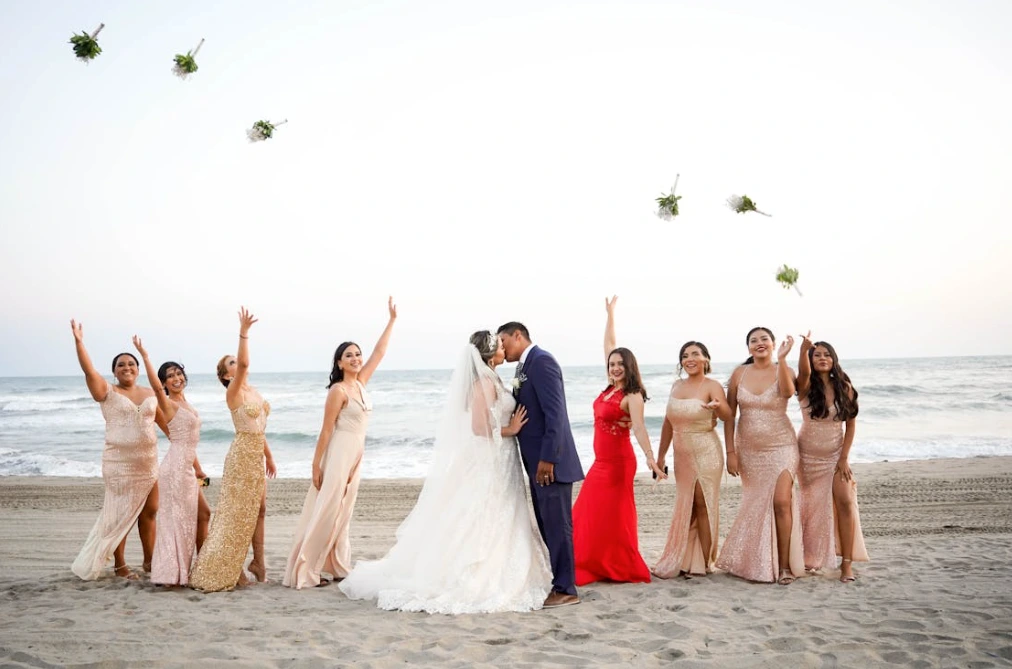
American weddings don't follow one script because America never had one culture.
Walk into a wedding in Pittsburgh, and you might find a table stacked with dozens of homemade Italian cookies like pizzelles, biscotti, and anginetti baked by aunts and grandmothers over weeks.
Drive to New Orleans, and you'll watch a couple jump a broom while guests cheer.
Head to a ceremony in New Mexico, and you might see godparents drape a floral lazo around the couple while a priest offers blessings.
What most people call "traditional American weddings" with a white dress, church ceremony, and tiered cake actually reflects white Protestant customs that became dominant in the mid-20th century.
Meanwhile, Italian families kept dancing the tarantella. Mexican families kept passing coins. African American families kept honoring ancestors through libation ceremonies.
American weddings are inherently multicultural, shaped by immigration, Indigenous practices, and constant blending across generations.
The shift happening now: younger generations are asking what their great-grandparents did at weddings and bringing back practices that got quietly dropped.
Here's what different communities are actually doing at weddings today.
American Wedding Traditions by Community
American weddings reflect dozens of distinct cultural heritages: Italian, Mexican, African American, Chinese, Korean, Filipino, Jewish, Middle Eastern, Caribbean, and many more.
This article focuses on traditions with strong regional presence and historical significance in the United States.
The table below shows what communities and practices this guide covers.
African American and Black American Wedding Traditions
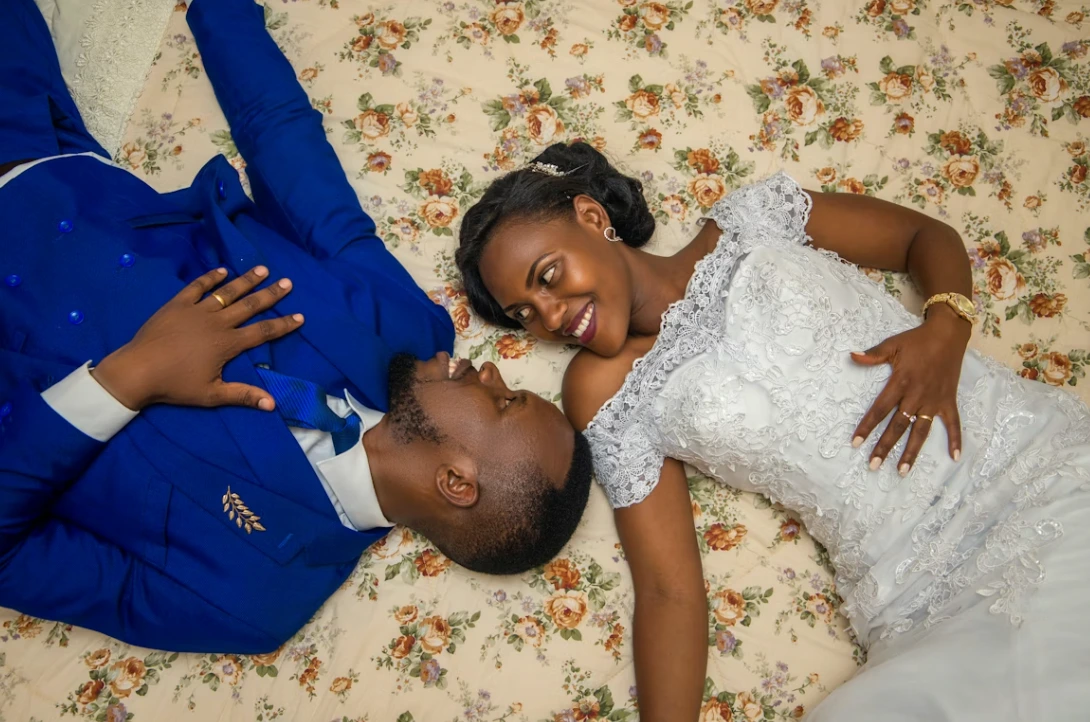
Jumping the Broom
What it is: An African American wedding tradition where couples jump over a broom together at ceremony's end, symbolizing sweeping away the old life and stepping into the new.
Jumping the broom carries weight that goes beyond the moment itself.
During slavery, enslaved people couldn't legally marry. They created their own ceremonies, and jumping over a broom together became one symbolic way to publicly declare commitment.
The broom represented sweeping away the old life and stepping into a new one together.
Today, Black American couples jump the broom to honor ancestors denied legal recognition of their marriages and to create a moment of cultural pride.
How it works:
- Happens at the ceremony's end, before or after the recessional
- Officiant explains the tradition's history
- Couple jumps together while guests cheer
- Some families use brooms passed down through generations
It's more common in Southern states and among families with deep historical consciousness about slavery's legacy.
Libation Ceremony
What it is: A ritual where someone pours water or wine while speaking the names of deceased family members, creating a connection between the living and ancestors.
A libation ceremony says something simple: the people who came before you still matter.
Someone pours water or wine while speaking the names of deceased family members, grandparents, parents, and ancestors, who shaped the family.
The practice comes from West African traditions, particularly Yoruba, where pouring liquid while speaking names creates a connection between the living and dead.
The couple isn't starting from scratch. They're continuing something that began long before them.
Other Key African American Wedding Traditions
Money Dance: Guests pin money to the couple's clothing during a reception dance. The money helps start married life and represents community investment in their future.
Tasting the Four Elements: The couple tastes something sour (disappointment), bitter (hardship), sweet (joy), and hot (passion). This acknowledges marriage includes all types of experiences, not just the good ones.
Cultural Reclamation: Younger Black American couples increasingly incorporate African fabrics like kente cloth, drumming, and Afrocentric elements, balancing African heritage with African American cultural expressions developed in the United States.
Italian American Wedding Traditions
Italian American weddings feel grand, communal, and centered around food and celebration, whether the ceremony is Catholic, Protestant, or secular.
The Tarantella Dance
The tarantella turns the reception into a participatory celebration.
Guests form circles around the couple, clapping in rhythm while the couple dances in the center. The music is fast, loud, energetic, and impossible to not dance to.
Strongest in the Northeast cities like New York, New Jersey, and Pennsylvania, particularly among families where Italian immigration is relatively recent.
The tradition connects weddings to Italian village celebrations where the whole community danced together.
Cookie Tables
What it is: An Italian American wedding tradition (strongest in Western Pennsylvania and Ohio) featuring dozens of varieties of homemade cookies baked by family members, displayed on a dedicated table for guests to take home.
If you've never seen an Italian American wedding in Western Pennsylvania or Ohio, the cookie table will surprise you.
Dozens of varieties of homemade Italian cookies like pizzelles, biscotti, anginetti, rainbow cookies, sfogliatelle, and cannoli, baked by family members over weeks. Guests fill boxes to take home.
It's not about the wedding cake. It's about everyone contributing something, showing love through feeding people, and doing it together.
The cookie table represents collective effort. Marriage isn't just about two people; it's about the families and community supporting them.
Other Italian American Traditions
Money Dance: Guests pin money to the couple during a dance. Italian American weddings also trend toward cash gifts. Envelopes are strongly preferred over registry items.
Multi-Course Feast: Meals often include antipasto, soup, pasta, fish, meat, salad, and dessert. The emphasis is on abundance and leisurely family dining that can stretch for hours.
Bomboniere: Small bags of sugared almonds (typically five) given to guests, representing health, wealth, happiness, fertility, and longevity.
For Italian Catholic wedding ceremony traditions and how these customs integrate into Catholic Mass, see our guide to Catholic Wedding Traditions.
Latin American Wedding Traditions
Latin American Wedding Traditions
"Latin American" encompasses many distinct cultures: Mexican, Colombian, Puerto Rican, Dominican, Cuban. These traditions reflect cultural heritage and appear at weddings across different religious backgrounds.
Cultural Symbols: Lazo and Arras
Many Latin American weddings incorporate symbolic elements that represent unity and shared responsibility:
El Lazo (The Lasso): A large rosary, rope, or floral cord placed in a figure-eight around the couple, symbolizing eternal unity.
In Catholic ceremonies, godparents place it during Mass. In secular or Protestant weddings, it may be incorporated during vows or omitted.
Las Arras (The Coins): Thirteen gold coins representing prosperity and shared financial responsibility. Traditionally, the groom gives them to the bride.
In Catholic weddings, a priest blesses them; in other ceremonies, an officiant or family elder may present them.
Padrinos y Madrinas (Godparents/Sponsors)
Latin American weddings often designate multiple godparents who sponsor specific elements: Bible, coins, lasso, cake, and bouquet.
This tradition appears in Catholic, Protestant, and secular Latin American weddings, emphasizing that marriage is supported by the entire community, not just two individuals.
Reception Traditions
Mariachi Music: Mexican American weddings often feature mariachi bands, creating an atmosphere of cultural pride that pulls everyone into participation.
Money Dance (El Baile del Billete): Guests pin money to the bride's dress or groom's suit during a special dance, contributing to the couple's new life together.
These cultural traditions honor Latin American heritage regardless of the ceremony's religious context.
South American Wedding Traditions
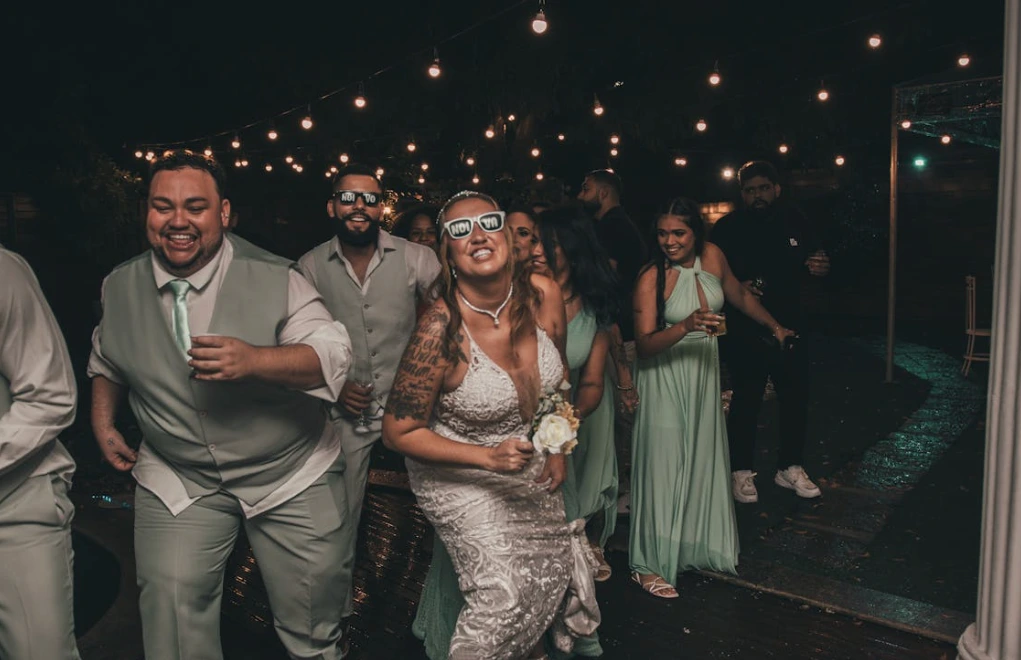
Alt Tag: Bride and groom dancing with guests at wedding party while wearing sunglasses. Source
While South American countries share some Latin American customs, they also have region-specific traditions that reflect their distinct cultures.
These traditions focus primarily on reception celebrations.
La Hora Loca (The Crazy Hour)
What it is: A late-reception tradition where masks, props, and noisemakers suddenly appear, the DJ switches to high-energy music, and the party gets a second wind.
Late in the reception, often around midnight when energy starts flagging, masks, props, noisemakers, and glow sticks suddenly appear.
The DJ switches to high-energy reggaeton, salsa, cumbia, or electronic dance. Guests grab props and the party gets a second wind.
Popular in Colombian, Venezuelan, and Peruvian communities. The tradition extends celebrations well into the night and prevents the party from dying down after dinner and formal dances end.
In Colombian weddings specifically, la hora loca often includes elaborate costumes, LED props, and coordinated dance performances by the wedding party.
Regional South American Reception Traditions
Colombian weddings often feature cumbia dancing and may include the "crazy hour" with professional dancers or entertainers leading guests.
Peruvian weddings sometimes incorporate traditional dances like the marinera and may include cake-pulling ribbons (cintas) where single women pull ribbons attached to the cake.
One ribbon has a ring, predicting who will marry next.
Venezuelan weddings may include joropo dancing and often emphasize extended family involvement with multiple padrinos sponsoring different elements.
Argentine weddings frequently feature tango demonstrations and emphasize late-night celebrations that extend until dawn.
Native American Wedding Traditions
There are over 570 federally recognized tribes, each with distinct practices.
Generalizing "Native American weddings" as one thing is inaccurate and harmful. What follows are traditions in some communities, not universal customs.
The Blanket Ceremony
Some tribes, particularly Navajo and Cherokee, practice wrapping the couple together in a single blanket (often blue, representing new life), symbolizing unity. An elder or officiant performs the wrapping while offering prayers.
This is specific to certain tribes and doesn't apply universally.
The blanket ceremony represents two individuals coming together as one while being wrapped in the warmth and protection of their community and ancestors.
Honoring the Four Directions
Some tribal traditions include prayers offered to North, South, East, and West, each holding spiritual significance. A fire ceremony may accompany this.
Specifics vary by tribe; what the four directions represent, how prayers are conducted, and who leads the ceremony all depend on tribal-specific spiritual practices.
Elders' Blessings
Across many communities, elders play a central role. Their blessings, prayers, and wisdom matter more than specific rituals.
Elders may share oral traditions, offer prayers in tribal languages, or speak about the couple's responsibilities to the community and future generations.
This emphasizes that marriage isn't just about two individuals. It's about continuing the community and honoring those who came before.
Important Context
Centuries of cultural suppression, forced assimilation through boarding schools, and deliberate erasure mean many Native Americans grew up with Christian weddings, not traditional tribal ceremonies.
Now some couples research what their great-grandparents practiced and work to bring ceremonies back.
Others blend Christian and tribal elements, creating hybrid ceremonies that honor both their tribal heritage and the religious practices their families adopted.
Key point: If you want to know about a specific tribe's wedding traditions, ask someone from that tribe. Practices are not universal.
Some traditions aren't meant to be shared outside the community, and that boundary should be respected.
What Modern American Couples Actually Do
Most couples today navigate multiple heritages, regional expectations, and personal values while creating authentic weddings.
Blending Multiple Heritages
Couples with different backgrounds choose which traditions to include from each side.
An African American and Italian American couple might include both jumping the broom and the tarantella dance.
A Mexican American and Jewish couple might incorporate las arras alongside the ketubah signing.
A second-generation Chinese American marrying a third-generation Irish American might blend tea ceremonies with Celtic handfasting.
The key: Discussing which traditions hold genuine meaning versus which feel obligatory. One meaningful ritual beats five forced practices you're including because "we're supposed to."
What this looks like in practice:
- Researching what each tradition actually means (not just performing it because it looks good)
- Talking to family members who've practiced these traditions about why they matter
- Making intentional choices about what to include, what to modify, and what to skip
- Explaining to guests why you've chosen specific traditions so they understand the significance
Reclaiming Cultural Identity
Millennials and Gen Z are reclaiming traditions their parents or grandparents minimized or dropped entirely.
Second-generation immigrants sometimes downplayed their heritage to fit in: Anglicizing names, speaking only English at home, adopting "American" customs completely.
Their children now see cultural specificity as valuable and ask elders about practices quietly dropped decades ago.
This shows up as:
- Third-generation Italian Americans researching what their great-grandparents did in Sicily, not just the Americanized versions
- Young Latino couples incorporating traditional dress or music their parents skipped
- Black Americans researching West African traditions beyond just the American interpretations
- Asian Americans incorporating language, dress, and ceremonies their parents considered "too ethnic"
When One Partner Has Strong Cultural Ties
If one partner has strong cultural traditions and the other doesn't, balance matters.
Approaches that work:
- The partner without strong traditions learns about and participates in their partner's customs genuinely
- Couples incorporate smaller meaningful elements rather than overwhelming the less-culturally-connected partner
- The culturally-connected partner educates their partner beforehand so nothing feels foreign during the ceremony
- Both partners research the less-connected partner's heritage—sometimes there are traditions they just don't know about
What doesn't work:
- One partner performing traditions they don't understand or believe in
- Skipping all cultural elements to keep things "neutral"
- One family's traditions dominating without acknowledging the other partner
- Assuming the partner without obvious cultural traditions has no heritage worth honoring
Legal Marriage Separate from Cultural Ceremony
Some couples handle legal paperwork separately from their cultural ceremony, removing administrative pressure from the traditional celebration.
If you're coordinating multiple cultural traditions or managing family expectations across different backgrounds, separating legal marriage simplifies the process.
Courtly provides government-issued U.S. marriage certificates through online ceremonies legally recognized in 150+ countries.
Couples can handle legal requirements first, then plan their cultural ceremony without worrying about marriage license timing, witness availability, or government filing deadlines.
This is especially helpful for international couples, military families facing deployment, or couples coordinating complex multicultural ceremonies.
How to Choose Which Traditions to Include
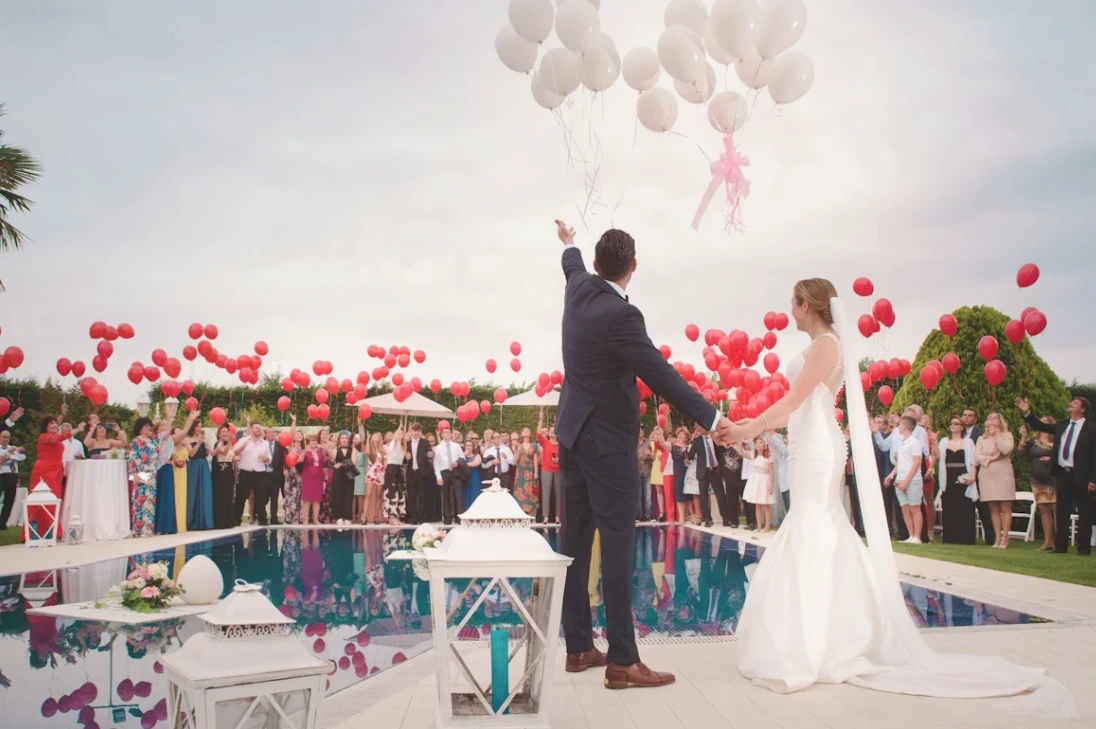
Start with What Feels Meaningful
Ask yourself: "Does this tradition mean something personally, or am I including it because I think I should?"
If you can't articulate why a tradition matters to you, beyond "it's what people do," consider whether you actually want it.
Questions to ask:
- Does this tradition connect me to my family's history?
- Do I understand what it represents?
- Will including this make the ceremony feel more like us or less like us?
- Am I doing this for my family's expectations or because it genuinely matters to me?
Research Your Family's Specific Traditions
Ask parents, grandparents, aunts, and uncles. What you think is "the Italian way" might be specific to your family's region in Italy or something they adopted after immigration.
Questions to ask your elders:
- What happened at your wedding? Your parents' wedding?
- What traditions did you stop doing? Why?
- What do you wish you had included?
- Are there regional variations? (Northern Italy vs. Southern Italy, for example)
- What did your family do that other families in the community didn't?
Some practices were lost during immigration when families assimilated. Your grandparents might remember things your parents never mentioned.
If your family doesn't remember or won't talk about it:
- Research regional customs from where your family originated
- Connect with cultural organizations or community centers
- Hire cultural consultants who specialize in traditional ceremonies
- Accept that some knowledge is genuinely lost and focus on creating new meaningful rituals
Communicate with Your Partner
Discuss which traditions each person values most. Find common ground when traditions conflict.
Scenarios to navigate:
If traditions directly conflict: Mexican Catholic ceremonies can be lengthy with specific religious elements.
Jewish ceremonies have different timing requirements. Talk through which elements are non-negotiable versus flexible.
If one tradition overshadows others: Italian multi-course feasts take hours. If your partner has specific reception traditions, discuss timing so nothing gets rushed or skipped.
If families have different expectations: One family expects a formal Catholic mass. The other expects an outdoor ceremony with tribal blessings.
Find a compromise. Separate religious and legal ceremonies, blend elements thoughtfully, or create two ceremonies honoring both traditions.
If you're third-generation and your partner is first-generation: The intensity of cultural connection differs. The first-generation partner might have strong feelings about language, dress, and specific rituals.
The third-generation partner might feel less connected but still wants to honor heritage. Balance authentic participation with genuine respect for the more-connected partner's needs.
Set Boundaries with Family
Some family members may expect traditions you don't want. Others may want you to minimize cultural elements.
What clear communication sounds like:
- "We appreciate how important this is to you, and we've decided to honor it this way instead."
- "We're including [tradition] because it connects us to [specific family member/history], but we're skipping [other tradition] because it doesn't resonate with us personally."
- "We understand this was meaningful at your wedding. For our ceremony, we're approaching it differently."
When family members push back:
- Acknowledge their feelings without changing your plans
- Explain your reasoning if you're comfortable, but you don't owe extensive justification
- Redirect: "We've made our decision. We'd love your support, but we understand if that's difficult."
Regional Variations in American Wedding Traditions
American Weddings Reflect American Diversity
"American wedding traditions" is inherently plural. There's no single template because America has never been culturally monolithic.
Modern couples have more freedom to choose traditions that connect them to heritage, family, and community. They can honor what's meaningful, leave behind what isn't, and create rituals reflecting their specific identity.
What matters isn't perfect adherence to every expectation. It's creating a wedding true to who you are and where you come from.
Whether you're honoring one tradition or blending several, clear legal documentation removes administrative stress.
Courtly helps couples get legally married online with government-recognized certificates accepted for immigration, name changes, and all legal purposes.
FAQs: American Wedding Traditions
What are traditional American wedding customs?
Mainstream American weddings often include a white dress, ceremony with vows, cake cutting, and first dance.
However, "American" traditions vary significantly by cultural heritage. African American weddings may include jumping the broom and libation ceremonies.
Italian American celebrations feature tarantella dances and cookie tables.
Latin American ceremonies incorporate lazo and arras coins.
Native American weddings honor tribal-specific customs varying by community.
What is jumping the broom and why do African American couples do it?
Jumping the broom is an African American wedding tradition rooted in slavery, when enslaved people couldn't legally marry and created their own ceremonies.
The broom represents sweeping away the old life and stepping into the new together.
Modern Black American couples jump the broom to honor ancestors denied legal recognition and celebrate cultural resilience.
The tradition is most common in Southern states and among families with strong historical consciousness.
What are Black American wedding traditions?
Black American wedding traditions include jumping the broom at the ceremony's end, libation ceremonies where someone pours water or wine while speaking the names of deceased ancestors, money dances where guests pin cash to the couple, and tasting four elements (sour, bitter, sweet, hot) representing life's experiences.
Younger generations increasingly incorporate African fabrics like kente cloth, drumming, and Afrocentric elements that balance African heritage with African American cultural expressions.
What are common Italian American wedding traditions?
Italian American weddings often include the tarantella dance (fast-paced group dancing), cookie tables with dozens of homemade Italian cookies baked by family members, multi-course feasts lasting hours, money dances where guests pin cash to the couple, and bomboniere (sugared almond favors).
These traditions are strongest in Northeast and Midwest communities with Italian heritage, particularly families in New York, New Jersey, Pennsylvania, and Ohio.
What is the lazo ceremony in Latin American weddings?
El lazo is a large rosary, rope, or floral cord placed in a figure-eight around the couple during the ceremony, symbolizing eternal bond while maintaining individual identities.
Common in Mexican, Colombian, and other Latin American Catholic weddings, godparents (padrinos) typically place the lazo after vows, and it stays on the couple until the ceremony ends.
The figure-eight represents infinity and the intertwining of two lives.
What are South American wedding traditions?
South American wedding traditions include la hora loca (the crazy hour) where masks, props, and high-energy music revive the party late in reception. Most popular in Colombian, Venezuelan, and Peruvian communities.
Colombian weddings often feature cumbia dancing and elaborate hora loca performances. Peruvian weddings may include marinera dancing and cake-pulling ribbons.
Venezuelan weddings emphasize joropo dancing and extended family involvement.
Argentine weddings frequently feature tango and celebrations extending until dawn.
Are Native American wedding traditions the same across all tribes?
No. There are over 570 federally recognized tribes, each with distinct practices.
Some tribes practice blanket ceremonies (particularly Navajo and Cherokee), while others have completely different traditions.
Generalizing "Native American weddings" as one thing is inaccurate and harmful. Tribal-specific traditions should be learned from that community, and some aren't meant to be shared outside the tribe.
Always ask someone from the specific tribe about their practices rather than assuming universal customs.
Can you mix traditions from different cultures in one wedding?
Yes. Many couples successfully blend traditions from multiple heritages. An African American and Italian American couple might include both jumping the broom and the tarantella dance. A Mexican American and Jewish couple might incorporate las arras alongside the ketubah signing.
The key is choosing elements meaningful to both partners, communicating with families about expectations, and honoring each tradition respectfully rather than treating them as decorative elements.
Research what traditions actually mean before including them.
How do I choose which wedding traditions to include?
Start by asking whether each tradition means something personally or if you're including it out of obligation.
Research your family's specific traditions by asking parents, grandparents, and elders what they practiced and why.
Communicate with your partner about which traditions each person values most. Set boundaries with family members who have different expectations.
Focus on one meaningful ritual that connects you to family history rather than five obligatory practices that don't resonate with you.
What if my family doesn't remember our cultural wedding traditions?
If your family doesn't remember or won't discuss traditional practices, you can research regional customs from where your family originated.
Try to connect with cultural organizations or community centers that preserve these traditions, hire cultural consultants who specialize in traditional ceremonies.
You may have to accept that some knowledge is genuinely lost and focus on creating new meaningful rituals that honor your heritage in ways that feel authentic to you.
Let us handle the paperwork.
Getting married is complicated. Courtly simplifies the process and provides everything necessary to get married online, including providing a licensed officiant who can perform a remote ceremony.
Get Married

Get married online.
Getting married is complicated. Courtly simplifies the process and provides everything necessary to get married online.

