


If you married in the United States, including through a Utah online marriage, and want to register your marriage in the Philippines, you may need an apostilled marriage certificate to complete the Philippine Report of Marriage (ROM) process.
An apostille authenticates the origin of your U.S. marriage certificate so Philippine authorities can verify the document. The apostille does not automatically register your marriage in the Philippines. You must submit the required documents to the Philippine Embassy or Consulate with jurisdiction, which forwards the approved Report of Marriage to the Philippine Statistics Authority (PSA).
The process generally involves obtaining a certified marriage certificate, securing an apostille from the appropriate U.S. state authority, filing a Report of Marriage, and waiting for the marriage record to become available through the PSA.
This guide explains how to apostille a U.S. marriage certificate for use in the Philippines, where to apply, what the process costs, and how important legal terms affect your application.
Important: Apostille requirements, digital document acceptance, and Report of Marriage checklists can vary by issuing state and Philippine Consulate. Always verify the latest requirements with the office handling your application.
Get your marriage certificate apostilled through Courtly's document legalization service.
Do You Need an Apostille for a U.S. Marriage Certificate in the Philippines?
Yes. If you married in the United States and want to register your marriage with the Philippine civil registry, you generally need an apostille on your certified U.S. marriage certificate before filing a Report of Marriage with the appropriate Philippine Embassy or Consulate.
The apostille must be issued by the competent authority in the U.S. state where the marriage certificate originated. For Utah marriage certificates, this is the Office of the Utah Lieutenant Governor. For most other states, it is the Secretary of State.
After obtaining the apostille, submit the marriage certificate and the required supporting documents to the Philippine Consulate with jurisdiction. The approved Report of Marriage is then transmitted to the Philippine Statistics Authority (PSA) for registration.
Remember: An apostille authenticates the marriage certificate. The Report of Marriage registers the foreign marriage with Philippine authorities.
How to Get a U.S. Marriage Certificate Apostille for the Philippines
Getting a U.S. marriage certificate apostilled for use in the Philippines involves obtaining a certified marriage record, submitting it to the appropriate state authentication authority, and filing a Report of Marriage with the Philippine Embassy or Consulate.
The process depends on which U.S. state issued your marriage certificate. Utah has a different apostille authority from most other U.S. states.
Step 1: Obtain a Certified Copy of Your Marriage Certificate
Request an official certified copy of your marriage certificate from the county or state office that registered your marriage.
For a Utah online marriage, the certificate is generally issued through Utah County after the ceremony has been completed and recorded.
Check the following details before requesting an apostille:
Full legal names of both spouses
Date of marriage
Place of marriage
Government-issued certification, signature, or seal
Any spelling or date discrepancies
Do not confuse a marriage certificate with a marriage license. The license authorizes the marriage before the ceremony, while the certificate documents the completed marriage.
Step 2: Identify the Correct Apostille Authority
The apostille must come from the competent authority responsible for authenticating documents issued in the state where the marriage certificate originated.
For example:
Utah marriage certificate: Office of the Utah Lieutenant Governor
California marriage certificate: California Secretary of State
New York marriage certificate: New York Department of State
Texas marriage certificate: Texas Secretary of State
You cannot choose a different state's apostille authority simply because it is more convenient. The authority must be able to authenticate the document's origin.
Where Can You Get a U.S. Marriage Certificate Apostilled?
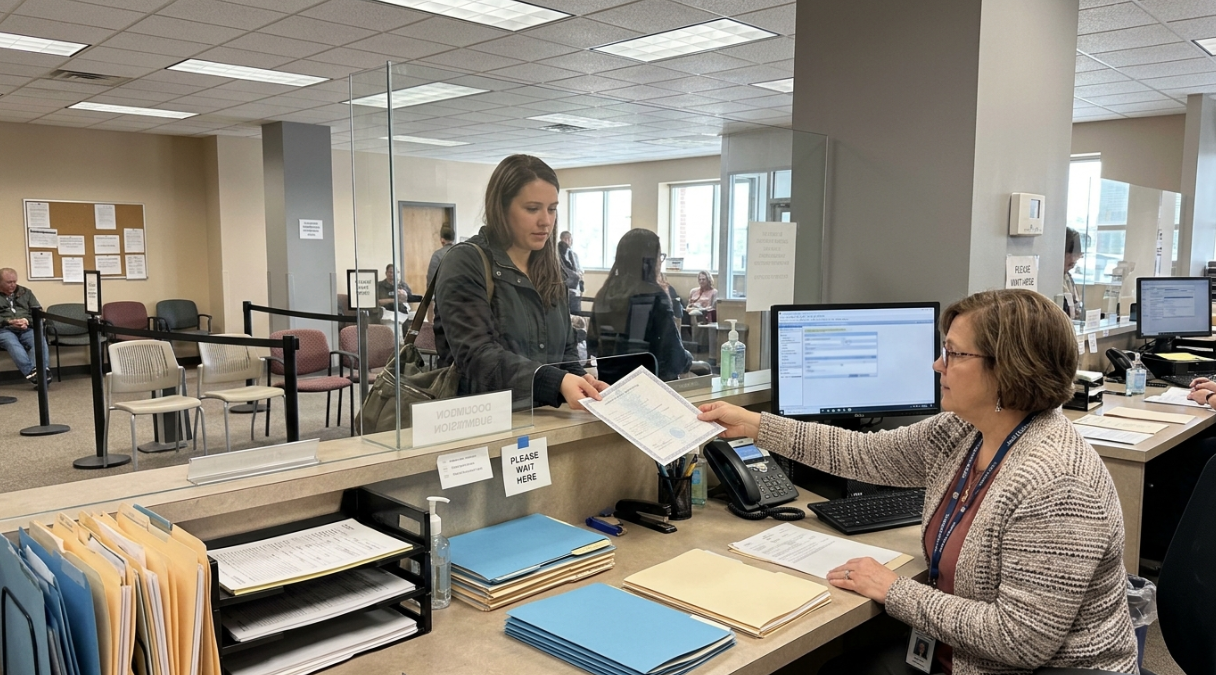
The correct apostille authority depends on the state that issued your marriage certificate. The issuing state's designated authority must authenticate the document.
Marriage certificate issued in | Apostille authority |
|---|---|
Utah | Office of the Utah Lieutenant Governor |
California | California Secretary of State |
New York | New York Department of State |
Texas | Texas Secretary of State |
Florida | Florida Department of State |
Other U.S. states | The state's designated competent authority |
Utah online marriage: If your marriage certificate was issued by Utah County, you must use the Utah Lieutenant Governor's Office rather than the Secretary of State of another state.
Always check the relevant state's official website for document eligibility, submission instructions, fees, and processing options.
Step 3: Submit the Marriage Certificate for an Apostille
Submit your certified marriage certificate through the applicable state authority's accepted application process.
For Utah documents, the Office of the Lieutenant Governor handles apostille and authentication requests. Its current services include online ordering and digital delivery for eligible documents, as well as traditional paper-document options.
Before submitting, confirm whether the Philippine Consulate handling your Report of Marriage accepts the particular digital or physical format being issued.
Step 4: Prepare Your Philippine Report of Marriage Documents
Once you have the apostilled marriage certificate, check the current Report of Marriage checklist of the Philippine Embassy or Consulate responsible for your application.
Depending on the consulate and your circumstances, supporting documents may include:
Completed Report of Marriage application forms
Original or certified apostilled marriage certificate
Photocopies of the marriage certificate and apostille
Philippine passport or other proof of Filipino citizenship
Foreign spouse's passport or identification
CENOMAR or other civil-status records, if required
Birth certificates or additional supporting records, if requested
Previous marriage termination documents, if applicable
Do not assume every consulate requires the same number of originals, photocopies, or supporting documents.
Step 5: File the Report of Marriage
Submit the application to the Philippine Embassy or Consulate with jurisdiction over your marriage registration.
Some consulates accept applications by mail, while others provide in-person or appointment-based services. Follow the filing instructions of the specific office.
The consulate reviews the documents and, once approved, transmits the Report of Marriage to the Philippine Statistics Authority.
Step 6: Obtain Your PSA Marriage Certificate
After the Report of Marriage has been transmitted and registered, the PSA can make the corresponding Philippine marriage record available.
The waiting period varies. Some Philippine consular offices advise applicants to allow approximately six months to one year, although actual processing and posting times may differ.
Once the record is available, you can request an official PSA-issued marriage certificate through the appropriate PSA service.
Important: Keep your approved Report of Marriage and any transmittal or reference details provided by the consulate. These can help you track the registration and request your PSA record later.
How Much Does a Marriage Certificate Apostille Cost?
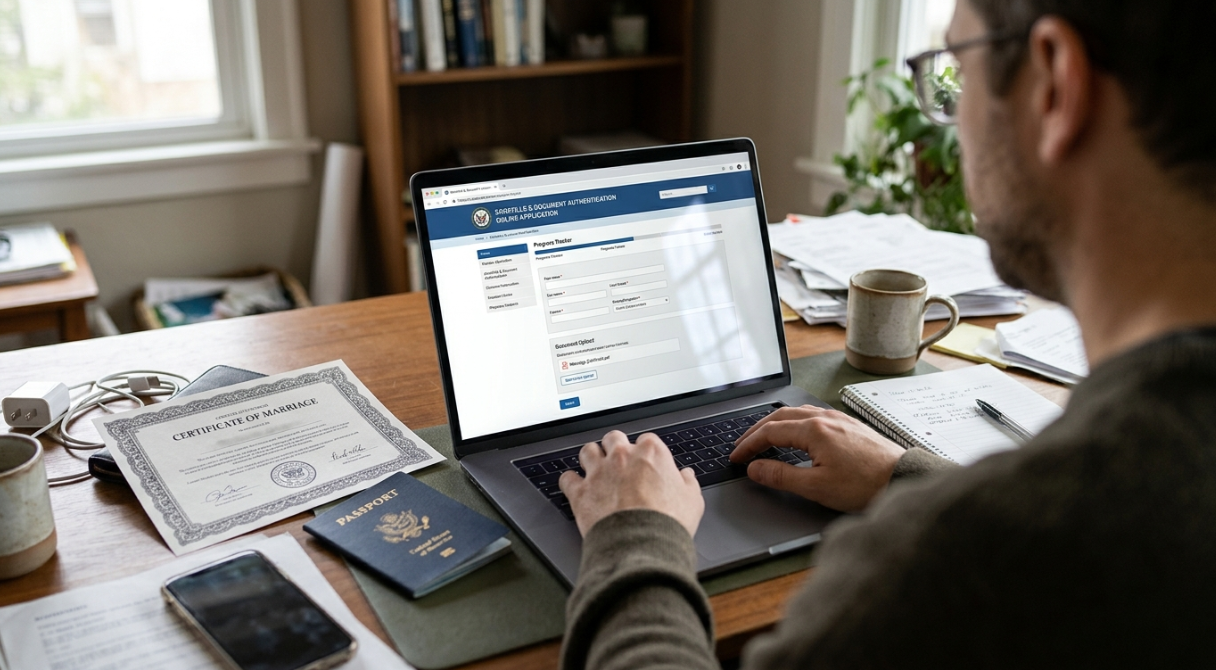
The cost of apostilling a U.S. marriage certificate depends on the state issuing the apostille, the processing speed, shipping arrangements, and whether you use a third-party document legalization service.
For Utah marriage certificates, the state fee schedule published by the Lieutenant Governor's Office lists the following charges:
Utah apostille service | Government fee |
|---|---|
Standard apostille | $19 per document |
Next-business-day processing | Additional $34 |
Same-day processing | Additional $74 |
These are state processing fees, not necessarily the total amount you will pay to receive an apostilled marriage certificate.
Additional costs may include:
Certified marriage certificate fees
County processing fees
Shipping and courier charges
Third-party document handling
International delivery
How Long Does the Apostille Process Take?
Processing time depends on the issuing authority and the delivery method.
For Utah documents, the published fee schedule identifies standard processing as three to five business days. However, this is not the total delivery time from the marriage ceremony to receiving the apostilled certificate overseas.
You should also account for certificate issuance, document submission, international delivery, and any additional processing.
Process | What affects the timeline |
|---|---|
Marriage certificate issuance | County recording and document preparation |
Apostille processing | State authority workload and selected service |
International delivery | Shipping method and destination |
Report of Marriage | Consulate review and application completeness |
PSA registration | Transmittal, posting, and civil registry processing |
Important: Treat government processing estimates and third-party service timelines as separate figures. Neither should be presented as a guaranteed end-to-end completion date.
Quick-Reference Table: Apostille and Marriage Registration Terms
Term | One-Line Definition |
|---|---|
Apostille | An official certificate authenticating the origin of a public document for international use |
Article 26, Family Code | Philippine law governing the recognition of qualifying marriages celebrated abroad |
Authentication | A process used to verify the origin of documents for international use |
CENOMAR | Certificate of No Marriage Record issued by the PSA |
Certified Marriage Certificate | An official certified record of a completed marriage |
Competent Authority | The government office authorized to issue apostilles |
DFA | Department of Foreign Affairs of the Philippines |
eApostille | An electronic apostille issued in digital format |
Hague Apostille Convention | The 1961 international treaty simplifying authentication of public documents |
Lex Loci Celebrationis | The legal principle referring to the law of the place where a marriage was celebrated |
Lieutenant Governor (Utah) | The Utah official whose office issues apostilles and authentications |
Marriage License | A legal authorization issued before a marriage takes place |
Marriage Certificate | The official record documenting a completed marriage |
PSA | Philippine Statistics Authority, which maintains the national civil registry |
Red Ribbon | The informal name for the former Philippine consular legalization process |
Report of Marriage (ROM) | The registration of a marriage celebrated outside the Philippines |
Secretary of State | The designated apostille authority in many U.S. states |
Utah County | The county authority responsible for Utah marriage records and related services |
Glossary of Key Terms
Apostille
An apostille is an official certificate that authenticates the origin of a public document for use in another country that participates in the Hague Apostille Convention. It verifies the authenticity of the signature, the capacity in which the person signing the document acted, and the identity of the seal or stamp on the document.
An apostille does not verify the accuracy of the document's contents or independently establish the legal validity of the event recorded in it.
Philippines context: The Philippines became a party to the Hague Apostille Convention on May 14, 2019. Since then, qualifying U.S. public documents intended for use in the Philippines generally require an apostille from the competent authority in the state of origin rather than the former Philippine consular legalization process.
For a U.S. marriage certificate, the apostille authenticates the certificate's official origin. The Philippine Consulate separately evaluates the document as part of the Report of Marriage application.
Common confusion: An apostille does not correct spelling mistakes, inaccurate dates, or incorrect personal information. Check your marriage certificate before submitting it for authentication.
For a more detailed explanation, see apostille vs. authentication.
Article 26, Family Code of the Philippines
Article 26 of the Philippine Family Code generally recognizes marriages celebrated outside the Philippines when they were performed in accordance with the laws of the country where they took place and are valid under those laws, subject to the exceptions provided by Philippine law.
Philippines context: Article 26 provides the legal foundation for recognizing qualifying foreign marriages in the Philippines. This can include marriages performed through legally authorized remote-appearance procedures, provided the marriage satisfies the applicable requirements of the foreign jurisdiction and Philippine law.
For couples married through Utah's online marriage system, Utah law governs the marriage ceremony and the issuance of the Utah marriage certificate. However, the parties should not assume that obtaining a Utah certificate and apostille automatically resolves every Philippine recognition or registration issue.
Common confusion: An apostille and Article 26 serve different purposes. Article 26 concerns the legal recognition of qualifying foreign marriages, while an apostille authenticates the origin of the marriage certificate presented to Philippine authorities.
For more information, see Is Online Marriage Legal?.
Authentication Certificate (Red Ribbon)
Before the Philippines implemented the Hague Apostille Convention, documents originating in other countries generally underwent a multi-step authentication and consular legalization process. In the Filipino community, this process became known as red ribbon authentication because of the ribbon attached to the authenticated documents.
Philippines context: The Philippines began implementing the Apostille Convention on May 14, 2019. For qualifying U.S. public documents intended for use in the Philippines, an apostille from the appropriate U.S. competent authority replaced the former requirement for Philippine consular legalization.
When additional authentication may still apply: Documents intended for countries outside the Hague Apostille Convention may require a different authentication and legalization procedure. Private documents may also need preliminary notarization or other certification before they can receive an apostille.
CENOMAR (Certificate of No Marriage Record)
CENOMAR stands for Certificate of No Marriage Record. It is a document issued by the Philippine Statistics Authority (PSA) stating that no marriage record was found for the person identified in the certificate based on the PSA's records.
Philippines context: A CENOMAR may be requested as supporting documentation for certain marriage-related applications. However, it is not a universal requirement for every Report of Marriage application involving a Filipino citizen married abroad.
Some Philippine Consulates may request a CENOMAR, Advisory on Marriages, or other proof of civil status depending on the applicant's circumstances and the applicable checklist.
Important: A CENOMAR is not the same as an apostilled foreign marriage certificate. The CENOMAR concerns a person's Philippine civil registry record, while the foreign marriage certificate documents the marriage celebrated abroad.
Check the current requirements of your Philippine Embassy or Consulate before ordering one.
Certificate of Legal Capacity to Marry
This document, sometimes called a “Certificate of Legal Capacity to Contract Marriage,” is issued by a foreign national’s embassy or consulate. It certifies that the person is legally free to marry under the laws of their home country.
Philippines context: This is relevant when a foreigner marries inside the Philippines. For marriages celebrated in the U.S. (including Utah online marriages), this certificate is generally not required because U.S. marriage law does not demand it. However, it may come up if a Filipino citizen plans a subsequent ceremony within the Philippines.
Competent Authority
A competent authority is a government office officially designated to issue apostilles under the Hague Apostille Convention.
Each participating country designates the authorities responsible for authenticating public documents originating within its jurisdiction.
Philippines context: The appropriate competent authority depends on where the document originated.
U.S. marriage certificate: The designated apostille authority in the U.S. state that issued the certificate.
Philippine marriage or PSA certificate: The Department of Foreign Affairs (DFA).
For example, Utah marriage certificates are handled by the Office of the Utah Lieutenant Governor. Philippine-origin PSA certificates are handled through the DFA's apostille system.
Common confusion: The DFA cannot issue an apostille for a U.S.-issued marriage certificate. You must obtain the apostille from the appropriate U.S. authority.
DFA (Department of Foreign Affairs)
The DFA is the Philippine government agency responsible for foreign policy, consular services, and, since 2019, issuing apostilles on Philippine public documents.
Philippines context: If you need to send a Philippine-origin document (like a PSA birth certificate or marriage certificate) to another Hague Convention country, the DFA is where you get the apostille. The DFA does not apostille U.S. documents. That distinction catches people off guard.
Worth noting: Germany, Finland, and Greece have filed objections to the Philippines’ accession to the Hague Convention. This means Philippine-origin apostilles may not be accepted in those three countries. This does not affect U.S.-to-Philippines apostilles at all.
eApostille
An eApostille is an electronic apostille issued in digital format rather than as a traditional paper certificate. It provides a way to authenticate eligible public documents electronically for international use under the Hague Apostille Convention.
Philippines context: On March 16, 2026, the Philippine Department of Foreign Affairs launched its fully digital apostille service for eligible Philippine Statistics Authority (PSA) electronic certificates and Commission on Higher Education (CHED) electronic certification documents.
Eligible PSA documents include electronic birth certificates, marriage certificates, death certificates, CENOMARs, and related civil registry records. The published eApostille fee is PHP 200, separate from the underlying PSA electronic certificate fee.
Important distinction: The Philippine DFA eApostille service is for eligible Philippine-origin documents. It is not the service used to authenticate a U.S. marriage certificate.
For U.S.-issued marriage certificates, use the competent authority in the state of origin. Utah also introduced digital apostille delivery and online ordering in 2026, but applicants should confirm that the receiving Philippine Consulate accepts the specific digital document format before submitting it.
Common confusion: An eApostille does not mean every foreign authority automatically accepts every electronic document format. Always check the receiving institution's requirements.
Hague Apostille Convention (1961)
The Convention Abolishing the Requirement of Legalisation for Foreign Public Documents, commonly called the Hague Apostille Convention, is a 1961 international treaty. It created a simplified, single-step method for authenticating public documents between member countries, eliminating the need for the older multi-layer consular legalization process.
Philippines context: The Philippines acceded to the Convention, and it entered into force on May 14, 2019. Because both the United States and the Philippines are now contracting parties, a single U.S. apostille on a marriage certificate is sufficient for Philippine use. No consular authentication is needed.
Lex Loci Celebrationis
This Latin phrase means “law of the place of celebration.” It is the legal principle that a marriage’s formal validity is governed by the law of the jurisdiction where the marriage was performed.
Philippines context: This principle is baked into Article 26 of the Family Code. If you got married online through Utah, the marriage is governed by Utah law, not Philippine law. Utah issued the license, Utah authorized the ceremony, and Utah issued the certificate. The Philippines recognizes the marriage as a Utah marriage, regardless of where the Filipino spouse was sitting during the video call.
Lieutenant Governor (Utah)
Utah does not use a Secretary of State as its primary state-level apostille authority. Instead, the Office of the Lieutenant Governor handles apostilles and document authentication for qualifying Utah public records.
Philippines context: If your marriage certificate was issued in Utah County, the Utah Lieutenant Governor's Office is the competent authority responsible for issuing the apostille.
As of 2026, the office offers online ordering and digital delivery for eligible apostille requests, alongside traditional paper-document services.
The published Utah fee schedule lists a $19 standard apostille fee, with additional charges for expedited processing. These fees are separate from county document fees, shipping, and third-party service charges.
Before applying, verify the latest document requirements and whether the receiving Philippine Consulate accepts the selected certificate format.
Courtly also offers assistance with document legalization. Learn more about how Courtly works.
Marriage Certificate
A marriage certificate is the official government-issued document that proves a marriage took place. It records the names of the spouses, the date and place of marriage, the officiant, and the witnesses.
Philippines context: This is the document that gets apostilled. Do not confuse it with a marriage license, which is the permit to marry issued before the ceremony. The Philippines requires the apostilled marriage certificate (not the license) for the Report of Marriage process. That said, some Philippine consulates also ask for a copy of the marriage license as a supporting document.
Confused about the difference? Here’s a clear breakdown of marriage license vs. marriage certificate.
PSA (Philippine Statistics Authority)
The Philippine Statistics Authority (PSA) is the national government agency responsible for maintaining the country's civil registration system and issuing official certificates for registered births, marriages, deaths, and other civil registry events.
Philippines context: When a Filipino citizen marries abroad, the marriage can be reported to the appropriate Philippine Embassy or Consulate through a Report of Marriage application.
After the consulate approves the application, the Report of Marriage and supporting documents are transmitted to the PSA for registration.
Once the record has been processed and becomes available, the Filipino spouse can request an official PSA-issued marriage certificate.
Important: Receiving an approved Report of Marriage from the consulate and obtaining a PSA-issued marriage certificate are two separate stages. Keep the consulate's approval and transmittal information until the PSA record becomes available.
Red Ribbon
See “Authentication Certificate” above. “Red ribbon” is the informal Filipino term for the old consular legalization process. Many Filipinos still search for this term, but it no longer applies to U.S. documents bound for the Philippines. Since 2019, an apostille is all you need.
Report of Marriage (ROM)
A Report of Marriage is the formal registration of a marriage that took place outside the Philippines. It is filed with the Philippine Embassy or Consulate that has jurisdiction over the place of marriage or the Filipino spouse’s residence.
Philippines context: Filing a ROM is how your foreign marriage enters the Philippine civil registry. The Philippine Consulate General in San Francisco, for example, specifies that for marriages celebrated online in Utah, the marriage certificate must be apostilled by the Utah Lieutenant Governor. The consulate’s checklist requires one original and three photocopies of the apostilled marriage certificate.
Practitioners on VisaJourney confirm that the apostille is specifically needed for the Philippine Report of Marriage process. USCIS, the National Visa Center, and the U.S. Embassy do not require an apostilled marriage certificate for I-130 visa petitions. This distinction matters enormously if you’re trying to prioritize tasks. If your immediate goal is the immigration petition, the apostille can wait. If you need Philippine recognition, it cannot.
For couples navigating the immigration side, Courtly also offers guidance on online marriage for immigration.
Secretary of State
In most U.S. states, the Secretary of State is the competent authority that issues apostilles. This is the person you contact if your marriage certificate was issued in California, New York, Texas, or virtually any state other than Utah.
Philippines context: If you married in a state other than Utah, contact that state’s Secretary of State office for the apostille. Each state sets its own fees and processing times. The important thing is that you go to the correct state. An apostille from California cannot authenticate a marriage certificate issued in Texas.
Are Utah Online Marriages Recognized in the Philippines?
Utah allows qualifying couples to obtain a marriage license and participate in a legally authorized remote-appearance marriage ceremony. The resulting marriage certificate is issued under Utah law.
For Filipino citizens married through Utah's online marriage process, Philippine recognition and registration involve more than obtaining the Utah marriage certificate. The marriage must satisfy applicable legal requirements, and the Report of Marriage application must meet the requirements of the Philippine Consulate handling the registration.
What Documents Do You Need?
Depending on the consulate and the circumstances of the marriage, applicants may need:
Certified Utah marriage certificate
Apostille or other accepted authentication
Filipino spouse's Philippine passport
Foreign spouse's passport
Completed Report of Marriage forms
CENOMAR or other civil-status documents, if requested
Additional supporting records required by the consulate
Does the Filipino Spouse Need to Travel to Utah?
Utah's remote-appearance marriage process allows qualifying couples to participate without both spouses physically attending a ceremony in Utah.
However, the ability to participate remotely under Utah law should not be confused with automatic Philippine civil registration. Applicants should confirm the applicable requirements with the Philippine Consulate before filing.
Which Apostille Authority Handles a Utah Marriage Certificate?
The Office of the Utah Lieutenant Governor handles apostilles for qualifying Utah documents.
If your marriage certificate was issued by Utah County, you should not send it to the Secretary of State of another U.S. state.
For additional information, read Utah Online Marriage and Get Married Online.
How the Apostille and Philippine Marriage Registration Process Connect
The apostille process and the Philippine Report of Marriage process are connected, but they serve different legal purposes.
The apostille authenticates the U.S. marriage certificate. The Philippine Consulate uses that document as part of its review of the Report of Marriage application. The PSA subsequently maintains the Philippine civil registry record.
Here is how the documents move through the process:
Stage | Document or Authority | Purpose |
|---|---|---|
1. Marriage ceremony | Utah marriage officiant | Legally solemnizes the marriage under applicable Utah law |
2. Marriage registration | Utah County | Records the marriage and issues the official certificate |
3. Document authentication | Utah Lieutenant Governor | Issues the apostille for the eligible Utah document |
4. Philippine registration | Philippine Embassy or Consulate | Reviews and processes the Report of Marriage |
5. Civil registry recording | Philippine Statistics Authority | Maintains the Philippine marriage record |
6. Certificate issuance | PSA | Makes the official Philippine marriage certificate available |
Why Are Both an Apostille and a Report of Marriage Necessary?
They are not interchangeable.
An apostille verifies the origin of the foreign public document. A Report of Marriage is the formal process through which a Filipino citizen reports a marriage celebrated abroad to Philippine authorities.
Obtaining the apostille does not automatically create a Philippine marriage record. Likewise, having a foreign marriage certificate without the required authentication may prevent the consulate from processing the registration.
For this reason, couples should complete the document authentication requirements and follow the applicable Report of Marriage checklist.
How These Terms Connect: The Step-by-Step Pipeline
Understanding the individual terms is useful. Understanding how they fit together is what actually gets things done. Here is the typical path for a couple who married through a Utah online marriage and needs Philippine recognition:
Step 1: Complete the marriage ceremony. The couple participates in a legal, remote-appearance ceremony under Utah law. Utah County issues a marriage certificate.
Step 2: Receive the certified marriage certificate. The physical certificate typically arrives within one to two weeks after the ceremony.
Step 3: Obtain the apostille. The certificate is submitted to the Utah Lieutenant Governor’s Authentications Office for an apostille. Standard processing takes three to five business days at the state level, though total time from ceremony to receiving the apostilled document at your destination is longer (Courtly’s standard timeline is 20 to 40 business days; expedited is 10 to 20 days).
Step 4: File the Report of Marriage. The Filipino spouse (or their representative) submits the apostilled marriage certificate and supporting documents to the Philippine Consulate with jurisdiction. Required documents typically include the apostilled certificate, passport copies, CENOMAR, and completed application forms.
Step 5: Wait for PSA registration. The consulate forwards everything to the PSA in Manila. After six months to one year, the PSA issues an official Philippine marriage certificate on security paper. This document is what you will use for all Philippine legal and administrative purposes going forward.
For Philippine documents going abroad (the reverse direction), the flow is: order a PSA certificate, submit it to the DFA for apostille (now available digitally at apostille.gov.ph for eCertificates), and present the apostilled document to the receiving Hague member country.
Need the full end-to-end service? Courtly handles everything from the online marriage ceremony through document legalization.
Important Differences Between Apostille and Philippine Marriage Registration Terms
Understanding the differences between these documents and legal concepts can help prevent delays when registering a foreign marriage in the Philippines.
Apostille vs. Authentication
An apostille is a standardized certificate used between countries participating in the Hague Apostille Convention. Traditional authentication and consular legalization may still be necessary for documents intended for countries outside the Convention.
Since May 14, 2019, qualifying U.S. public documents intended for use in the Philippines generally require an apostille rather than the former red ribbon legalization process.
Read Apostille vs. Authentication for a more detailed comparison.
Marriage License vs. Marriage Certificate
A marriage license is authorization to marry. A marriage certificate is the official record documenting a completed marriage.
For a Report of Marriage application, the foreign marriage certificate is the central document used to establish that the marriage took place. A marriage license may be requested as additional supporting documentation in certain cases.
Utah Lieutenant Governor vs. Secretary of State
Most U.S. states designate their Secretary of State as the apostille authority. Utah is different.
The Office of the Utah Lieutenant Governor handles apostille and authentication services for Utah public documents.
If your marriage certificate was issued in Utah, you must use the appropriate Utah authority rather than another state's Secretary of State.
eApostille vs. Physical Apostille
An eApostille is an electronically issued apostille, while a physical apostille is issued in paper form.
The Philippine DFA launched its fully digital apostille service in March 2026 for eligible Philippine PSA eCertificates and CHED eCAV documents.
Utah also introduced digital apostille services in 2026. However, the issuing authority and receiving institution's document-format requirements must still be checked.
Apostille vs. Report of Marriage
An apostille authenticates a foreign public document. A Report of Marriage registers a qualifying foreign marriage with Philippine authorities.
You may have an apostilled U.S. marriage certificate without yet having a Philippine-registered marriage record.
The two procedures are separate stages of the overall process.
Apostille for USCIS vs. Apostille for Philippine Registration
The document requirements for U.S. immigration and Philippine civil registration are different.
For example, an I-130 petition generally does not require a marriage certificate apostille simply because the certificate is foreign-issued. USCIS has its own rules for acceptable civil documents and translations.
A Philippine Consulate may separately require an apostilled foreign marriage certificate for a Report of Marriage application.
Do not assume that a document requirement for one government agency automatically applies to another.
For couples navigating both processes, see Online Marriage for Immigration.
Same-Sex Marriage vs. Philippine Civil Registration
The United States recognizes qualifying same-sex marriages under U.S. law. However, the Philippines does not currently provide a general civil marriage registration process for same-sex couples.
Article 1 of the Philippine Family Code defines marriage as a special contract of permanent union between a man and a woman. Consequently, same-sex couples should not assume that a U.S. marriage certificate can be registered through the standard Philippine Report of Marriage procedure.
An apostille authenticates the foreign document; it does not change Philippine marriage law or guarantee recognition for Philippine civil registration.
For additional information, see the Philippines Same-Sex Online Marriage Legal Guide.
What Are the Requirements for a Philippine Report of Marriage?
A Report of Marriage application generally requires proof of the foreign marriage, evidence of the Filipino spouse's identity and citizenship, completed application forms, and other supporting civil-status documents.
The exact requirements depend on the Philippine Embassy or Consulate handling the application.
Common Report of Marriage Documents
Document | Purpose |
|---|---|
Report of Marriage application form | Records the details of the marriage |
Certified foreign marriage certificate | Establishes that the marriage took place |
Apostille | Authenticates the origin of the foreign marriage certificate |
Filipino spouse's Philippine passport | Establishes Filipino identity and citizenship |
Foreign spouse's passport | Establishes the other spouse's identity |
CENOMAR or Advisory on Marriages | May be required as proof of civil status |
Previous divorce or annulment records | Establishes the termination of a previous marriage, where applicable |
Death certificate of a former spouse | Supports an application involving a widowed applicant, where applicable |
Does Every Philippine Consulate Require the Same Documents?
No. Each Philippine Embassy or Consulate publishes its own filing instructions, including document quantities, application forms, appointment requirements, and mailing procedures.
Some offices may request original documents and multiple photocopies. Others may have additional requirements depending on the marriage circumstances.
For example, an applicant who was previously married may need to submit additional documents that do not apply to a first-time marriage.
Before submitting your application: Check the current Report of Marriage checklist of the consulate with jurisdiction over your case. Do not rely exclusively on another consulate's checklist.
Frequently Asked Questions About Apostille Marriage Certificates in the Philippines
Do I need an apostille for a U.S. marriage certificate in the Philippines?
Generally, yes. If you are filing a Report of Marriage with a Philippine Embassy or Consulate, the foreign marriage certificate generally needs an apostille from the competent authority in the U.S. state where it was issued.
Where can I get my U.S. marriage certificate apostilled?
You must apply through the competent apostille authority in the state that issued your marriage certificate.
For Utah marriage certificates, the responsible office is the Utah Lieutenant Governor. In most other states, the authority is the Secretary of State or another designated state office.
Do I need an apostille if I got married online in Utah?
Generally, yes, if you intend to submit your Utah marriage certificate for Philippine Report of Marriage registration.
You should obtain the required apostille from the Utah Lieutenant Governor's Office and verify the document-format requirements of the Philippine Consulate handling your application.
Is a Utah online marriage valid in the Philippines?
A marriage validly performed under Utah law may qualify for recognition under Article 26 of the Philippine Family Code. However, recognition depends on compliance with the applicable foreign and Philippine legal requirements.
The apostille authenticates the marriage certificate, while the Philippine Consulate separately processes the Report of Marriage.
How much does a Utah marriage certificate apostille cost?
The published Utah standard apostille fee is $19 per document. Additional expedited processing charges, certified certificate fees, shipping, and service-provider fees may apply.
Check the Utah Lieutenant Governor's official fee schedule before submitting your application.
How long does it take to apostille a marriage certificate?
The apostille processing time depends on the issuing state and submission method. Utah's published standard processing schedule lists three to five business days, but this does not include all certificate issuance, mailing, and international delivery time.
The subsequent Philippine Report of Marriage and PSA registration process takes additional time.
How long does it take for a Report of Marriage to appear in the PSA?
The timeline varies depending on the consulate's processing and the PSA's receipt and registration of the documents.
Some Philippine consular offices advise applicants to allow approximately six months to one year before the resulting Philippine marriage certificate becomes available.
Is CENOMAR required for a Report of Marriage?
Not necessarily in every case. Some Philippine Consulates request a CENOMAR or Advisory on Marriages as supporting documentation, while requirements may vary according to the applicant's circumstances.
Check the current checklist of the consulate handling your application.
Can I use an eApostille for my U.S. marriage certificate?
The Philippine DFA's eApostille service is designed for eligible Philippine-origin documents, such as PSA electronic certificates and CHED eCAVs.
It is not the authority that issues apostilles for U.S. marriage certificates. Those must be authenticated by the appropriate U.S. state authority.
Utah also introduced digital apostille services in 2026. Confirm acceptance of the specific digital format with the receiving Philippine Consulate.
Can I register a same-sex marriage in the Philippines?
The Philippines does not currently provide a general Report of Marriage registration process for same-sex marriages. Although a same-sex marriage may be legally valid in the United States, an apostille does not make it registrable under Philippine marriage law.
Do I need to apostille my marriage certificate for an I-130 petition?
An apostille is generally not a standard requirement for submitting a marriage certificate with Form I-130. USCIS has separate requirements for establishing a qualifying marital relationship and evaluating foreign civil documents.
However, an apostille may still be necessary for a separate Philippine Report of Marriage application.
What happens after the Philippine Consulate approves my Report of Marriage?
The consulate transmits the approved Report of Marriage and supporting documents to the Philippine Statistics Authority for registration.
Once the record has been processed and becomes available, the Filipino spouse can request an official PSA-issued marriage certificate.
Can I use my apostilled marriage certificate instead of a PSA marriage certificate?
The apostilled foreign marriage certificate and the PSA-issued Philippine marriage certificate serve different purposes.
The apostilled certificate documents the foreign marriage and authenticates its origin. The PSA certificate is the Philippine civil registry record resulting from the Report of Marriage process.
Some transactions may accept the foreign certificate, while others may specifically require a PSA-issued record. Always confirm the requirements of the agency requesting the document.
Ready to start the process? Courtly handles everything from the online ceremony through apostille and document delivery. See how it works and take the first step toward getting your marriage recognized in the Philippines.
Let us handle the paperwork.
Getting married is complicated. Courtly simplifies the process and provides everything necessary to get married online, including providing a licensed officiant who can perform a remote ceremony.
Get Married

Get married online.
Getting married is complicated. Courtly simplifies the process and provides everything necessary to get married online.

