

Yes, two foreigners can get married online in the US through Utah’s remote appearance marriage system. Neither partner needs a visa, residency, Social Security Number, or even to set foot on American soil. Utah is the only state that allows a fully virtual wedding where both parties appear remotely via video. The marriage is recognized across all 50 US states, though international recognition varies by country.
The short answer is yes. Two foreign nationals, neither of whom is a US citizen or resident, can legally marry each other online through the state of Utah. No travel required. No visa required. No residency or citizenship requirement whatsoever.
But the process comes wrapped in legal terminology that trips up most couples. Words like “remote appearance,” “solemnization,” “apostille,” and “consummation” carry specific legal weight, and misunderstanding any one of them can cause problems down the line. This glossary defines every term two foreigners will encounter when getting married online in the US, explains why each matters, and flags the pitfalls that most guides overlook.
Ready to start the process? See Courtly’s plans for online marriage packages that handle everything from the license application to certificate delivery.
Quick Answer
Yes. Two foreigners can legally get married online in the United States through Utah's Remote Appearance Marriage system. Neither person needs to be a U.S. citizen, resident, visa holder, or physically present in America. Both partners can join by video from anywhere in the world while a Utah officiant conducts the ceremony.
However, there are three important limitations:
- The marriage is valid under U.S. law.
- Whether your own country recognizes the marriage depends on its laws.
- If you intend to use the marriage for immigration purposes, additional rules may apply.
If your goal is simply to become legally married under U.S. law, Utah currently provides the only fully remote option.
At a Glance
Question | Answer |
|---|---|
Can two foreigners marry online in the US? | Yes |
Need a US visa? | No |
Need US residency? | No |
Need Social Security Number? | No |
Need to travel to the US? | No |
Which state allows it? | Utah |
Ceremony online? | Yes |
Marriage legal in all US states? | Yes |
Automatically recognized worldwide? | No |
Need two witnesses? | Yes |
Need passports? | Yes |
Who This Guide Is For
This guide is written for couples such as:
Two foreign citizens living in different countries
International long-distance couples
Couples unable to travel to the United States
Same-sex couples whose home country does not allow marriage
Couples needing a legal marriage quickly
Digital nomads and expatriates
Couples planning future immigration or visa applications
How Online Marriage in the US Works: Core Terms
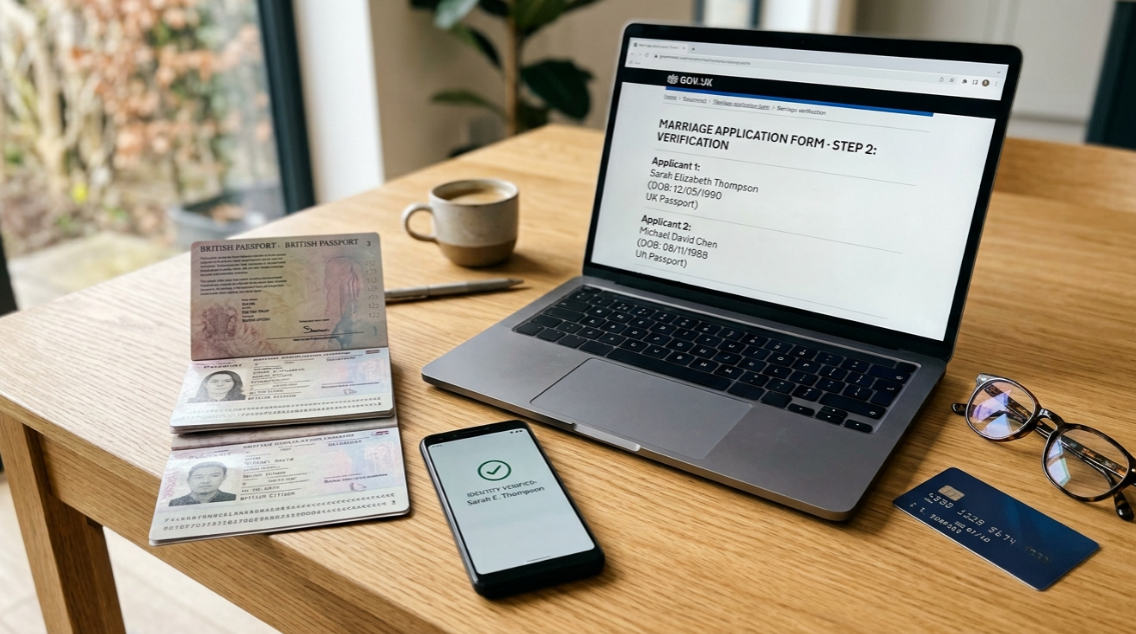
Online Marriage / Virtual Marriage
An online marriage (also called a virtual marriage) is a legally binding wedding ceremony conducted over video conferencing software where the couple does not need to be physically present in the same location as each other or the officiant. As of 2025, Utah is the only US state that allows a fully virtual wedding with both partners appearing remotely.
For two foreigners, this is the critical point: you can each be sitting in different countries, on different continents, and still get legally married through the US.
Remote Appearance Ceremony
This is Utah’s specific legal term for the virtual wedding process. “Remote appearance” means the couple appears before a Utah-based officiant via live video rather than in person. The term matters because it’s what distinguishes Utah’s system from proxy marriage (more on that distinction below). Utah County’s online marriage portal is the only system of its kind in the United States.
Marriage License
A marriage license is the government document that authorizes a couple to have a wedding ceremony. Think of it as permission to get married, not proof that you did. In Utah, the license application happens entirely online. You upload passport photos, complete a shared digital application, and pay the fee.
Key facts for foreigners:
No residency or citizenship requirements exist for a Utah marriage license
No Social Security Number needed
No US address needed
The fee is approximately $71.75
No waiting period after issuance
The license expires 32 days after issuance, so your ceremony must happen within that window
Marriage Certificate
The marriage certificate is the official document proving your marriage took place. It’s issued after the ceremony, not before. This is what you’ll present to government agencies, embassies, and courts. One important detail that surprises many couples: the certificate looks identical to one issued after an in-person ceremony. It contains names, dates, location, officiant, and witnesses. Nothing on the document indicates the ceremony was virtual.
If you need your certificate recognized abroad, you’ll likely need an apostille or embassy authentication, both defined later in this glossary. Courtly offers document legalization services to handle that step.
Officiant
The officiant is the person legally authorized to perform your marriage ceremony. In Utah’s remote appearance system, the officiant must be physically located in Utah during the ceremony. This is non-negotiable. The officiant’s physical presence in Utah is what establishes legal jurisdiction and makes the marriage valid under Utah law.
You and your partner can be anywhere in the world. Your witnesses can be anywhere. But the officiant must be in Utah.
Witnesses
Utah law requires two witnesses who are at least 18 years old. These witnesses must be able to see and hear everything happening during the ceremony in real time. The good news for two foreigners getting married online in the US: witnesses can join remotely. They don’t need to be in Utah, in the US, or even in the same country as either partner.
If you don’t have two people available to serve as witnesses, services like Courtly can provide witnesses as part of their higher-tier packages or as an add-on.
Host Location
The host location is the physical place in Utah where the officiant sits during your ceremony. This location establishes the legal jurisdiction for the marriage. From a practical standpoint, you never need to visit or even know the exact address of the host location. It exists to satisfy the legal requirement that the marriage be “performed in Utah.”
Solemnization
Solemnization is the legal act of formally performing the marriage ceremony. Under Utah law, a marriage must be solemnized to be valid. This means a licensed officiant must conduct an actual ceremony, not just sign paperwork. The ceremony can be brief, but it must happen.
Declaration of Intent
Since May 2024, Utah requires that every marriage ceremony include a verbal declaration of intent. Both partners must state out loud, during the ceremony, that they are willing to marry each other. A simple “I do” or “I will” satisfies this requirement. It cannot be implied or assumed. The officiant will prompt each partner to make this declaration during the video call.
Step-by-Step Process
Apply online for a Utah marriage license.
Upload passports and complete identity verification.
Pay the county license fee.
Receive approval.
Schedule the online ceremony.
Attend the ceremony by live video.
Make your declaration of intent.
Receive your digital marriage certificate.
Obtain an apostille or legalization if your country requires one.
Proxy Marriage vs. Virtual Marriage: A Critical Distinction
This section exists because the confusion between proxy and virtual marriage causes real legal problems, especially for immigration purposes.
Proxy Marriage
A proxy marriage is a ceremony where one or both partners are represented by a stand-in (a “proxy”) rather than attending personally. The proxy literally takes your place at the altar. Montana and a handful of other states allow various forms of proxy marriage.
Here’s what matters: Utah does not perform or recognize proxy marriages. This distinction is not academic. US immigration authorities treat proxy marriages differently from virtual marriages, and the consequences are significant.
For a deeper comparison, read about proxy, online, and virtual weddings.
Virtual Marriage (as Distinct from Proxy)
In a virtual marriage through Utah, both partners attend the ceremony live via video. Nobody stands in for you. You speak your own vows, make your own declaration of intent, and sign your certificate electronically. Utah law considers you legally “present” because you are participating in real time, even though you’re not physically in the room.
This distinction matters enormously for US immigration. USCIS generally does not recognize unconsummated proxy marriages. But because Utah’s virtual marriages involve both parties participating live, multiple immigration attorneys argue they should not be subject to the same consummation requirements. More on that in the immigration section below.
Double Proxy Marriage
A double proxy marriage is one where neither partner attends. Both are represented by stand-ins. Only Montana currently allows this for civilian couples. For two foreigners considering their options, a double proxy marriage is legally riskier than a Utah virtual marriage because it faces stricter scrutiny from immigration agencies and foreign governments alike.
Requirements Checklist
Requirement | Required? |
|---|---|
Valid passport | Yes |
US visa | No |
US citizenship | No |
US residency | No |
Social Security Number | No |
Internet connection | Yes |
Webcam | Yes |
Two adult witnesses | Yes |
Utah officiant | Yes |
Countries That Usually Recognize Utah Online Marriages
Many countries recognize Utah marriages once properly legalized with an apostille or embassy authentication. Recognition often depends on whether the country recognizes foreign marriages generally rather than whether the ceremony occurred online.
Countries that commonly recognize properly authenticated U.S. marriages include:
Canada
United Kingdom
New Zealand
Mexico
Brazil
South Africa
Japan (case dependent)
Singapore (case dependent)
Always verify current requirements with your local civil registry.
US Legal Recognition
Full Faith and Credit Clause
The Full Faith and Credit Clause is found in Article IV of the US Constitution. It requires every state to recognize a marriage validly performed in another state. This means a marriage conducted through Utah’s remote appearance system is legally recognized in all 50 states, plus Washington D.C. and US territories.
Federal agencies (the IRS, Social Security Administration, Department of Defense) also recognize these marriages. For two foreigners who get married online in the US, this means the marriage carries the same legal weight as any traditional wedding performed on American soil.
International Recognition: Making Your Certificate Work Abroad
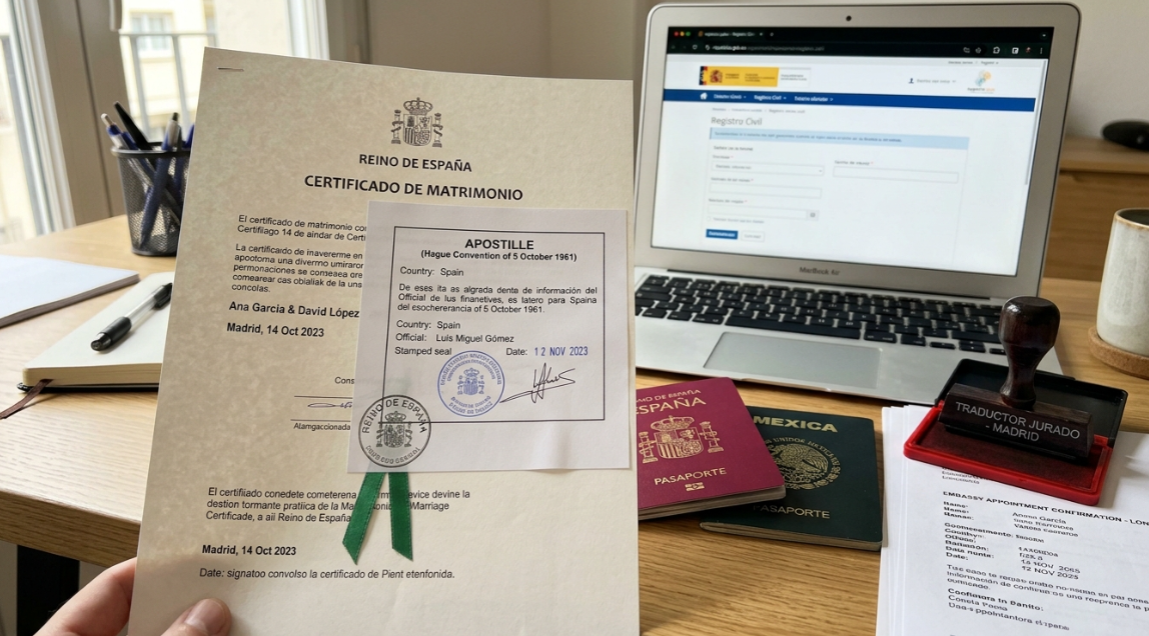
This is where things get complicated. A US marriage certificate is valid in the United States, but your home country decides whether to accept it. That decision varies widely.
Apostille
An apostille is a standardized certificate issued by a government authority that authenticates a document for use in another country. If your home country is a member of the 1961 Hague Convention, an apostille on your Utah marriage certificate is typically all you need for the marriage to be recognized.
The process: Utah’s Lieutenant Governor’s office issues the apostille, which is attached to your marriage certificate. You then present the apostilled certificate to your home country’s authorities.
Over 125 countries accept apostilles. For a detailed walkthrough, see this guide on apostilles.
Embassy Authentication / Legalization
If your home country is not a Hague Convention member, you’ll need embassy authentication (sometimes called legalization) instead of an apostille. This is a more involved process where your marriage certificate is first authenticated by the US Department of State, then legalized by your country’s embassy or consulate in the US.
The distinction between apostille and authentication matters because it affects your timeline and cost. If you’re unsure which applies to your country, this comparison breaks it down.
Hague Convention (1961)
The Hague Convention Abolishing the Requirement of Legalisation for Foreign Public Documents is an international treaty that simplifies how countries verify each other’s official documents. If both the country that issued the document (the US, in this case) and the country where you plan to use it are signatories, an apostille is sufficient for recognition. There are currently over 125 member countries.
Verbal Warning Requirement (2026 Law)
This is new and important. Utah Senate Bill 257, signed into law on March 18, 2026 and effective May 6, 2026, requires every officiant to deliver a verbal warning during remote appearance ceremonies. The warning states:
“A marriage solemnized according to the laws of the State of Utah through online remote appearance may be invalid in the country where the parties to the marriage reside.”
The backstory is worth knowing. The original legislative proposal (SB 110) would have severely restricted or ended remote marriages for non-residents. That restrictive language was removed before passage. The final version of SB 257 preserved remote marriage entirely but added this mandatory warning. So as of mid-2026, two foreigners can still get married online in the US through Utah. The law just ensures they hear a disclaimer about potential foreign recognition issues.
Countries with Known Non-Acceptance
Certain countries have historically refused to recognize online or remote-appearance marriages from Utah. Based on published guidance, these include: Germany, Hungary, Australia, Norway, France, Turkmenistan, Sweden, Poland (varies by case), Taiwan, and Finland.
This list is not exhaustive and can change. Always verify current policy with your country’s civil registry or embassy before proceeding. You can check country-specific guidance for more details.
The Lebanon Precedent
In May 2025, a Beirut Civil Court became the first known court in the Middle East to formally evaluate a Utah Zoom marriage for the purpose of registration in Lebanon. This case, analyzed in the Conflict of Laws journal, raised fundamental questions about where a virtual marriage is “celebrated” in legal terms. It’s a developing area of international private law with no settled global consensus.
Immigration Terms and Considerations
This section requires a blunt caveat that most guides bury or skip: if both partners are foreign nationals and neither holds US citizenship or permanent residency, neither can petition the other for a US immigrant visa. The marriage is still legally valid, but it has limited direct utility for US immigration unless one partner later becomes a US citizen or green card holder.
That said, there are edge cases. For example, a foreign national on an H-1B work visa may be able to sponsor a dependent visa for their spouse. And practitioners on Reddit’s r/USCIS forum have shared anecdotal reports of couples using Utah online marriages as part of broader immigration strategies, including cases where one partner was already in the process of adjusting status.
Consummation Requirement
Consummation, in immigration law, means the couple has met in person and had a physical relationship after the wedding. This requirement exists specifically for proxy marriages under the Immigration and Nationality Act. USCIS has historically held that a proxy marriage is not valid for immigration purposes until consummated.
Here’s where it gets contested. Because Utah’s virtual marriages are not proxy marriages (both partners participate live), some immigration attorneys argue the consummation requirement does not apply. One immigration firm states plainly that a “non-proxy marriage” does not have a consummation requirement and that the marriage certificate itself is sufficient.
However, the majority of immigration attorneys referenced across forums and legal Q&A sites recommend that couples plan to meet in person after the ceremony if they intend to use the marriage for any US immigration purpose. The safest approach: treat consummation as a practical requirement even if it may not be a legal one.
For more on how immigration authorities handle this, read about online marriages and immigration recognition.
CR-1 / IR-1 Visa (Spouse Visa)
The CR-1 (Conditional Resident) and IR-1 (Immediate Relative) visas are the standard immigration pathways for spouses of US citizens or permanent residents. The CR-1 applies when the marriage is less than two years old at the time the visa is issued. The IR-1 applies when the marriage is over two years old.
To file for either visa, the petitioning spouse must be a US citizen or lawful permanent resident. This is why two foreigners who get married online in the US typically cannot use the marriage for these visa categories unless one partner’s immigration status changes.
If you’re considering the immigration angle, a spouse visa consultation can clarify your options.
K-1 Visa (Fiancé Visa)
The K-1 visa allows a US citizen to bring their foreign fiancé to the United States for the purpose of getting married. Once married, the foreign spouse can apply for adjustment of status.
Here’s the practical tension: if you marry online through Utah before entering the US, you are no longer a fiancé. You’re a spouse. That means the K-1 path closes and the CR-1/IR-1 path opens instead. This is not necessarily a bad thing (the CR-1/IR-1 path has certain advantages), but it’s a choice with consequences. Couples should decide their visa strategy before the ceremony, not after.
Bona Fide Marriage
A bona fide marriage is one entered into in good faith, meaning both partners genuinely intend to build a life together. This term comes up constantly in immigration proceedings. USCIS evaluates whether a marriage is bona fide by looking at evidence like joint financial accounts, shared leases, photographs together, communication records, and travel history.
For two foreigners who married online, building a paper trail of bona fide evidence starts the day of the ceremony. Save screenshots, video recordings, chat logs, and any documentation showing your ongoing relationship.
I-130 Petition
The I-130 is the form a US citizen or permanent resident files to sponsor their spouse for immigration. Without a petitioner who holds US citizenship or permanent residency, the I-130 cannot be filed. This is the specific procedural barrier that limits the immigration utility of an online marriage between two foreign nationals.
Practical Requirements for Foreigners
Government-Issued Photo ID
Each partner needs a valid, government-issued photo ID to apply for a Utah marriage license. For foreigners, a passport works perfectly. The Utah County application system requires you to scan your ID and take a selfie using a smartphone. The system verifies your identity by matching the selfie to the ID photo.
No Social Security Number is needed. No US driver’s license. No visa stamp. Just a valid passport from any country.
Utah County Online Application Process
Here is what two foreigners need to get married online in the US through Utah:
A valid passport for each partner
A valid email address for each partner
A smartphone (to scan IDs and take selfies for verification)
A credit or debit card to pay the approximately $71.75 license fee
Two witnesses aged 18 or older (they can join remotely from anywhere)
A stable internet connection for the video ceremony
The process itself: apply online, get your license approved, schedule your ceremony, attend via video, make your verbal declaration of intent, and receive your marriage certificate digitally, with a physical copy mailed afterward.
There is no waiting period between license approval and the ceremony. The entire process can happen within days.
Want to get started? Begin your online marriage with a guided application process.
Special Circumstances Worth Noting
Same-Sex Couples from Restrictive Countries
One of the most meaningful use cases for two foreigners getting married online in the US involves same-sex couples. As one commenter on an immigration attorney’s blog shared: “My partner and I are non-US nationals, both from Asian countries and none of our home countries allow same-sex marriage.”
Utah’s remote appearance system offers a legal path to marriage for same-sex couples regardless of what their home countries allow. The marriage will be recognized throughout the United States. Whether it’s recognized in the couple’s home country depends entirely on that country’s laws regarding both same-sex marriage and foreign marriages generally.
Divorce Complications
This is a detail almost no one mentions. Utah law typically requires that at least one party be a resident of a Utah county for at least three months before filing for divorce. Two foreigners who marry via Utah’s remote system and later want to divorce face a residency problem: they may not be able to divorce in Utah and would need to seek dissolution in a jurisdiction where one of them resides. Check your home country’s rules on dissolving foreign marriages before you proceed.
Frequently Asked Questions
Can two foreigners get married online in the US without a visa?
Yes. Neither partner needs a US visa, residency, or any form of immigration status. Utah’s remote appearance marriage system has no citizenship or residency requirements. You each need a valid passport and can participate from anywhere in the world.
Is an online marriage from Utah legal in my country?
It depends on your country. Countries that are signatories to the 1961 Hague Convention generally recognize foreign marriages authenticated with an apostille. However, some countries (including Germany, France, Australia, Norway, Sweden, Hungary, Finland, and others) have historically refused to accept remote-appearance marriages. Always check with your local civil registry or embassy.
How much does it cost for two foreigners to get married online in the US?
The Utah County marriage license fee is approximately $71.75. Beyond that, costs depend on whether you use a service to handle the process. Courtly’s plans range from $199 to $599 depending on inclusions like ceremony recording, witnesses, and rush processing. Add-ons like apostille, translation, and authentication are priced separately.
Can we use a Utah online marriage for US immigration purposes?
Only if one partner is a US citizen or lawful permanent resident who can file an I-130 petition. If both partners are foreign nationals with no US immigration status, the marriage is legally valid but cannot be used to sponsor either partner for a US visa. There are narrow exceptions (such as employer-sponsored visa holders adding dependents).
How long does the entire process take?
The application can be completed in under an hour. License approval typically takes a few business days. Once approved, the ceremony can be scheduled immediately since there’s no waiting period. Rush processing can compress the timeline further. The license must be used within 32 days of issuance.
Do we need to meet in person after the ceremony?
Not for the marriage to be legally valid under Utah law. However, if you plan to use the marriage for US immigration purposes, the majority of immigration attorneys recommend meeting in person and consummating the marriage afterward to avoid complications with USCIS.
Will our marriage certificate show it was an online ceremony?
No. The Utah marriage certificate issued after a remote appearance ceremony is identical in format and content to one issued after an in-person ceremony. It lists names, dates, location, officiant, and witnesses, with no indication the ceremony was virtual.
Has Utah’s online marriage law changed recently?
Yes. SB 257, which became law on March 18, 2026 (effective May 6, 2026), added a requirement that officiants verbally warn couples about potential foreign non-recognition. The law preserved the right to marry remotely. An earlier legislative proposal that would have restricted remote marriages for non-residents was removed before passage.
Two foreigners can absolutely get married online in the US. The legal framework exists, the process is straightforward, and thousands of international couples have already done it. The key is understanding the terminology, knowing which steps apply to your specific situation, and planning ahead for recognition in your home country.
Explore Courtly’s pricing and plans to see how the process works from start to finish.
Let us handle the paperwork.
Getting married is complicated. Courtly simplifies the process and provides everything necessary to get married online, including providing a licensed officiant who can perform a remote ceremony.
Get Married

Get married online.
Getting married is complicated. Courtly simplifies the process and provides everything necessary to get married online.

