

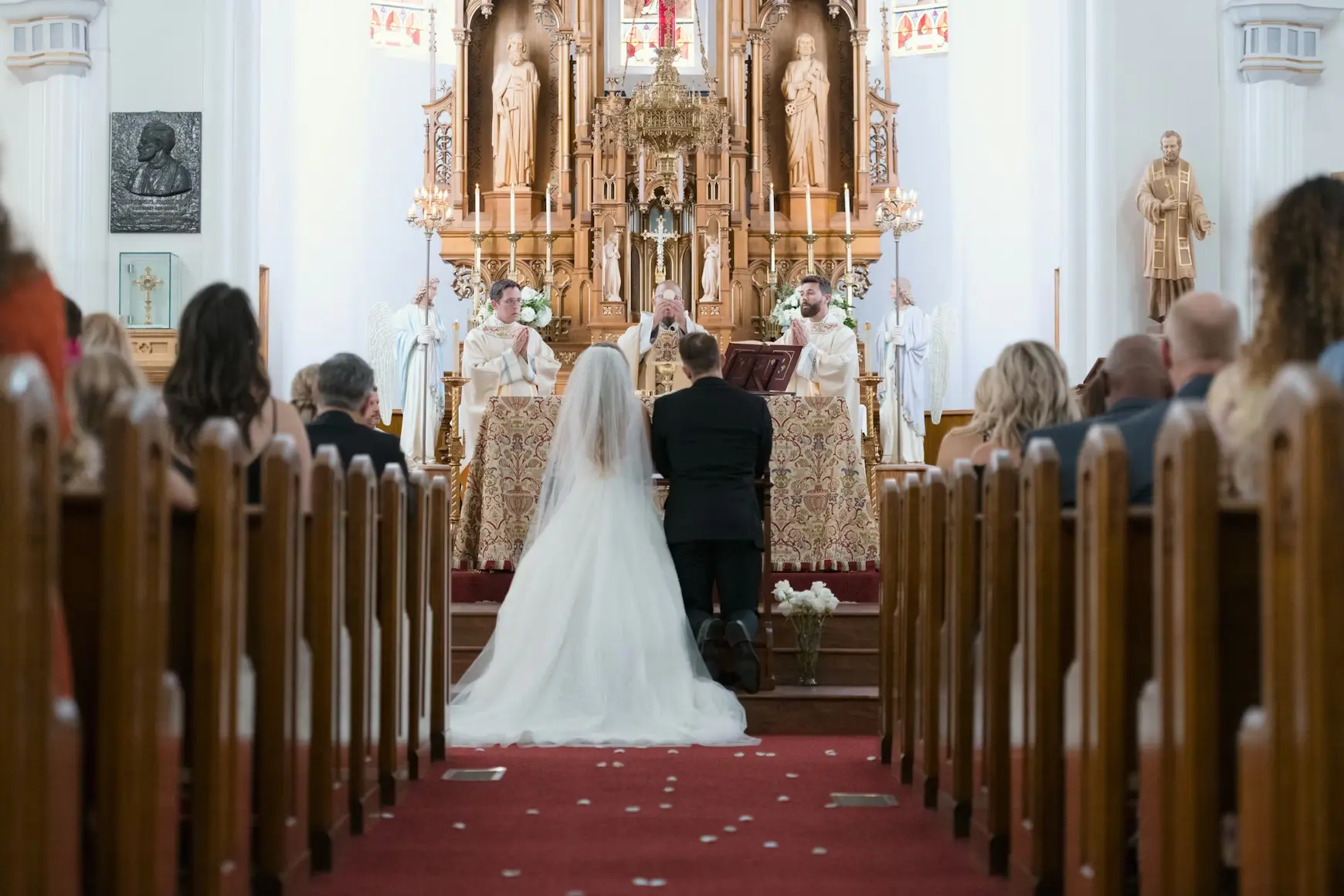
If you're a Christian thinking about getting married, you've probably asked this question at some point: What does the Bible actually say marriage is supposed to be?
It's worth sitting with, because the answer shapes everything from how you approach your vows to how you think about the relationship between your religious ceremony and your legal marriage certificate.
This guide walks through what Scripture teaches about biblical marriage, what the key principles are, and how couples today can honor those principles while also navigating the practical and legal side of getting married.
What Does the Bible Say About Marriage?
The Bible doesn't hand you a step-by-step wedding guide. What it does give you is a consistent picture of what marriage is meant to be, developed across both the Old and New Testaments, with Genesis as the foundation.
The key passage most theologians return to is Genesis 2:24:
"Therefore a man shall leave his father and his mother and hold fast to his wife, and they shall become one flesh."
Jesus quotes this passage directly in Matthew 19:5, which tells you a lot about how central it is to the biblical understanding of marriage. It's not just an Old Testament custom. It's treated as the enduring design.
From this and other passages, a consistent set of principles emerges across Christian traditions.
What Are the Core Principles of Biblical Marriage?
While denominations interpret some aspects differently, there's broad agreement across mainstream Christianity on these foundational principles.
Marriage Is a Covenant, Not Just a Contract
A contract is a legal exchange of obligations. A covenant is something deeper: a binding commitment of loyalty and love, entered into before God and witnessed by community.
The Bible consistently describes marriage using covenant language (Proverbs 2:17, Malachi 2:14).
This distinction matters practically. A contract can be broken when terms aren't met. A covenant is meant to hold even when things get hard. Most Christian traditions teach that marriage, entered into with sincere faith, is meant to be permanent.
Marriage Is a Public Commitment
Biblical marriage isn't a private arrangement between two people. Weddings in Scripture are social events, celebrated with community, feasting, and witnesses.
Psalm 45 describes a royal wedding as a festive, communal occasion. Jesus performed his first miracle at a wedding in Cana (John 2). The covenant is made before God and in front of others, both of which matter.
This is actually one reason most churches encourage couples to also get their marriage legally recognized: it's another layer of public acknowledgment that the commitment is real.
Marriage Requires Genuine Consent
Both parties must willingly enter the covenant. This has always been a principle in Christian theology, and it's why forced or coerced marriages are considered invalid regardless of any ceremony conducted.
Marriage Is a "One Flesh" Union
The "one flesh" language in Genesis describes both the physical and relational reality of marriage. Two people, from different families and backgrounds, becoming a new unified household.
It's intimate, comprehensive, and meant to reflect something deeper: the relationship between Christ and the Church (Ephesians 5:25-33).
Marriage Is Meant to Reflect God's Love
Ephesians 5 is the New Testament's fullest teaching on marriage, and it frames the relationship in terms of Christlike love and service. Husbands are called to love their wives sacrificially. Wives are called to respect and support their husbands. The picture is one of mutual care and devotion, not hierarchy for its own sake.
What Constitutes a Biblical Marriage?
Theologians often summarize this with three elements: ceremony, covenant, and consummation.
The Bible doesn't prescribe a specific order of service, a particular venue, or a required officiant title.
What it does emphasize is that marriage is public, covenantal, and entered into with genuine intent.
What Are the Biblical Laws on Marriage?
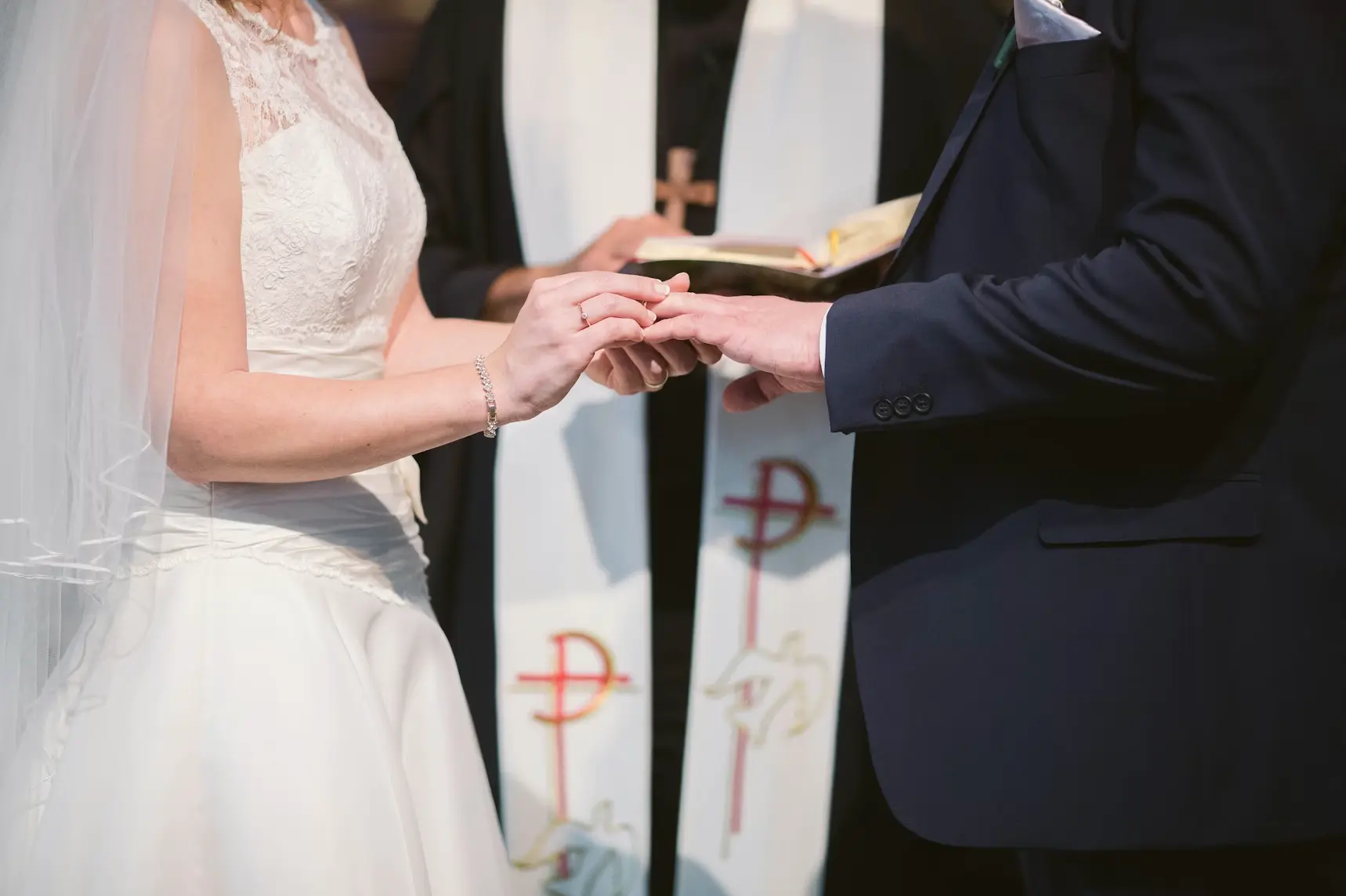
The Bible addresses marriage across many passages, and different Christian traditions weigh them differently. Here are the areas most consistently emphasized:
Faithfulness: Sexual fidelity is non-negotiable. The seventh commandment (Exodus 20:14) prohibits adultery. Hebrews 13:4 describes the marriage bed as honorable. Physical intimacy is described as something reserved for and celebrated within marriage.
Leaving and cleaving: Genesis 2:24 establishes that marriage creates a new family unit. A husband and wife are to prioritize their relationship with each other, not to dishonor their families, but to form a new primary bond.
Love and sacrifice: 1 Corinthians 13 is often read at weddings for good reason. It's the Bible's clearest description of what love actually looks like in practice: patient, kind, not self-seeking, not easily angered.
Avoiding sexual immorality: Throughout the New Testament, sexual intimacy outside marriage is treated as contrary to God's design. 1 Corinthians 6:18-20 and 1 Thessalonians 4:3-5 are among the clearest passages on this.
Forgiveness and perseverance: Ephesians 4:32 and Colossians 3:13 apply broadly but are especially relevant to marriage. Christian marriage is expected to involve conflict, and the response to that conflict is meant to reflect grace.
How to Get Married Biblically: What Does That Look Like Today?
This is where couples often have practical questions. The Bible describes marriage in terms of covenant and community, but it doesn't specify what the ceremony needs to look like, who has to officiate, or whether government paperwork is required.
Here's what most Christian pastoral guidance suggests:
Make your vows before God and witnesses. A ceremony where you publicly commit to each other, with your faith community present, reflects the biblical pattern. This doesn't have to be elaborate. What matters is sincerity and witnesses.
Involve your church community if possible. Most Christian traditions encourage couples to be married within their faith community, with a pastor or elder presiding. This provides accountability, blessing, and spiritual grounding for the marriage.
Honor the governing authorities. Romans 13:1-7 encourages Christians to submit to governing authorities in areas that don't conflict with Scripture. Getting legally married is widely understood to fall under this. It's also a form of public acknowledgment that the commitment is real and binding.
Don't skip the legal piece. A religious ceremony without a civil marriage license means the marriage isn't recognized legally.
That has real consequences: no legal inheritance rights, no spousal medical decision-making authority, no access to the legal benefits of marriage.
Most pastors and theologians encourage couples to handle both.
Does Biblical Marriage Require a Church Ceremony?
Not strictly. The Bible doesn't mandate a church building, a specific denomination, or a particular style of service. What it emphasizes is the public nature of the commitment and the covenantal intent of the couple.
Couples who get legally married first through a civil or online ceremony and then celebrate with their church community later aren't doing anything unbiblical. The legal marriage and the faith celebration can happen separately while both remain meaningful.
Online marriage through Courtly is one way couples handle the legal side efficiently, freeing them to focus their church ceremony entirely on the covenant, the vows, and the community celebration without the paperwork pressure.
Does a Civil Marriage Count as a Biblical Marriage?
This is a question many Christian couples wrestle with, especially when logistics make a full church ceremony difficult.
The honest answer is: it depends on your tradition and your church leadership, and it's worth talking to your pastor about.
What most mainstream Christian theologians agree on is that the legal certificate itself doesn't define whether you're married in God's eyes. What matters is the genuine covenant you've made before Him, with sincere intent, witnessed by others.
Many couples choose to make that covenant in both settings: a legal ceremony that handles the civil requirements and a church ceremony or blessing that honors the spiritual dimension.
That approach honors both the governing authorities and the faith community.
Do You Need Both a Biblical Marriage and a Legal Marriage?
Short answer: yes, and here's why they're not the same thing.
A biblical marriage is a covenant before God. It's spiritual, relational, and recognized by your faith community. But it isn't automatically recognized by your government, your employer, your bank, your hospital, or immigration authorities.
A legal marriage is a civil contract recognized by the state. It's what unlocks the practical protections that matter enormously when life gets complicated.
Here's what a biblical ceremony alone won't give you:
None of this means your biblical marriage isn't real. It absolutely is. But without the legal certificate, the world outside your church doesn't recognize it, and that gap can cause serious problems when you least expect them.
The good news is that getting legally married doesn't require a second big event. Many Christian couples get legally married first through a quick, private civil ceremony or through an online service like Courtly, then celebrate their covenant with their church community separately.
The legal piece handles the practical protections. The church ceremony attends to the spiritual and communal meaning. Both are real. Both matter. And neither one diminishes the other.
Biblical Marriage and the Question of Legal Recognition

One area worth addressing directly: some couples wonder whether getting legally married through a state or civil process somehow diminishes the sanctity of their biblical marriage. Most Christian theologians say no.
Marriage as an institution predates the state. Governments don't create marriages. They recognize them and extend legal protections.
Getting a marriage license is participating in that recognition, not replacing or undermining the covenant you're making before God.
Think of it this way: the vows you make to each other and to God are the marriage. The certificate is the state saying, "We see this, and we'll protect it." Both matter, and they serve different purposes.
For more on what the legal side of marriage actually covers, see our guide on what changes when you get married legally.
The Bottom Line
Biblical marriage is a covenant of love, faithfulness, and mutual commitment, rooted in Scripture and meant to reflect God's love for his people. It's public, covenantal, and designed to be lifelong. The specific form the ceremony takes matters less than the sincerity of the commitment and the witness of the community.
For Christian couples navigating both the spiritual and the legal sides of getting married, the good news is that the two don't have to conflict. You can honor your faith traditions fully and still take care of the practical and legal requirements that protect your relationship.
If you're ready to handle the legal side, Courtly can help. The process is simple, legal, and completely online, so your church ceremony can be exactly what you want it to be.
Key Takeaways
- Biblical marriage is described as a covenant relationship, rooted in Genesis 2:24, where two people become "one flesh" before God and witnesses.
- The core principles of biblical marriage include covenant commitment, mutual love and faithfulness, public witness, and the "one flesh" union.
- Three elements commonly cited as constituting biblical marriage are ceremony, covenant, and consummation.
- The Bible doesn't prescribe a specific wedding format, venue, or officiant type. What it emphasizes is sincerity, public commitment, and covenantal intent.
- Most Christian theologians encourage couples to also get legally married, consistent with the biblical call to honor governing authorities.
- A civil or legal marriage doesn't diminish biblical marriage. The state recognizes and protects what God has joined; it doesn't create or define it.
- Couples can get legally married first and celebrate with a church ceremony separately without compromising the biblical integrity of either.
- The legal and spiritual dimensions of marriage serve different purposes and are meant to complement each other, not compete.
Frequently Asked Questions
What is the biblical definition of marriage?
The biblical definition of marriage is a covenant relationship between a man and a woman, established by God, in which the two become "one flesh" (Genesis 2:24).
It's a public, willing commitment of love and faithfulness, entered into before God and witnessed by the community. Jesus affirms this definition in Matthew 19:5-6, adding that what God joins together shouldn't be separated.
What constitutes a biblical marriage?
Most Christian theologians describe biblical marriage in terms of three elements: ceremony (a public occasion where vows are made before God and witnesses), covenant (a sincere commitment of mutual faithfulness and love), and consummation (the physical union that fulfills the "one flesh" relationship).
The Bible doesn't require a specific ceremony format, but it does emphasize that the commitment is genuine, public, and covenantal.
Does the Bible require a marriage license?
The Bible doesn't specifically mention government marriage licenses, which didn't exist in their modern form in biblical times. However, Romans 13 encourages Christians to honor governing authorities, and most Christian theologians recommend getting legally married as an extension of that principle and as a way of providing legal protection for the marriage and family.
Can you be biblically married without a legal ceremony?
From a purely theological standpoint, some traditions hold that a sincere covenant before God constitutes a real marriage regardless of legal paperwork.
However, without a legal marriage, couples don't have access to the rights and protections that come with civil recognition, including inheritance, medical decision-making, and immigration benefits.
Most pastoral guidance encourages couples to do both.
What does the Bible say about how to get married?
The Bible describes marriage as a public, covenantal act but doesn't prescribe a specific ceremony format or order of service. What it emphasizes is leaving one's family to form a new unit, making a public commitment before God and witnesses, and entering the marriage with sincere and willing intent.
The exact form the ceremony takes has historically varied widely across cultures and Christian traditions.
Is it biblical to get legally married before the church ceremony?
Yes, many Christian couples do exactly this. Getting legally married first through a civil or online ceremony handles the practical requirements, and the church ceremony or blessing follows as the spiritual and communal celebration. Neither invalidates the other, and many pastors actively support this approach when logistics require it.
What are the biblical laws on marriage?
Key biblical teachings on marriage include: faithfulness and avoiding adultery (Exodus 20:14), the "leave and cleave" principle of forming a new family unit (Genesis 2:24), sacrificial love (1 Corinthians 13; Ephesians 5:25), sexual integrity (1 Corinthians 6:18-20), and forgiveness and perseverance within the relationship (Colossians 3:13-14). These aren't rigid rules so much as principles that shape what a healthy, God-honoring marriage looks like.
Does the type of ceremony affect whether God recognizes the marriage?
Most Christian theologians say no. God's recognition of a marriage is tied to the genuine covenant made before Him, not the form of the ceremony. A couple who marries sincerely in a civil courthouse and then celebrates with their church community is no less married in God's eyes than a couple who follows a traditional church ceremony from start to finish.
Let us handle the paperwork.
Getting married is complicated. Courtly simplifies the process and provides everything necessary to get married online, including providing a licensed officiant who can perform a remote ceremony.
Get Married

Get married online.
Getting married is complicated. Courtly simplifies the process and provides everything necessary to get married online.

