

Here's something that surprises a lot of couples: the type of wedding ceremony you have has almost nothing to do with whether you're legally married.
You could have the most beautiful church wedding with hundreds of guests and a full Mass and still not be legally married if the paperwork wasn't filed correctly.
You could also get married in five minutes on a video call and have a fully recognized, government-issued marriage certificate in hand the next day.
That's the civil vs. religious marriage distinction in a nutshell. The ceremony reflects your values and traditions. The license makes it legal.
This guide breaks down exactly what each type of marriage means, how they interact, and what actually matters when it comes to your legal rights as a couple.
What Is a Civil Marriage?
A civil marriage is a legally binding union performed by a government-authorized officiant. Think judges, justices of the peace, county clerks, and in some states, licensed marriage officiants who aren't affiliated with any religious institution.
What it doesn't include: prayers, scripture, religious vows, or any faith-based elements. What it does include: the legal essentials: your consent, an officiant, witnesses (in most states), and a marriage license.
Civil marriages can happen almost anywhere. Courthouse, city hall, a park, your living room, or even over video. The venue doesn't determine whether it's civil. The officiant and the license do.
Civil marriage is also the foundation of online marriage. When you get legally married through a service like Courtly, you're completing a civil marriage under Utah County jurisdiction, with a licensed officiant, producing a US government-issued certificate.
What Is a Religious Marriage?
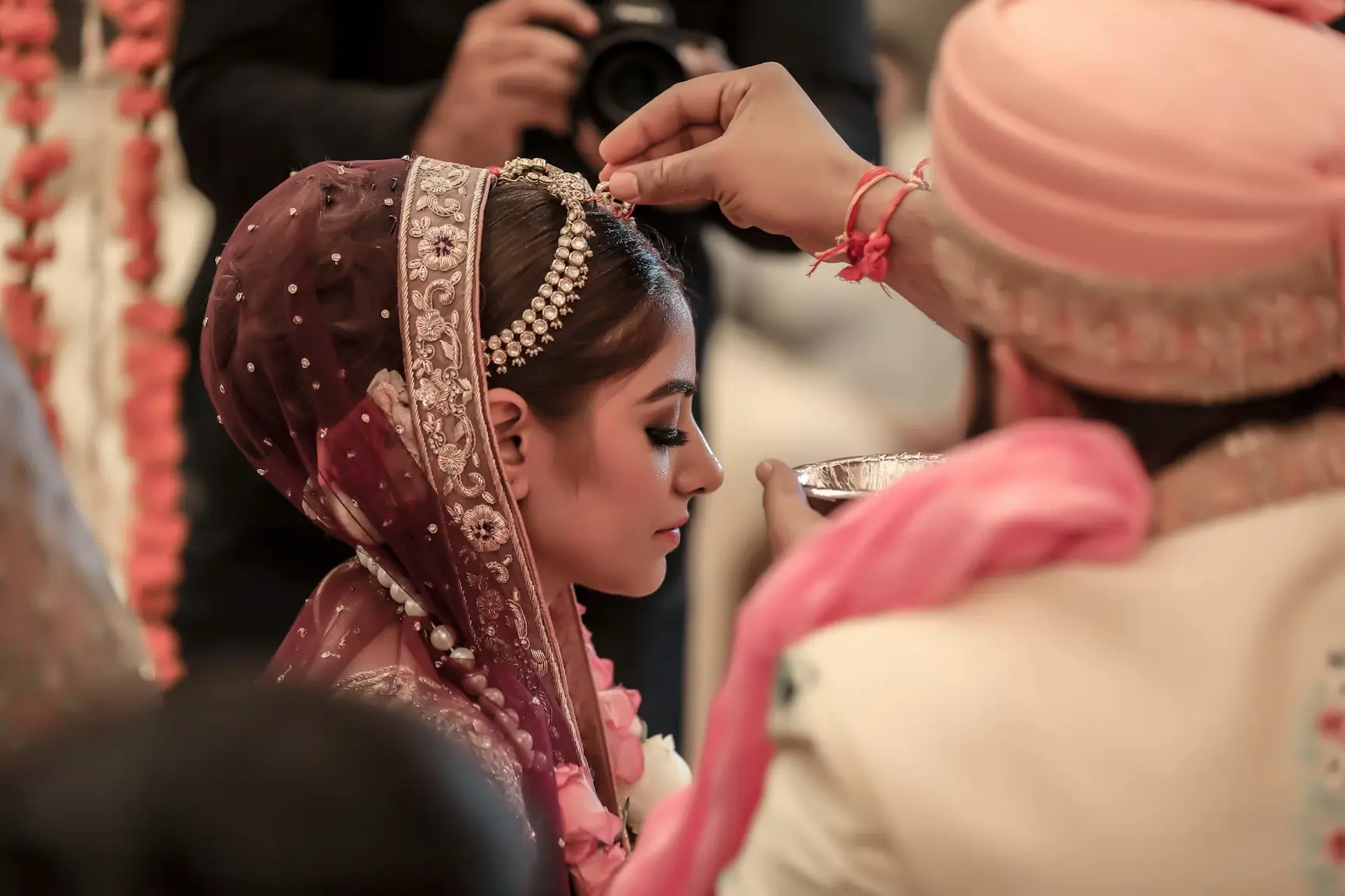
A religious marriage is a ceremony conducted according to the beliefs and traditions of a specific faith. A Catholic Nuptial Mass, a Jewish ceremony under the chuppah, a Muslim Nikah, a Hindu wedding with the Saptapadi; these are all religious marriages.
The form varies enormously by faith and culture. What they share is that the ceremony is guided by religious doctrine, conducted by a faith leader (a priest, imam, rabbi, pastor, or equivalent), and carries spiritual and community significance within that tradition.
Here's the critical thing to understand: a religious ceremony alone doesn't make you legally married in the US.
For a religious marriage to be legally recognized, the officiant must be authorized by the state to perform marriages, and a marriage license must be obtained and filed.
Most clergy are state-authorized, but not all and even then, the license is non-negotiable.
What's the Difference Between Civil and Religious Marriage?
This is where a lot of confusion lives. Let's clear it up.
The biggest practical difference comes down to this: civil marriage and religious marriage aren't mutually exclusive.
Most religious weddings in the US are simultaneously civil marriages because the officiant is licensed by the state, the license is filed, and all the legal requirements are met at the same time as the ceremony.
Can a Religious Ceremony Be Legally Valid?
Yes, absolutely. But there are two conditions.
First, the officiant has to be legally authorized to perform marriages in the state where the ceremony takes place. Most ordained clergy are, but it's worth confirming. An officiant who isn't registered with the state can perform a beautiful ceremony that has zero legal weight.
Second, a government-issued marriage license must be obtained before the ceremony and filed afterward. No license means no legal marriage, regardless of how meaningful the ceremony was.
When both of those conditions are met, a religious ceremony produces a fully legal marriage. The faith-based elements don't diminish the legal status, and the legal requirement doesn't diminish the religious meaning. They coexist just fine.
What About Religious Contracts Like a Ketubah or Nikah Nama?
Religious marriage contracts, like a Jewish ketubah or an Islamic nikah nama, carry deep meaning within their traditions. They're also separate from the civil marriage record.
US courts generally won't enforce purely spiritual obligations written into these contracts, but financial provisions (like a mahr in a Nikah) may be enforceable if they're drafted clearly as contractual agreements.
For couples navigating both religious and civil requirements, the safest approach is to ensure the civil marriage is properly registered and treat the religious contract as a complement to it, not a substitute.
Is There a Difference Between a Civil and Religious Marriage License?
This is one of the most searched questions on this topic, and it's based on a common misconception worth clearing up.
There's no such thing as a religious marriage license. There's only one kind of marriage license: the government-issued civil document that authorizes a marriage to take place.
Whether you're getting married in a church, a mosque, a synagogue, or a courthouse, you need the same marriage license from your county clerk's office. The license itself has nothing to do with religion. It's a legal document, full stop.
What varies is who performs the ceremony and what the ceremony looks like. But the license — the piece of paper that makes it all legally real — is always a civil document, issued by the state.
See our full breakdown of the difference between a marriage license and a marriage certificate if you want to understand exactly what each document does.
Can You Have Both a Civil and Religious Marriage?
Yes, and many couples do but in different ways.
The most common approach: Get legally married in a civil ceremony first (quickly and privately), then celebrate with a full religious ceremony later. This separates the legal requirements from the celebration, which takes the pressure off the big day entirely.
Another common approach: Have a religious ceremony that simultaneously meets all civil requirements — licensed officiant, valid license, proper filing. One event, dual recognition.
A less common but valid approach: Have a religious ceremony that holds meaning within your faith community, and separately complete a civil marriage for legal purposes. Some couples in certain traditions do this intentionally.
None of these approaches is more "real" than the others. What matters is that the legal requirements are met at some point — because without them, you don't have access to the legal and financial benefits of marriage that protect you as a couple.
How Does Immigration Treat Civil vs Religious Marriage?
For immigration purposes, the distinction is clear: only a legally recognized civil marriage counts.
USCIS doesn't care whether you had a religious ceremony. What they need is a government-issued marriage certificate from a recognized jurisdiction. A nikah nama, a church record, or a cultural ceremony certificate won't satisfy immigration requirements on its own.
This is one of the most important practical reasons couples prioritize getting legally married — especially when one partner is navigating a visa or green card application. A religious ceremony alone can leave a couple in a genuinely precarious legal position.
Online civil marriage has become a practical solution for many international couples in exactly this situation. Courtly's process produces a US government-issued certificate accepted by USCIS and recognized in 150+ countries — regardless of what religious ceremonies the couple has or hasn't held.
Religious vs Civil Marriage: Which Is Right for You?
There's no universal right answer here. It depends on your faith, your family, your timeline, and your practical needs.
A few questions worth thinking through:
- Do you want your marriage recognized by your faith community? A religious ceremony matters here, provided the civil requirements are also met.
- Are you navigating immigration, military benefits, or other legal deadlines? A civil marriage completed quickly and correctly, should be the priority.
- Do you want a ceremony that reflects your culture and traditions? You can have that and a civil marriage. They don't cancel each other out.
- Are you not religious? A civil ceremony gives you full legal recognition without any faith-based elements required.
The thing most couples discover is that the two aren't really in competition. Civil marriage handles the legal side. Religious or cultural ceremonies handle the meaning, community, and tradition. Most couples find a way to honor both.
The Bottom Line
Civil marriage is the legal framework. Religious marriage is the spiritual and cultural expression.
In the US, you need the civil piece: the license, the authorized officiant, the filed paperwork, for your marriage to be recognized by the government, by immigration authorities, and by every institution that relies on a marriage certificate.
The ceremony you build around that legal foundation is entirely yours to design.
If you're ready to handle the legal side first — quickly, privately, and from anywhere in the world — Courtly makes the whole process straightforward. You get a real US marriage certificate, and your celebration can happen whenever and however you choose.
Key Takeaways
- A civil marriage is a legally binding union performed by a state-authorized officiant, with no religious elements required.
- A religious marriage ceremony is only legally valid in the US if a government-issued marriage license is obtained and filed, and the officiant is state-authorized.
- There's no such thing as a "religious marriage license" — there's only one kind of marriage license, and it's always issued by the government.
- Most religious weddings in the US are simultaneously civil marriages, because the clergy are state-licensed and the marriage license is filed.
- Religious contracts like a ketubah or nikah nama carry meaning within a faith community but aren't substitutes for civil registration.
- For immigration purposes, only a legally recognized civil marriage certificate counts — a religious ceremony alone won't satisfy USCIS requirements.
- Many couples choose to get legally married civilly first, then celebrate with a religious or cultural ceremony on their own timeline.
- Civil and religious marriage aren't mutually exclusive — most couples find a way to honor both.
Frequently Asked Questions
Is a church wedding legally valid in the US?
Yes, if two conditions are met: the officiant is authorized by the state to perform marriages, and a government-issued marriage license is obtained and filed. When both are in place, a church ceremony is simultaneously a legal civil marriage. If either condition isn't met, the ceremony is spiritually meaningful but not legally recognized.
What's the difference between a civil marriage and a courthouse marriage?
They're essentially the same thing. A courthouse marriage is just one type of civil marriage — performed by a judge or court official at a courthouse. Civil marriages can also happen at home, in a park, online, or at any venue where a licensed officiant is present. The location doesn't define it; the officiant and the license do.
Can you be religiously married but not legally married?
Yes, and it happens more often than people realize. If a couple has a religious ceremony without obtaining a civil marriage license, they're married in the eyes of their faith community but not in the eyes of the law. This means they don't have access to legal rights like spousal inheritance, medical decision-making, immigration benefits, or joint tax filing.
Do you need a religious ceremony to get legally married?
No. A civil ceremony with a licensed officiant and a valid marriage license is all that's legally required in every US state. Religious elements are entirely optional.
Is an online marriage a civil marriage?
Yes. Online marriages conducted through a licensed service like Courtly are civil marriages — performed by a state-authorized officiant under a recognized US jurisdiction (Utah County), with a government-issued marriage certificate as the result. They carry the same legal weight as a courthouse ceremony.
What happens if I only have a religious ceremony and skip the license?
You're not legally married. That means none of the legal protections of marriage apply to your relationship — no automatic inheritance rights, no spousal Social Security benefits, no legal standing for medical decisions, and no recognized status for immigration purposes. A religious ceremony without a civil license is spiritually meaningful but legally invisible.
Can a couple do the religious ceremony first and the civil marriage later?
Yes, many couples do exactly this. If a religious ceremony takes place without a license (or with an officiant who isn't state-authorized), the couple can complete the civil marriage separately at any point — at a courthouse or through an online service. The civil marriage date becomes the legal date of marriage.
Does the type of marriage (civil vs religious) affect divorce proceedings?
No. Divorce is handled through civil law regardless of how the marriage was performed. If you were legally married — civil or religious ceremony — you need a legal divorce to end that marriage. A religious annulment from a church doesn't dissolve a civil marriage. Both may be relevant to a couple's faith and family situation, but they operate on separate tracks legally.
Let us handle the paperwork.
Getting married is complicated. Courtly simplifies the process and provides everything necessary to get married online, including providing a licensed officiant who can perform a remote ceremony.
Get Married

Get married online.
Getting married is complicated. Courtly simplifies the process and provides everything necessary to get married online.

