

If you got married online (typically through Utah) and plan to use that marriage for U.S. immigration, USCIS requires you to “consummate” the marriage by physically meeting your spouse after the ceremony. This applies to both proxy and virtual marriages. You cannot file an I-130 petition until consummation has occurred. Evidence like flight tickets, dated photos together, and joint hotel receipts will satisfy the requirement. If you haven’t met yet, the K-1 fiancé visa remains a fallback option.
Couples searching for information about online marriage consummation immigration are almost always in the same situation: one partner is a U.S. citizen (or permanent resident), the other is abroad, and they’ve either already completed an online wedding or are considering one. The question that keeps them up at night is whether their marriage will actually count for immigration purposes.
The terminology is genuinely confusing. Immigration law, state law, and everyday English each use “consummation” differently. “Proxy marriage” and “virtual marriage” sound interchangeable but carry different legal weight. And the consequences of getting this wrong are severe: a denied petition, months of wasted time, or being stuck in the wrong visa track entirely.
This guide defines every critical term at the intersection of online marriage and immigration, explains the rules behind each one, and gives you a practical roadmap for meeting USCIS requirements.
If you’re exploring how online marriage works for immigration, start there for a broader overview. This page goes deeper into the specific vocabulary and legal standards you’ll encounter.
Quick Answer
For immigration purposes, an online or proxy marriage can require post-ceremony physical meeting before the marriage qualifies as a “spouse” relationship under INA § 101(a)(35). The key issue is whether the spouses were physically present together during the marriage ceremony. When they were not, the marriage generally must be consummated by the couple physically being together after the ceremony. USCIS focuses on evidence of post-ceremony physical presence rather than requiring graphic or intimate proof.
Online Marriage Immigration: What You Need to Know
Question | Short Answer |
|---|---|
Does USCIS recognize Utah virtual marriages? | Generally, yes, when the marriage is legally valid under the law of the jurisdiction where it was performed. |
Does an online marriage require consummation for immigration? | If the spouses were not physically present together during the ceremony, INA § 101(a)(35) generally requires post-ceremony consummation before the marriage qualifies as a spouse relationship for immigration purposes. |
Does consummation mean proving sexual intercourse? | No. USCIS guidance focuses on evidence that the spouses were physically together after the ceremony rather than requiring intimate or graphic evidence. |
Does meeting before the wedding count? | No. The relevant physical meeting must occur after the marriage ceremony. |
Can a couple use an unconsummated online marriage for an I-130? | An unconsummated marriage that falls under INA § 101(a)(35) generally does not qualify as a spouse relationship for the petition. |
What evidence should couples keep? | Travel records, boarding passes, passport records, hotel records, dated photographs, and other evidence showing the spouses were together after the ceremony can help document the required physical presence. |
Is consummation the same as proving a bona fide marriage? | No. They are separate issues. A couple must also establish that the marriage is genuine and was not entered into primarily for immigration benefits. |
What if the couple cannot meet after an online marriage? | They should evaluate whether waiting to meet is appropriate or whether another immigration pathway, such as a K-1 fiancé(e) visa, is available based on their circumstances. |
Core Glossary Terms
What Does Consummation Mean for Immigration?
In the context of immigration law, “consummation” is important because INA § 101(a)(35) creates a special rule for certain marriages in which the spouses were not physically present together during the marriage ceremony.
For these marriages, the spouses generally must have been physically together after the ceremony for the marriage to qualify as a spouse relationship for immigration purposes.
This does not mean that couples need to submit graphic or intimate evidence to USCIS. The practical issue is documenting that the spouses were physically together after the marriage ceremony. Evidence may include travel records, boarding passes, passport entries, hotel records, dated photographs, and other documentation establishing that the spouses were together.
The timing is critical. A meeting that occurred before the marriage ceremony does not satisfy the post-ceremony requirement.
Key takeaway: For an online or proxy marriage covered by INA § 101(a)(35), focus on proving post-ceremony physical presence together, not on trying to document private sexual activity.
Does Consummation Mean Sexual Intercourse for Immigration?
Not necessarily in the way the term is commonly understood. For immigration purposes, the important question for a marriage covered by INA § 101(a)(35) is whether the spouses were physically together after a ceremony in which they were not physically present together.
USCIS does not ask couples to submit photographs, videos, medical records, or other graphic evidence of sexual activity. Instead, couples should document the fact that they were physically together after the marriage through objective evidence such as travel records, hotel records, dated photographs, and other documentation.
Because “consummation” can have different meanings in religious, cultural, legal, and everyday contexts, couples should avoid assuming that the immigration standard is identical to the traditional definition of consummation.
Bottom line: For an online or proxy marriage, think of the immigration issue as a post-ceremony physical-presence requirement rather than a request for intimate evidence.
Virtual Marriage vs. Proxy Marriage: Immigration Comparison
Issue | Virtual Marriage | Proxy Marriage |
|---|---|---|
How the ceremony occurs | The spouses participate remotely, typically through live video | One or both parties may be represented by a proxy |
Are the spouses physically together during the ceremony? | No | No, in the relevant proxy scenario |
Is the ceremony legally valid? | Depends on the law of the jurisdiction where it is performed | Depends on the law of the jurisdiction where it is performed |
Important immigration rule | INA § 101(a)(35) may require post-ceremony consummation when the spouses were not physically present together | INA § 101(a)(35) requires consummation for the marriage to qualify as a spouse relationship when the parties were not physically present together |
What should couples document? | Post-ceremony physical meeting and evidence of a genuine marriage | Post-ceremony physical meeting and evidence of a genuine marriage |
Common U.S. example | Utah virtual marriage | Certain proxy-marriage arrangements authorized under state law |
Main immigration concern | Whether the ceremony falls within INA § 101(a)(35) | Whether the marriage satisfies the statutory consummation requirement |
Important: State marriage law and federal immigration law are separate questions. A marriage can be legally valid under state law while still requiring additional steps before it qualifies for immigration purposes.
The 3 Separate Questions USCIS Must Consider
When an online marriage is being used for U.S. immigration, couples should separate three different legal questions.
1. Is the marriage legally valid?
First, the marriage must be valid under the law of the jurisdiction where the marriage was celebrated. This is where the place-of-celebration rule becomes important.
2. Does INA § 101(a)(35) require consummation?
If the spouses were not physically present together during the marriage ceremony, the statute creates a special rule. The marriage must be consummated before the relationship qualifies as a “spouse” relationship for the relevant immigration benefit.
3. Is the marriage bona fide?
Even after satisfying the consummation issue, the couple must still establish that the marriage is genuine. USCIS can request evidence showing that the spouses entered the marriage in good faith rather than primarily to obtain an immigration benefit.
Why this distinction matters
These are separate questions. A legally valid marriage is not automatically a qualifying immigration relationship, and proving consummation does not automatically prove that the marriage is bona fide.
Think of the process as:
Legal marriage → INA § 101(a)(35) analysis → post-ceremony physical presence when required → bona fide marriage evidence → immigration eligibility
Online Marriage / Virtual Marriage
A legally binding marriage conducted remotely via videoconference, where both parties participate live from separate locations. As of 2025, Utah is the only U.S. state that allows a fully virtual wedding for any couple, regardless of residency. The officiant must be physically located in Utah during the ceremony.
Why it matters: Utah virtual marriages produce a real U.S. marriage certificate. USCIS recognizes these marriages as valid under the place-of-celebration rule, but the consummation requirement still applies for immigration purposes.
Proxy Marriage
A marriage where one or both parties are physically absent from the ceremony and a stand-in (proxy) signs documents on their behalf. This is fundamentally different from a virtual marriage, where both parties attend live. States that allow some form of proxy marriage include Montana (double proxy, often military), Colorado, Texas (military), and California (military deployment).
Why it matters: USCIS always requires consummation for proxy marriages. The distinction between proxy and virtual matters because some immigration attorneys argue virtual marriages should be exempt from the consummation requirement. More on that debate below.
For a detailed comparison, see the guide on proxy marriage vs. virtual marriage.
INA § 101(a)(35)
The section of the Immigration and Nationality Act that defines “spouse” for immigration purposes. The statute reads: “The term ‘spouse’, ‘wife’, or ‘husband’ does not include a spouse, wife, or husband by reason of any marriage ceremony where the contracting parties thereto are not physically present in the presence of each other, unless the marriage shall have been consummated.”
Why it matters: This is the sole statutory basis for the consummation requirement in online marriage consummation immigration cases. Every USCIS decision on this topic traces back to this provision.
Place-of-Celebration Rule
USCIS determines whether a marriage is valid based on the laws of the jurisdiction where the ceremony took place, not where the couple lives. A Utah virtual marriage is valid because Utah law authorizes it, even if neither spouse is a Utah resident and even if their home state doesn’t recognize online ceremonies.
Why it matters: This rule is why Utah virtual marriages work for immigration at all. A state’s refusal to recognize virtual marriages has no bearing on USCIS recognition, as long as the ceremony was lawful where it was performed.
Form I-130 (Petition for Alien Relative)
The USCIS form a U.S. citizen or permanent resident files to sponsor a spouse for a green card. For couples married online or by proxy, this petition cannot be filed until consummation has occurred. USCIS requires that the petitioner meet all eligibility requirements at the time of filing.
Why it matters: Filing an I-130 before consummation will result in denial. This is not a technicality that USCIS overlooks; it is consistently enforced.
Form I-129F (Petition for Alien Fiancé)
The petition used for a K-1 fiancé visa. Relevant here because an unconsummated proxy or virtual marriage does not block K-1 processing. Per the Foreign Affairs Manual, a party to an unconsummated proxy marriage may still be processed as a fiancé(e).
Bona Fide Marriage
A genuine marriage entered into for the purpose of building a life together, not solely for immigration benefits. Here is a point that most guides miss: consummation and bona fide status are separate legal tests. The Board of Immigration Appeals (BIA) affirmed in Matter of Peterson (1968) that consummation is not required to prove a marriage is bona fide. Consummation is only a prerequisite for recognizing proxy and virtual marriages, not a general test applied to all marriages.
Why it matters: Couples sometimes confuse these two standards. Even after satisfying the consummation requirement, you still need to demonstrate your marriage is bona fide through separate evidence (joint finances, communication records, photos, affidavits from friends and family).
Apostille
A standardized certificate that authenticates a U.S. document for use in countries that are members of the Hague Apostille Convention. If you need your Utah marriage certificate recognized by a foreign government, you’ll likely need an apostille.
For a full explanation of this process, see all about apostilles or explore Courtly’s document legalization service.
CR-1 / IR-1 Visa
The two spouse visa categories for immigrating to the United States. CR-1 (Conditional Resident) applies if you’ve been married less than two years at the time of admission. IR-1 (Immediate Relative) applies if you’ve been married two or more years. Both require a valid, consummated marriage as the foundation.
K-1 Visa
A fiancé visa that allows a foreign national to enter the U.S. and marry within 90 days of arrival. This becomes the relevant pathway when an online marriage hasn’t been consummated yet, giving couples a legal alternative to waiting.
Virtual Marriage vs. Proxy Marriage: Why the Distinction Matters for Immigration
This is the single biggest source of confusion in online marriage consummation immigration discussions. The two terms sound similar but carry different legal implications.
Feature | Virtual Marriage | Proxy Marriage |
|---|---|---|
Both parties attend ceremony | Yes, via video | No, a stand-in represents one or both |
Both parties sign documents | Yes, electronically | No, the proxy signs |
Primary U.S. jurisdiction | Utah | Montana, Colorado, Texas, California (limited) |
USCIS consummation required? | Yes (under current policy) | Yes (always) |
Both parties considered “present”? | Debated among attorneys | No |
Immigration firm Fickey Martinez Law has noted that Utah “cut out the middleman” by allowing spouses to marry virtually, sign electronically, and receive a state-issued certificate accepted throughout the United States and for immigration purposes. Some practitioners argue this means Utah virtual marriages avoid the consummation requirement entirely because both parties are “present” via video.
However, immigration attorney Gary Chodorow of Chodorow Law takes a more conservative position. He argues that any virtual marriage falls under INA § 101(a)(35) because the statute excludes ceremonies “where the contracting parties thereto are not physically present in the presence of each other.” In his reading, the statute turns on physical location, not virtual attendance.
The USCIS Policy Manual, updated in October 2025, seems to split the difference. It treats virtual marriages as their own category but still requires consummation “if the parties were not physically together for the ceremony.”
The practical takeaway: Plan for consummation regardless of how your marriage is classified. The safest approach is to meet in person after the ceremony and gather evidence, whether your marriage is technically a proxy or virtual ceremony.
Evidence of Post-Ceremony Physical Presence
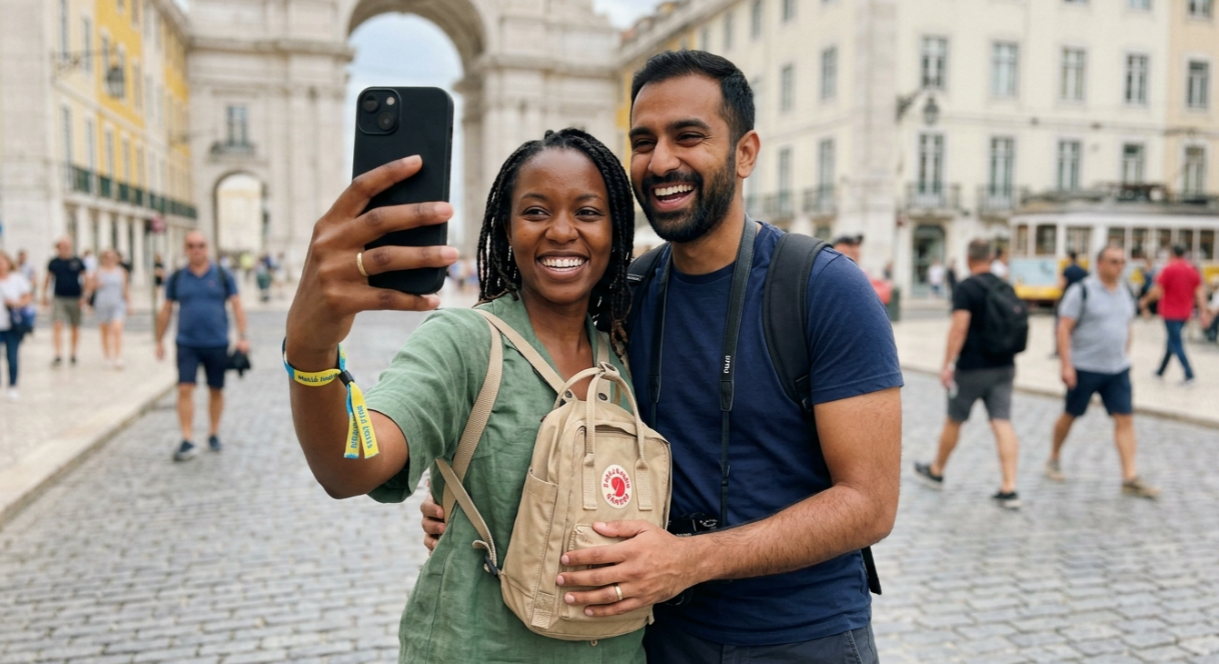
The strongest evidence is generally objective documentation that independently establishes where each spouse was and when they were there. Couples should preserve multiple types of evidence rather than relying on a single photograph or document.
Evidence | What it can show | Relative usefulness |
|---|---|---|
Airline tickets or boarding passes | Travel to the same destination | Strong |
Passport entry/exit records | Physical travel and dates | Strong |
Hotel records showing both spouses | Shared location and dates | Strong |
Joint travel reservations | Planned travel together | Strong |
Dated photographs together | Physical presence at a particular time and place | Helpful |
Receipts from shared activities | Presence at the same location | Helpful |
Messages discussing the trip | Context supporting the visit | Supporting |
Witness declarations | Third-party confirmation that the couple met | Supporting |
Social media posts | Additional timeline evidence | Supporting |
Best practice
Use several independent pieces of evidence that tell the same story. For example, a flight itinerary, passport entry, hotel reservation, and dated photographs can collectively establish when and where the spouses met after the ceremony.
The goal is not to overwhelm USCIS with documents. The goal is to provide a clear, consistent timeline showing that the spouses were physically together after the marriage ceremony.
What Did USCIS Change in October 2025?
USCIS updated its Policy Manual in October 2025 with guidance addressing marriages performed through videoconference and other circumstances in which the spouses were not physically present together during the ceremony.
For couples using an online marriage for immigration, the important points are:
Virtual marriages are specifically addressed
The updated guidance distinguishes marriages performed through videoconference from other marriage arrangements rather than treating every remote ceremony as identical.
The place of celebration still matters
USCIS generally looks to the law of the jurisdiction where the marriage was celebrated to determine whether the marriage is legally valid.
Physical presence remains important
When the spouses were not physically present together during the ceremony, INA § 101(a)(35) remains relevant. The marriage may need to be consummated after the ceremony before the relationship qualifies as a spouse relationship for immigration purposes.
Bona fide marriage evidence remains separate
The policy update does not eliminate the requirement to establish that a marriage is genuine. Couples should be prepared to provide evidence of their shared relationship in addition to evidence addressing the post-ceremony physical-presence requirement.
2026 takeaway: The October 2025 guidance makes online-marriage cases easier to understand, but couples should not interpret a legally valid virtual marriage as automatically satisfying every federal immigration requirement.
What Happens If the Marriage Isn’t Consummated Yet?
An unconsummated proxy or virtual marriage does not create the status of “spouse” under INA § 101(a)(35). The practical consequences are significant.
You cannot file Form I-130. A U.S. citizen petitioner cannot file the I-130 Petition for Alien Relative until consummation has occurred. USCIS requires that the petitioner meet all eligibility requirements at the time of filing. Submitting the petition early will result in denial.
The K-1 fiancé visa remains available. An unconsummated marriage does not block K-1 processing. The Foreign Affairs Manual confirms that a party to an unconsummated proxy marriage may be processed as a nonimmigrant fiancé(e). This gives couples a path forward while they plan to meet in person.
The marriage itself is still legally valid. A Utah virtual marriage is valid immediately under state law. The consummation requirement is specifically an immigration recognition issue, not a question of whether the marriage exists.
Couples who need guidance navigating these options can explore a U.S. spouse visa consultation with an immigration attorney familiar with online marriage cases.
Frequently Confused Points
“Consummation” in immigration law vs. religious or traditional definitions. Immigration consummation is about physical copresence after the ceremony. Religious traditions may define it as the first act of sexual intercourse. USCIS does not require proof of the latter.
Consummation is only required for proxy and virtual marriages. If you married in person (both physically present with the officiant), consummation is not a prerequisite for USCIS recognition. This confusion leads some couples to worry unnecessarily.
A Utah virtual marriage is legally valid immediately. Consummation doesn’t affect the legal validity of the marriage under Utah law. It only affects whether USCIS recognizes you as spouses for immigration purposes. For more on the legality of online ceremonies, see are online weddings legal.
The BIA has ruled consummation is not part of the bona fide marriage test. Proving your marriage is genuine for USCIS is a separate process from proving consummation. You need both, but they require different types of evidence.
Having children together before the ceremony doesn’t count. This surprises many couples. A child born before the marriage is not evidence of post-ceremony consummation. You must still meet after the wedding and document it.
Quick Steps: Online Marriage for Immigration Purposes

For couples planning to use an online marriage to support a U.S. immigration petition, here is the typical sequence:
Step 1: Get legally married online. Complete a virtual ceremony through a jurisdiction that authorizes it. Utah is currently the only U.S. state offering fully virtual marriages to any couple.
Step 2: Obtain your marriage certificate. You’ll receive both a digital and physical copy. If you need the certificate recognized abroad, you may also need an apostille or embassy authentication.
Step 3: Meet in person after the ceremony. This is the consummation step. Travel to be with your spouse and gather evidence: flight tickets, hotel receipts, dated photos, witness affidavits. The more documentation, the better.
Step 4: File Form I-130 with USCIS. Only after consummation. Include your consummation evidence alongside the standard bona fide marriage evidence package.
Step 5: Continue building your bona fide evidence. Joint finances, regular communication records, photos together, affidavits from people who know your relationship. The immigration process takes time, so keep documenting your life together throughout.
Practitioners on Reddit’s r/USCIS forum report that couples who used Utah online marriages and filed I-130 petitions with strong consummation evidence have received approvals, though timelines vary. One thread documented the experience from ceremony through petition approval, noting that organized evidence packages made a noticeable difference.
Ready to get started? See Courtly’s pricing and plans for online marriage packages that include ceremony recording, certificate delivery, and optional add-ons for witnesses, translation, and document legalization.
Frequently Asked Questions
Does USCIS accept Utah virtual marriages for immigration?
Yes. USCIS applies the place-of-celebration rule, meaning if the marriage is valid under Utah law (which it is), USCIS recognizes it. However, you must still consummate the marriage by meeting in person after the ceremony before filing an I-130 petition.
What exactly counts as “consummation” for USCIS?
USCIS does not require intimate proof. Evidence that both spouses were physically in the same place at the same time after the wedding ceremony is sufficient. Flight tickets, hotel bookings, dated photos, and signed affidavits all qualify.
Can I file an I-130 immediately after my online wedding?
No. You must consummate the marriage first by meeting your spouse in person after the ceremony. Filing before consummation will result in a denied petition because USCIS requires that you meet all eligibility criteria at the time of filing.
What if we can’t meet in person right away?
You have two options. Wait until you can meet, gather consummation evidence, and then file the I-130. Or pursue a K-1 fiancé visa using Form I-129F, which allows your partner to enter the U.S. and marry within 90 days. An unconsummated marriage does not block K-1 processing.
We lived together before the online wedding. Does that count as consummation?
No. The meeting must occur after the ceremony. Prior cohabitation, prior sexual relations, and even children born before the marriage do not satisfy the consummation requirement under INA § 101(a)(35).
Is the consummation requirement different for same-sex couples?
USCIS has not defined consummation differently for same-sex couples, and eligibility will not be denied based on the same-sex nature of a marriage. Same-sex couples should focus on physical presence evidence (travel records, photos, affidavits) after the ceremony.
Do in-person marriages also require consummation for immigration?
No. The consummation requirement applies only to marriages where the parties were not physically present with each other during the ceremony. If you married in person, consummation is not an immigration prerequisite. The BIA confirmed this distinction in Matter of Peterson.
What changed with the October 2025 USCIS policy update?
Policy Alert PA-2025-23 (effective October 17, 2025) updated the USCIS Policy Manual to explicitly address virtual marriages for the first time. It confirmed that virtual ceremonies are valid if recognized in the jurisdiction where performed, but consummation is still required when the parties were not physically together. The update also strengthened fraud prevention guidance and replaced older adjudication standards.
Let us handle the paperwork.
Getting married is complicated. Courtly simplifies the process and provides everything necessary to get married online, including providing a licensed officiant who can perform a remote ceremony.
Get Married

Get married online.
Getting married is complicated. Courtly simplifies the process and provides everything necessary to get married online.

