

The online marriage timeline covers six phases, from license application to name change. You can go from application to digital marriage certificate in as few as 1 to 3 days with rush processing, or about 1 to 2 weeks on a standard path. Add 1 to 4 weeks for an apostille and 6 to 8 weeks for a full name change. Utah’s remote-appearance system makes all of this possible without either spouse traveling.
Getting legally married online isn’t some vague, open-ended process. It follows a clear sequence with real deadlines and measurable durations at every stage. Whether you’re working around a military deployment, a visa filing window, or the simple reality of living in different countries, knowing exactly how long each phase takes is the difference between a smooth experience and a stressful scramble.
This guide breaks down the complete online marriage timeline, phase by phase, with specific time estimates backed by government sources and real-world experience. Every step from clicking “apply” to holding your apostilled certificate is covered here.
Explore Courtly’s plans to see which timeline fits your situation.
Online Marriage Timeline at a Glance
Direct Answer
Most couples can complete an online marriage through Utah in 1 to 2 weeks, while couples using rush processing can legally marry in 1 to 3 days. The process follows six stages:
Step | Typical Time |
|---|---|
Apply for marriage license | 10–15 minutes |
License approval | Minutes to hours |
Schedule ceremony | Same day to 7 days |
Online wedding ceremony | 10–30 minutes |
Digital certificate | Minutes after ceremony |
Physical certificate | 1–2 weeks |
Apostille (optional) | 1–6 weeks |
Name change | 6–8 weeks |
This timeline applies to marriages performed remotely under Utah law, where both spouses may participate from anywhere in the world while the officiant remains physically located in Utah.
What Is an Online Marriage Timeline?
An online marriage timeline is the chronological sequence of steps, and their expected durations, for completing a legally binding marriage through a remote-appearance ceremony. In practice, this means a marriage performed under Utah law, the only U.S. state with a fully digital system that allows both the application and the ceremony to happen online.
Utah County pioneered this system starting in 2019, and it has since become what county clerk Burt Harvey described as “an international marriage venue completely by accident.” The system has undergone significant updates, including 2024 legislative changes that codified officiant location requirements and a 2026 rule adding a verbal warning before all remote ceremonies.
Understanding the full timeline matters because most couples aren’t just getting married for the sake of it. They need the certificate, and often an apostille, by a specific date. If you want a deeper look at how the process works mechanically, the guide on how online marriage works covers the operational details.
Here’s what the full online marriage timeline looks like at a glance:
Phase | Duration |
|---|---|
Application & license issuance | Minutes to hours |
Ceremony scheduling | Same day to ~1 week |
The ceremony itself | 10 to 30 minutes |
Certificate delivery | Minutes (digital) to 2 weeks (physical) |
Apostille & legalization | 1 to 6 weeks |
Name change | 6 to 8 weeks |
Now, each phase in detail.
Who Should Follow This Timeline?
This timeline is especially useful for:
International couples
Military families stationed overseas
Long-distance relationships
Immigration applicants
Digital nomads
Couples needing an apostille
Couples planning a visa application
LGBTQ+ couples where local marriage laws are restrictive
Busy professionals unable to travel
How Long Does the Entire Online Marriage Process Take?
Most couples fall into one of three timelines.
Situation | Total Time |
|---|---|
Fastest possible | 1–3 days |
Average couple | 1–2 weeks |
Including apostille | 2–6 weeks |
Including full name change | 2–3 months |
Phase 1: Application and License Issuance (Minutes to Hours)
What it means: The online marriage license application is the digital form you submit through Utah County’s system, providing identification details and paying the fee. No in-person visit is required.
What you need:
A valid email address for each applicant
A government-issued photo ID for both parties
A smartphone to scan IDs and complete facial verification
A credit or debit card for the fee of approximately $71.75
How long it takes: The application itself takes about 10 to 15 minutes. Once submitted with payment, the digital marriage license is issued almost immediately, typically within hours. There is no waiting period in Utah, so you’re clear to move forward as soon as the license arrives.
Key deadline: Your license is valid for exactly 32 days from issuance. Utah Code §81-2-302 states plainly that “a license that is not used within 32 days after the day on which the license is issued is invalid.” Miss that window and you’ll need to reapply and pay again.
Recommended timing: Utah County suggests applying 10 to 14 days before your desired ceremony date. This gives enough buffer to fix any application errors while leaving plenty of room within the 32-day window. For a complete list of what to prepare before applying, the documents needed checklist covers everything.
Phase 2: Ceremony Scheduling (Same Day to About 1 Week)

What it means: The ceremony scheduling window is the period between receiving your approved license and the actual date of your online wedding. How quickly this happens depends on the service you use and whether you opt for rush processing.
Standard path: Most couples complete their ceremony within the same week as license approval.
Rush path: Courtly’s Fast-Track plan includes a 24-hour scheduling guarantee after license approval, with a money-back promise if that window isn’t met. Other services advertise similar speed but rarely offer a formal guarantee.
Requirements for the ceremony:
A certified officiant physically located in Utah (codified as of May 1, 2024)
Two witnesses aged 18 or older
A video conferencing platform (Zoom, Skype, FaceTime, or similar)
Both parties must sign an affidavit agreeing to Utah’s jurisdiction for any future divorce or annulment proceedings
That jurisdiction affidavit is a 2024 addition. Power of attorney cannot be used, meaning both spouses must personally participate.
See Courtly’s pricing and rush options to compare standard and Fast-Track scheduling.
Utah Requirements That Affect the Timeline
Requirement | Why It Matters |
|---|---|
Both spouses appear live | Required by law |
Officiant must be in Utah | Legal validity |
Two witnesses required | Ceremony requirement |
License valid 32 days | Miss it and reapply |
No waiting period | Same-day ceremonies possible |
Phase 3: The Online Ceremony (10 to 30 Minutes)
What it means: This is the remote-appearance solemnization, the legal moment where your marriage becomes official. Utah law requires that the officiant, the couple, and witnesses all be able to see and hear one another throughout the ceremony.
Duration: Typically 10 to 30 minutes, depending on whether you include personal vows or keep things brief.
What happens during the ceremony:
Identity verification of both parties
The 2026-required verbal warning (a unique statement the officiant must read to all couples before proceeding, regardless of location)
Declaration of intent from both parties
Pronouncement of marriage by the officiant
The couple and witnesses can be located anywhere in the world. Only the officiant must be physically present in Utah. This is what makes the system work for long-distance couples, military families, and international partners. If you’re curious about the legal foundation, the article on whether online weddings are legal goes into the statutory basis.
Phase 4: Certificate Delivery (Minutes to 2 Weeks)
What it means: After the ceremony, the officiant submits the completed marriage license to the county. This triggers the issuance of your marriage certificate in two forms: digital and physical.
Digital certificate: Emailed within minutes of the officiant’s submission. This is often sufficient for initial administrative tasks and serves as immediate proof of marriage.
Physical certificate: Mailed the next business day after submission. Domestic delivery typically takes 1 to 2 weeks. International shipping takes longer and varies by destination.
One important detail: The marriage certificate issued by Utah after an online ceremony does not indicate that the marriage was conducted remotely. It looks identical to certificates from in-person ceremonies. This matters significantly for couples using the certificate for immigration filings or foreign government submissions.
Potential delay: Utah law gives officiants up to 30 days to return the completed certificate to the county, though most submit much sooner. Using a service with experienced, accountable officiants minimizes this risk.
Practitioners on Reddit who’ve gone through the process report that the digital certificate typically arrives the same day as the ceremony, while the physical copy shows up within a week or two domestically. One user in an r/wedding thread noted receiving everything on schedule with no surprises.
Phase 5: Apostille and Document Legalization (1 to 6 Weeks)
What it means: An apostille is an official certification that authenticates your marriage certificate for use in countries that are members of the Hague Apostille Convention. For non-Hague countries, you’ll need embassy authentication instead.
This phase is critical for international couples, especially those filing for immigration benefits or registering their marriage in another country.
State-level apostille: 1 to 3 weeks under standard processing, or 3 to 5 business days with expedited service.
Federal-level apostille: 4 to 6 weeks under standard processing, or 7 to 10 business days expedited. DIY mail-in orders through federal channels are currently taking 6 to 8 weeks or longer in 2026.
Real-world timing: Courtly testimonials indicate that apostilled copies typically arrive about 2 weeks after the ceremony, though this depends on the processing path chosen. For a thorough explanation of what apostilles are and when you need one, read the guide to apostilles. If your destination country isn’t part of the Hague Convention, the breakdown of apostille vs. authentication explains the alternative.
Explore document legalization options for apostille and embassy authentication services.
Phase 6: Name Change (2 to 8 Weeks)
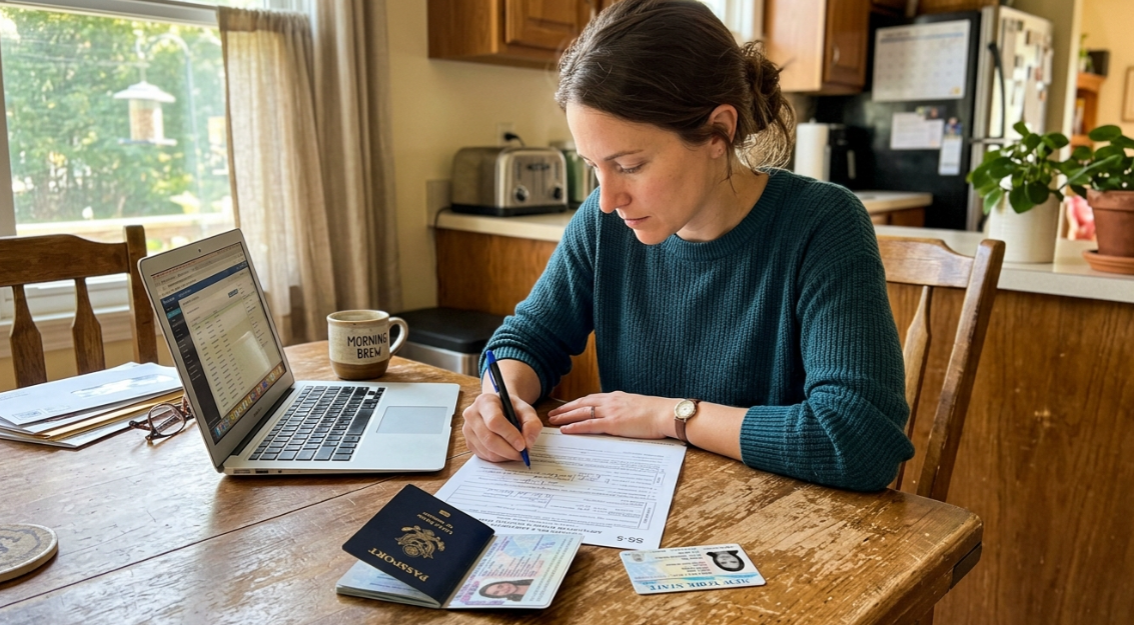
What it means: A post-marriage name change is the process of updating your legal name across government agencies, financial institutions, and other records. You can begin as soon as you have your certified marriage certificate in hand.
Typical durations for key documents:
Social Security card: approximately 2 weeks
Driver’s license: 1 to 2 weeks after SSA update
Passport: 8 to 11 weeks standard processing (expedited options available)
Total timeline: If you’re organized and tackle everything in sequence, the complete name change process takes about 6 to 8 weeks. If you handle it piecemeal, it can stretch to 6 months.
One rule worth knowing: The Social Security Administration applies stricter identity verification standards for name changes requested more than 2 years after the marriage. There’s no hard legal deadline, but acting within the first two years is simpler.
Courtly offers a Name Change Kit with prefilled forms and checklists to streamline the process across SSA, DMV, passport offices, and banks.
Standard vs. Rush Online Marriage Timeline
Here’s a side-by-side comparison of what to expect depending on your pace:
Phase | Standard Path | Rush Path |
|---|---|---|
Application to license | Minutes to hours | Minutes to hours |
License to ceremony | 3 to 7 days | Within 24 hours (with guarantee) |
Digital certificate | Minutes after ceremony | Minutes after ceremony |
Physical certificate | 1 to 2 weeks | 1 to 2 weeks |
Apostille (if needed) | 1 to 3 weeks | 3 to 5 business days (expedited) |
Name change | 6 to 8 weeks | 6 to 8 weeks |
The biggest variable between standard and rush is how quickly the ceremony gets scheduled. Everything after the ceremony follows the same timeline regardless of which path you chose. For couples with tight deadlines, there are ways to get married within 24 hours that explain the rush options in more detail.
What Can Delay Your Online Marriage Timeline?
Even a well-planned process can hit snags. Here are the most common ones:
Application errors or ID verification problems. If your photo ID doesn’t scan clearly or your information doesn’t match, the application can stall. This is why Utah County recommends applying 10 to 14 days early rather than waiting until the last minute.
License expiration. That 32-day window is a hard cutoff. If life intervenes and you can’t schedule the ceremony in time, you lose the license and the fee.
Officiant certificate return delays. Officiants have 30 days by law to submit the completed certificate. Most do it promptly, but an unresponsive officiant can hold up everything downstream. Working with a service that manages its own officiants reduces this risk considerably.
Apostille processing backlogs. Federal apostille processing has slowed in 2026, with standard mail-in orders taking 6 to 8 weeks. Expedited processing or using a professional service cuts this significantly.
International shipping variability. Physical certificates and apostilled documents sent overseas are subject to customs and postal delays that no one can fully control.
Immigration-specific complications. Practitioners on Reddit’s r/USCIS have noted that while online marriages are accepted for U.S. immigration purposes, couples may need to provide additional documentation. USCIS sometimes requests proof of consummation, particularly if the couple was not physically together during the ceremony. For immigration-specific guidance, the immigration resource page covers what to expect.
Frequently Asked Questions
How fast can I get married online?
With rush processing, you can go from application to completed ceremony in as little as 1 to 2 days. The digital certificate arrives minutes after. On a standard path, most couples complete everything within a week.
Does the marriage certificate say the marriage was online?
No. The Utah marriage certificate issued after a remote ceremony is identical to one issued after an in-person ceremony. There is no notation indicating it was conducted online.
How long does the apostille take after an online marriage?
A state-level apostille takes 1 to 3 weeks standard or 3 to 5 business days expedited. Federal apostille processing runs 4 to 6 weeks standard, though DIY mail-in orders are taking 6 to 8 weeks in 2026.
Is there a waiting period after getting the marriage license?
No. Utah has no waiting period. You can have your ceremony the same day the license is issued.
What happens if my marriage license expires?
If you don’t use it within 32 days of issuance, it becomes invalid. You’ll need to submit a new application and pay the fee again.
Can two people in different countries get married online?
Yes. The couple and witnesses can be located anywhere in the world. Only the officiant must be physically in Utah during the ceremony. This is what makes the system work for long-distance and international couples.
What if I need my certificate for immigration purposes?
Online marriages through Utah are recognized as valid for U.S. immigration filings. However, you may need supplementary documentation depending on your case. An apostille is typically required for international use. Consulting an immigration attorney early in the process is strongly recommended.
How long does the entire online marriage timeline take from start to finish?
From application to physical certificate in hand: roughly 1 to 2 weeks on a standard timeline. Add apostille time (1 to 4 weeks) and name change (6 to 8 weeks) if applicable. The total end-to-end timeline, including all post-ceremony steps, is typically 2 to 3 months when handled efficiently.
Ready to start your own online marriage timeline? Get started with Courtly and see which plan matches your deadline.
Let us handle the paperwork.
Getting married is complicated. Courtly simplifies the process and provides everything necessary to get married online, including providing a licensed officiant who can perform a remote ceremony.
Get Married

Get married online.
Getting married is complicated. Courtly simplifies the process and provides everything necessary to get married online.

