


India does not currently legally recognize or provide a marriage-registration pathway for same-sex couples. Indian couples may, however, be able to marry remotely under Utah law, where both spouses participate live by video with a Utah-based officiant. The resulting Utah marriage certificate can establish a legally valid marriage under Utah law, but it does not make the marriage legally recognized in India.
For couples considering U.S. immigration, a Utah online marriage may be relevant to spouse-based immigration benefits, including an I-130 petition, CR-1 or IR-1 immigrant visa, or an F-2 dependent visa, depending on the couple’s circumstances. Immigration eligibility is a separate question from whether India recognizes the marriage, and proxy-marriage rules can create additional issues.
This guide explains the key terms Indian same-sex couples need to understand, including Utah remote marriage, proxy marriage, consummation, apostille, foreign-marriage recognition, public policy, I-130 petitions, CR-1/IR-1 visas, F-2 visas, and OCI status.
Can Indian Same-Sex Couples Get Married Online?
Yes, Indian same-sex couples may be able to obtain a legally valid Utah marriage through a remote ceremony, even when both spouses are outside the United States. However, the marriage is not currently recognized as a same-sex marriage under Indian law.
The key distinction is between where the marriage is legally performed and where the couple wants to use the marriage. Utah law determines whether the remote ceremony creates a valid Utah marriage. Indian law determines whether India recognizes that marriage. U.S. immigration law separately determines whether the marriage qualifies for a particular immigration benefit.
For couples considering the Utah route, the three questions to answer are:
1. Is the marriage legally valid under Utah law?
2. Will the country where the couple needs to use the marriage recognize it?
3. Does the intended U.S. immigration benefit recognize the marriage under its applicable rules?
A Utah marriage certificate can answer the first question without automatically answering the other two.
The Three Legal Questions You Must Keep Separate
A same-sex couple using a Utah online marriage can encounter three different legal systems. Confusing them is one of the biggest sources of misinformation about international online marriage.
Question | Governing law | What it determines |
|---|---|---|
Is the online ceremony legally valid? | Utah law | Whether the ceremony creates a valid Utah marriage |
Will India recognize the marriage? | Indian law | Whether the marriage produces marital rights or recognition in India |
Can the marriage support a U.S. immigration benefit? | U.S. federal immigration law | Whether USCIS or the U.S. Department of State treats the marriage as qualifying for the specific benefit |
Important: A “yes” to one question does not automatically mean “yes” to the other two.
For example, a marriage can be legally valid under Utah law while still not being recognized as a same-sex marriage in India. Similarly, having a valid marriage certificate does not by itself guarantee approval of a particular U.S. immigration application.
What This Guide Covers
This guide explains the legal terminology surrounding same-sex online marriage for couples connected to India. It covers four areas:
Indian marriage law: same-sex marriage, Section 377, the Special Marriage Act, foreign marriages, and public policy.
Utah online marriage: remote appearance ceremonies, marriage licenses, virtual versus proxy marriage, and 2026 Utah law changes.
International documentation: apostilles, authentication, legalization, and foreign-marriage recognition.
U.S. immigration: consummation, I-130 petitions, CR-1 and IR-1 visas, F-2 visas, and related concepts.
The terminology matters because marriage validity, marriage recognition, document authentication, and immigration eligibility are separate legal questions.
India’s Legal Framework
Is Same-Sex Marriage Legal in India in 2026?
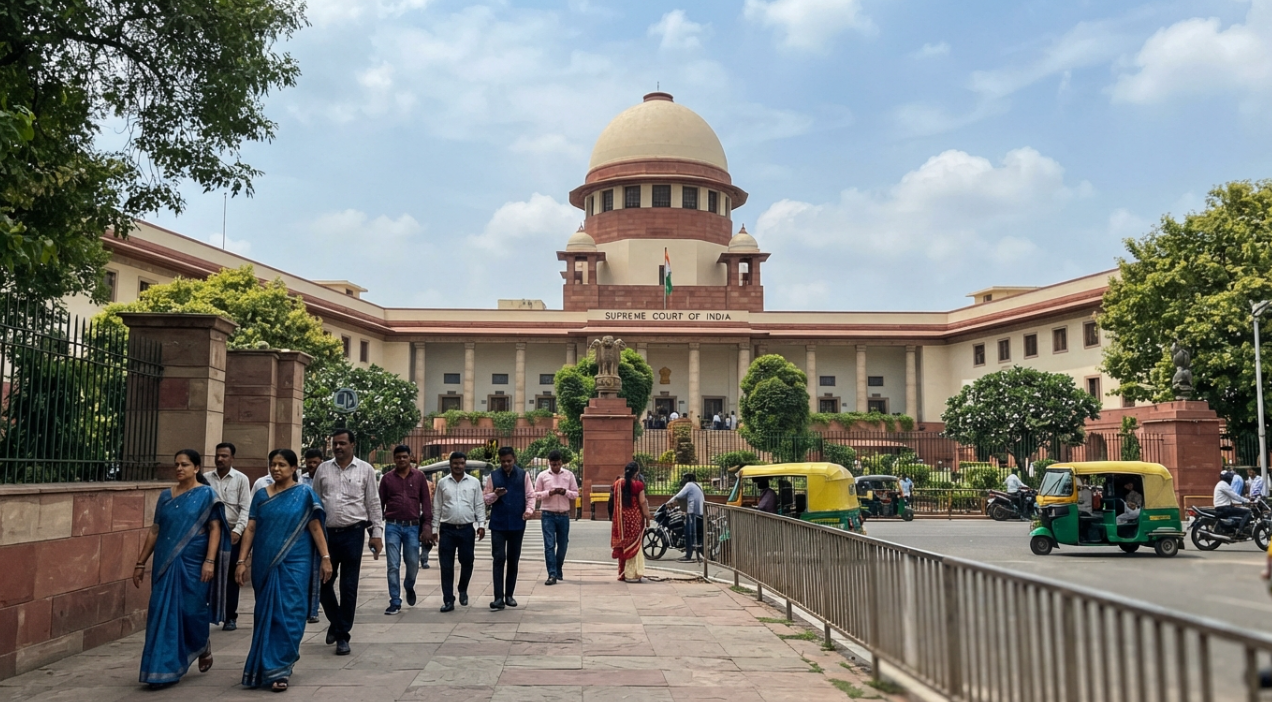
No. Same-sex marriage is not currently legally recognized or registered as marriage under Indian law.
India's Supreme Court declined in 2023 to judicially recognize a right to same-sex marriage and declined to reinterpret the Special Marriage Act to include same-sex couples. The Court instead left the question of legal marriage recognition to the legislative process.
This creates an important distinction between decriminalization of same-sex relationships and legal recognition of same-sex marriage. Consensual same-sex relationships between adults are not criminalized in India, but couples do not currently have an equivalent statutory route to register a same-sex marriage.
Therefore, an Indian same-sex couple can potentially hold a marriage certificate issued by another jurisdiction while still being unable to register that marriage as a same-sex marriage under Indian law.
Section 377 and Decriminalization
Section 377 of the Indian Penal Code criminalized “carnal intercourse against the order of nature,” a colonial-era provision that was used for decades to prosecute gay men. In September 2018, the Supreme Court struck down Section 377 in the landmark Navtej Singh Johar ruling, decriminalizing consensual same-sex relations between adults. In 2024, Section 377 was formally replaced when the Bharatiya Nyaya Sanhita (BNS) took effect as India’s new criminal code. The new code does not recriminalize homosexuality. This is important context: while same-sex relationships are no longer criminal, the legal system still does not provide a pathway to marriage.
Special Marriage Act, 1954
The Special Marriage Act is India’s secular marriage law. It allows couples of different religions, castes, or nationalities to marry without converting to a partner’s faith. However, the Act’s language refers to marriage between “a male and a female,” and the Supreme Court’s 2023 ruling specifically declined to expand this definition. Same-sex couples cannot register a marriage under this law. Parliament would need to amend the Act for that to change, and no such amendment is currently pending.
Foreign Marriage Act, 1969
The Foreign Marriage Act, 1969 provides a legal framework for certain marriages involving Indian citizens that are solemnized outside India. However, the existence of this framework does not mean that every foreign marriage will necessarily receive the same legal treatment under Indian law.
For same-sex couples, the central issue is India's current substantive position on same-sex marriage. Because Indian law does not currently recognize same-sex marriage as a category of marriage, obtaining a marriage certificate from another country does not automatically create marital rights under Indian law.
Couples should therefore distinguish between:
a foreign authority legally issuing a marriage certificate;
India authenticating that certificate as a genuine document; and
India recognizing the underlying relationship as a marriage.
These are different legal questions and can produce different outcomes.
Public Policy and Recognition of Foreign Marriages
Public policy is a principle in private international law that can limit recognition or enforcement of a foreign legal act when recognition would conflict with fundamental principles of the forum country's law.
For international marriages, this means that a marriage legally valid in the country where it was performed is not necessarily guaranteed to produce every legal consequence in another country.
For Indian same-sex couples, this distinction is especially important. A Utah marriage certificate can establish that a marriage was legally created under Utah law, while Indian authorities may apply India's current legal framework when determining whether that relationship receives marital recognition or benefits in India.
Do not confuse document authentication with marriage recognition. An apostille can authenticate the origin of a marriage certificate without requiring the destination country to recognize the marriage itself.
India Same-Sex Marriage Legal Timeline
Date | Development | Why it matters |
|---|---|---|
2018 | Supreme Court decision in Navtej Singh Johar | Consensual same-sex relations between adults were decriminalized |
2023 | Supreme Court same-sex marriage judgment | Court declined to judicially create a right to same-sex marriage |
2024 | New criminal codes took effect | Section 377 was replaced within India's new criminal-law framework; consensual same-sex relationships were not recriminalized |
2025 | Supreme Court rejected review petitions concerning the 2023 marriage ruling | The 2023 position remained in place |
2026 | Same-sex marriage remains unrecognized under current Indian law | Couples must distinguish foreign marriage validity from Indian recognition |
What This Means in Practice
India's legal position contains an important distinction: LGBTQ+ people have constitutional protections relating to dignity, privacy, equality, and personal relationships, but those protections do not currently create a statutory right for same-sex couples to register a marriage.
How Utah Online Marriage Works for Indian Same-Sex Couples
A typical Utah remote marriage process involves several stages:
1. Apply for the marriage license
The couple completes the applicable Utah County marriage-license process and provides the required identification and information.
2. Schedule the remote ceremony
The couple arranges a ceremony with an authorized officiant who can perform the marriage under Utah law.
3. Appear together by live video
Both spouses participate in the ceremony remotely. The officiant conducts the ceremony and completes the required legal formalities.
4. Complete the marriage record
After the ceremony and required filings are completed, the marriage is recorded under Utah law.
5. Obtain the marriage certificate
The couple can obtain an official copy of the Utah marriage certificate for use as evidence of the marriage.
6. Apostille the certificate when required
If the document needs to be presented to a foreign authority that requires authentication, an apostille may be appropriate.
7. Determine whether the destination country recognizes the marriage
This is a separate step. Possessing an apostilled certificate does not automatically mean that India or another country will recognize the marriage itself.
8. Evaluate U.S. immigration eligibility separately
If the marriage will be used for U.S. immigration, the couple must determine whether the specific immigration benefit recognizes the marriage and whether additional requirements apply.
Utah’s Online Marriage System
Online Marriage / Virtual Marriage
An online marriage (also called a virtual marriage) is a legally binding ceremony conducted over video call. Both partners appear live before a licensed officiant, exchange vows, and are pronounced married, all without being physically present in the same room or even the same country. Utah is currently the only U.S. state that allows this for couples anywhere in the world, regardless of citizenship or residency.
This is the mechanism that makes same-sex online marriage possible for Indian couples. Utah County has performed over 3,500 virtual weddings for international couples from dozens of countries. For a deeper explanation, see how online marriage works.
Remote Appearance Marriage
This is Utah’s legal term for the online marriage process. Under Utah law, the officiant must be physically located in Utah, but the couple can appear remotely from anywhere. Both parties must be present on the video call at the same time. The officiant verifies identities, conducts the ceremony, and signs the marriage license. The result is a standard Utah marriage certificate, indistinguishable in legal weight from one issued after an in-person ceremony. Utah’s remote appearance framework is what gives this entire process its legal foundation.
Utah County Marriage License
This is the specific marriage license issued by Utah County for remote ceremonies. There is no residency or citizenship requirement. The government fee is approximately $70. Applicants provide identification documents (typically passports for international couples), complete an online application, and receive their license electronically after approval. The license must be used within 32 days. For Indian couples, the key point is that this license does not require either party to be in the United States.
Proxy Marriage vs. Virtual Marriage
This distinction is critical and frequently misunderstood. In a proxy marriage, one or both parties are absent from the ceremony, and a stand-in appears on their behalf. In a virtual marriage, both parties are personally present via live video. They see the officiant, they speak their vows, and they participate in real time.
The difference has massive immigration consequences. U.S. immigration law treats proxy marriages differently: a proxy marriage is not valid for immigration purposes until it has been consummated. Virtual marriages, where both parties are present (just not physically in the same room), occupy a different legal category. Many immigration attorneys argue they do not carry the same consummation requirement. For a full comparison of these two types, the distinction is worth understanding thoroughly before proceeding.
SB 257 (Utah, 2026)
In early 2026, Utah’s legislature considered SB 257, a bill that initially contained language that would have severely restricted remote appearance marriages. The original version alarmed LGBTQ+ advocates and the international couples who depend on Utah’s system. Before introduction in committee, however, the bill was amended. The final version, effective May 6, 2026, does not limit remote marriages. Instead, it requires a verbal warning: the officiant must inform couples before the ceremony that a Utah marriage may not be recognized in their home country. County websites must also display a written warning. The substance of Utah online marriages remains unchanged; the process now simply includes an explicit disclaimer about foreign recognition.
Recognition and Documentation
Apostille
An apostille is an international certification that authenticates a public document for use in another country. When you receive a Utah marriage certificate and need to use it abroad, you get it apostilled by the Utah Lieutenant Governor’s office. India has been a member of the Hague Apostille Convention since 2005, which means Indian authorities accept apostilled documents as properly authenticated.
Here’s the crucial distinction: an apostille proves the marriage certificate is a genuine, legally issued document. It does not force India to recognize the underlying marriage. For a same-sex couple, an apostilled Utah marriage certificate is authentic and verifiable, but India can still decline to treat it as a valid marriage under domestic law. Learn more about how apostilles work and document legalization services.
Embassy Legalization / Authentication
For countries that are not part of the Hague Apostille Convention (or in situations where additional authentication is required), documents go through embassy legalization instead. This involves the U.S. State Department authenticating the document, followed by the destination country’s embassy or consulate adding its own verification. Since India is a Hague member, apostille is typically sufficient for document authentication. But some Indian bureaucratic processes may still request embassy-level authentication depending on the specific use case.
Marriage Recognition (International)
The general principle in private international law is that a marriage valid where it was performed is valid everywhere. In practice, exceptions abound. Countries can refuse recognition if the marriage violates their domestic public policy. For same-sex online marriage from India’s perspective, this exception applies directly: India acknowledges the marriage was legal in Utah but does not extend recognition domestically.
This means a same-sex couple married through Utah’s system holds a marriage that is valid throughout the United States and in many other countries that recognize same-sex unions. It is not valid in India. The practical impact depends on what the couple needs: for U.S. immigration, the marriage works. For inheritance rights, tax benefits, or adoption in India, it currently does not. Country-specific details are available through Courtly’s recognition guides.
OCI (Overseas Citizen of India)
OCI stands for Overseas Citizen of India, a status granted to foreign citizens of Indian origin (or their spouses) that provides long-term visa benefits and certain rights in India. The OCI application creates a genuine gray area for same-sex married couples.
Practitioners on immigration forums report that the OCI application form does not ask for a spouse’s gender. Some same-sex married applicants have reportedly listed their spouse on OCI applications without issues, with the OCI booklet reflecting the spouse’s name. Others have listed themselves as “single,” reasoning that since India doesn’t recognize same-sex marriage, their legal status with the Indian government is effectively unmarried. The Delhi High Court has issued notice in a plea seeking recognition of a foreign spouse of an Indian citizen as an OCI holder regardless of gender or sexual orientation. This case, if decided favorably, could clarify the status significantly. For now, the situation remains ambiguous and inconsistent.
U.S. Immigration Concepts
Consummation Requirement
This is one of the most debated topics among immigration attorneys handling same-sex online marriage cases for Indian couples. Under the Immigration and Nationality Act, Section 101(a)(35), a “proxy marriage” is not considered valid for immigration purposes until it has been consummated through physical meeting of the spouses.
The question is whether a Utah virtual marriage, where both parties appear live on video, counts as a proxy marriage requiring consummation. Opinions among attorneys differ. One immigration law firm takes the position that virtual marriages are “non-proxy marriages” because both parties are personally present, meaning the marriage certificate alone is sufficient proof. The prominent immigration attorney Gary Chodorow has written that a Utah video marriage is valid for nonimmigrant visas like the F-2 “after consummation.” He has also acknowledged the absurdity of trying to define consummation for same-sex couples, noting it would be “folly for USCIS to try to define what ‘consummation’ or ‘sex’ means” in that context.
Practitioners on Reddit’s r/immigration have discussed this exact scenario: an Indian same-sex couple asking about using a Utah online marriage for an F-2 visa. The community confirmed the route’s feasibility while flagging consummation as a potential issue. For a detailed guide on consummation and immigration, the nuances matter.
The safest practical advice from most attorneys: meet your spouse in person after the ceremony. This removes ambiguity regardless of how USCIS interprets the law.
I-130 Petition

Form I-130, Petition for Alien Relative, is the document a U.S. citizen or lawful permanent resident files to sponsor their spouse for a green card. For a same-sex couple where one partner is a U.S. citizen or green card holder and the other is Indian, filing an I-130 based on a Utah virtual marriage is a recognized pathway. USCIS has approved I-130 petitions based on Utah online marriages. The petition must include evidence that the marriage is bona fide (genuine, not solely for immigration benefits). For more on how online marriages interact with immigration, documentation and evidence preparation are covered separately.
CR-1 / IR-1 Spouse Visa
These are the two immigrant visa categories for spouses of U.S. citizens. The CR-1 (Conditional Resident) visa applies when the marriage is less than two years old at the time of visa issuance. The IR-1 (Immediate Relative) visa applies when the marriage has lasted more than two years. Both lead to a green card. For same-sex couples using a Utah online marriage, the visa category depends solely on the timing of the marriage relative to visa approval, not on whether the marriage was performed online or in person.
F-2 Visa
The F-2 is a dependent visa for spouses of F-1 student visa holders. This is particularly relevant for Indian same-sex couples because one partner is often in the U.S. on an F-1 student visa. On the Law and Border immigration blog, an Indian commenter described exactly this scenario: “My boyfriend and I both are from India, where gay marriage is illegal. I just got my F1 visa approved and now I am planning to do a Utah marriage and then have my husband apply for an F2 visa.”
The F-2 route is viable. The legal marriage in Utah gives the spouse eligibility to apply. However, the consummation question (discussed above) applies here too, and couples should plan to meet in person before or shortly after the ceremony.
Practical Considerations for Indian Same-Sex Couples
What a Utah Marriage Certificate Gets You
A U.S. marriage certificate that is legally valid in all 50 states. Eligibility to petition for U.S. immigration benefits (spouse visas, dependent visas, green cards). Legal spousal status recognized by U.S. federal agencies, employers, and institutions. A document that can be apostilled for international use.
What It Does Not Get You in India
Registration of your marriage under any Indian marriage law. Spousal rights to inheritance, succession, pension, or tax benefits under Indian law. Automatic adoption rights as a couple. Legal next-of-kin or medical decision-making authority in Indian hospitals.
The Generational Shift
The disconnect between India’s laws and the attitudes of younger Indians is striking. With nearly 60% of Indians under 35 supporting marriage equality in surveys, the legal status quo may not last forever. But legislative change takes time, and the Supreme Court has clearly placed the ball in Parliament’s court. For couples who need legal recognition now, the Utah route exists as a practical workaround for U.S.-based rights, even as domestic Indian recognition remains out of reach.
If you’re ready to explore this process, see how Courtly’s plans and pricing work to understand what’s included at each tier.
Frequently Asked Questions
Can two Indian citizens in a same-sex relationship get legally married online?
Yes, through Utah’s remote appearance marriage system. Neither partner needs to be in the United States, and there is no citizenship or residency requirement. The resulting marriage certificate is a valid U.S. legal document. However, India will not recognize this marriage domestically.
Will India recognize a same-sex marriage performed in Utah?
No. Under current Indian law, same-sex marriages solemnized abroad are not recognized regardless of where they were performed. Courts can invoke the public policy doctrine to refuse recognition even if the marriage was entirely legal in Utah.
Can a Utah online marriage be used for U.S. immigration (green card or spouse visa)?
Yes. USCIS recognizes marriages performed under Utah’s remote appearance law. Same-sex couples can file I-130 petitions and pursue CR-1, IR-1, or F-2 visas based on a Utah online marriage. The main legal gray area involves the consummation requirement, and most attorneys recommend meeting in person after the ceremony to eliminate doubt.
What is the difference between a proxy marriage and a virtual marriage for immigration?
In a proxy marriage, a stand-in represents an absent spouse. In a virtual marriage, both spouses appear live on video. U.S. immigration law requires proxy marriages to be consummated before they are valid for immigration purposes. Virtual marriages, because both parties are personally present, are treated differently by many attorneys, though the exact interpretation is still debated.
Do I need an apostille for my Utah marriage certificate to use it in India?
An apostille authenticates the document as genuine. India, as a Hague Convention member since 2005, accepts apostilled documents for verification purposes. But authentication and recognition are different things. The apostille proves the certificate is real; it does not compel India to recognize the same-sex marriage.
Has anything changed with Utah’s online marriage law in 2026?
SB 257, effective May 6, 2026, added a requirement that officiants deliver a verbal warning to couples before the ceremony, stating that the marriage may not be recognized in their home country. County websites must also display a written warning. The law did not restrict or limit remote marriages themselves.
What should I list as my marital status on an OCI application if I’m in a same-sex marriage?
This is a gray area. Some applicants list “single” because India does not recognize same-sex marriages, meaning their legal status with the Indian government is technically unmarried. Others have listed their same-sex spouse without issues. The Delhi High Court has taken notice of a related plea, but no definitive ruling exists yet. Consulting an immigration attorney familiar with OCI applications is the safest approach.
How do I start the process of getting married online as a same-sex couple from India?
You apply for a Utah County marriage license, attend a live video ceremony with a licensed officiant, and receive your U.S. marriage certificate. Services like Courtly handle the entire process, from license application to ceremony coordination to certificate delivery, so you can focus on what matters most.
Let us handle the paperwork.
Getting married is complicated. Courtly simplifies the process and provides everything necessary to get married online, including providing a licensed officiant who can perform a remote ceremony.
Get Married

Get married online.
Getting married is complicated. Courtly simplifies the process and provides everything necessary to get married online.

