


An apostille on a same-sex marriage certificate works exactly the same as on any other marriage certificate. The process is identical, and the document itself looks no different. The catch is that an apostille only verifies a document’s authenticity. It does not force a foreign country to recognize your same-sex marriage. That recognition depends entirely on the destination country’s laws, which vary widely and change frequently.
Quick Answer: Can You Apostille a Same-Sex Marriage Certificate?
Yes. You can apostille a legally issued same-sex marriage certificate in the same way as any other marriage certificate. The apostille verifies the authenticity of the issuing official's signature, seal, and authority. It does not determine whether another country recognizes same-sex marriage.
To use your certificate abroad, you generally need to complete two separate checks:
Document authentication: Determine whether the destination country requires an apostille, embassy legalization, or another form of authentication.
Marriage recognition: Confirm whether that country recognizes your marriage for the specific purpose, such as immigration, residency, civil registration, or spousal benefits.
For couples married online through Utah, the process also depends on the receiving country's rules for remote marriages. An apostille does not override those requirements.
Apostille vs. Marriage Recognition: What Each One Actually Does
An apostille and legal recognition serve two different purposes. Understanding the distinction helps prevent delays when submitting a same-sex marriage certificate to a foreign government.
Requirement | What It Does | What It Does Not Do |
|---|---|---|
Certified marriage certificate | Provides official proof that the marriage was registered | Does not automatically satisfy foreign authentication requirements |
Apostille | Authenticates the origin of the public document | Does not guarantee recognition of the marriage |
Embassy legalization | Authenticates a document for use in a country outside the Apostille Convention system | Does not establish marriage recognition |
Certified translation | Makes the document understandable to the receiving authority | Does not authenticate the original document |
Foreign marriage recognition | Determines whether the destination country accepts the marriage's legal status | Does not replace required document authentication |
Example: A same-sex couple married in Utah may obtain a valid Utah marriage certificate and have it apostilled. However, if they intend to use it for a residency application in another country, that country's immigration authority must still determine whether the marriage qualifies under its laws.
The key takeaway is simple: document authentication proves that the certificate is genuine; marriage recognition determines what legal effect the destination country gives it.
What Is an Apostille on a Same-Sex Marriage Certificate?
An apostille is a certificate issued by a government authority (typically a Secretary of State or Lieutenant Governor) that authenticates a public document for use in another country. It exists because of the Hague Apostille Convention of 1961, a treaty designed to simplify how countries verify each other’s paperwork. As of 2026, 130 countries participate in this convention.
When applied to a marriage certificate, the apostille confirms that the document is genuine, that the signatures and seals on it are real, and that it was issued by a legitimate authority. That’s all it does.
Here’s the part that matters most for LGBTQ+ couples: there is absolutely no difference between an apostille on a same-sex marriage certificate and one on an opposite-sex marriage certificate. In the United States, marriage certificates do not indicate the gender of the spouses or whether the marriage is same-sex. The apostille process is identical regardless of who married whom.
If you’re considering getting married online through a U.S.-based service, the resulting marriage certificate and apostille look the same as any other.
Apostille vs. Marriage Recognition: The Distinction That Actually Matters
This is where most couples get confused, and where the stakes are highest for same-sex partners.
An apostille authenticates your document. It says: “This marriage certificate is real, it was issued by the proper authority, and the seals check out.” What it does not say is: “The destination country must now treat this couple as married.”
Think of it like a notarized translation. A perfect translation of a contract doesn’t mean the other party has to agree to the contract’s terms. Similarly, a perfectly apostilled same-sex marriage certificate doesn’t obligate a foreign government to recognize your marriage.
The European Union makes this distinction explicit. Under EU guidance, if you present a same-sex marriage certificate from one EU member state to another, the receiving country cannot demand an apostille, but it is also not obliged to recognize the marriage if same-sex marriage isn’t legal there. (Though a major 2025 court ruling changed this somewhat, as discussed below.)
Practitioners on Reddit consistently echo this reality. A common theme across forums like r/LGBTWeddings and r/Philippines_Expats is that “the apostille was the easy part; getting the destination country to register the marriage was where it got complicated.” The document authentication rarely fails. The recognition step is where same-sex couples hit walls.
Where Will an Apostilled Same-Sex Marriage Certificate Actually Work?
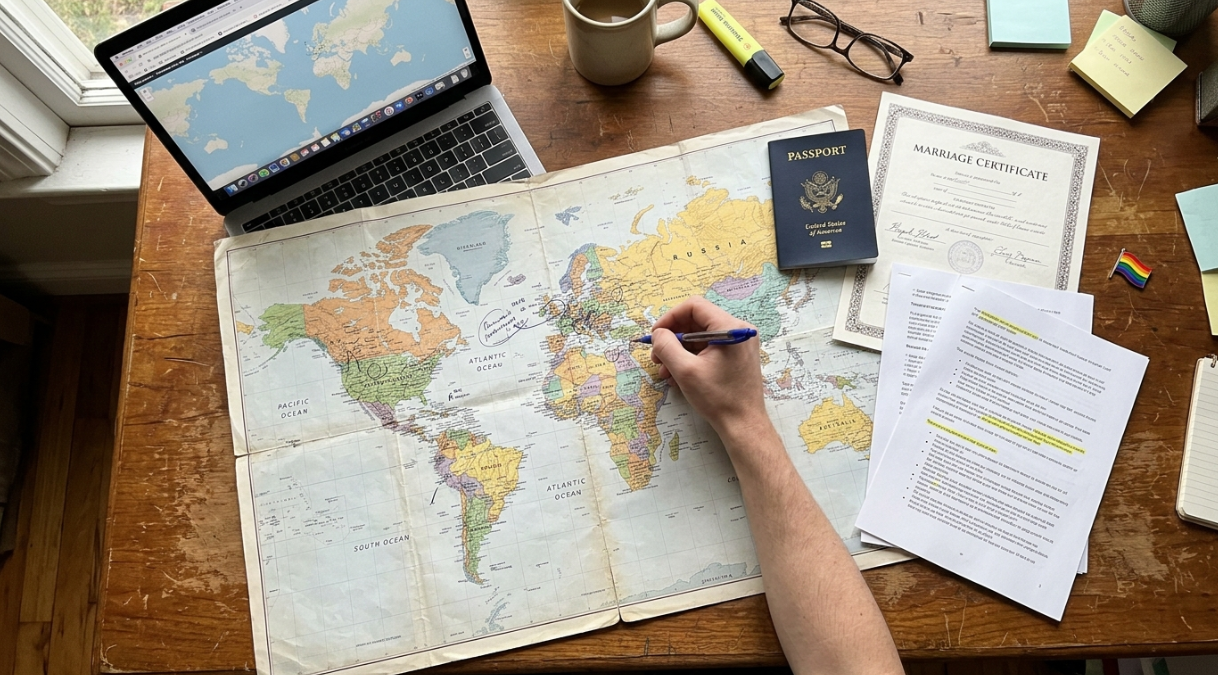
Countries That Recognize Same-Sex Marriage (39 and Growing)
As of mid-2026, 39 countries legally recognize same-sex marriage. This list has grown steadily. Thailand became the newest addition in January 2025, and Nepal’s Supreme Court ordered the government to guarantee marriage equality in June 2026.
In these countries, an apostilled same-sex marriage certificate from the U.S. will generally be accepted for legal purposes, including residency applications, spousal benefits, and property rights. “Generally” because some countries may have additional requirements around document format, translation, or registration deadlines.
The ECJ Ruling That Changed Europe
In November 2025, the European Court of Justice ruled that EU member states must recognize same-sex marriages lawfully performed in another member state. This was a watershed moment. Even countries like Poland, which had not legalized same-sex marriage domestically, began recognizing foreign same-sex marriages for purposes like healthcare, social security, and taxation.
This ruling means that an apostilled same-sex marriage certificate from the U.S. now carries more weight across the EU than it did even two years ago. Countries must still process the document through their own registration systems, but outright refusal to recognize a lawfully performed same-sex marriage from another jurisdiction is no longer permissible within the EU.
For country-specific guidance, Courtly maintains recognition resources for destinations like France, Germany, and Australia.
Countries That Recognize Foreign Same-Sex Marriages Without Domestic Legalization
A few countries occupy an interesting middle ground. Israel, for example, does not perform same-sex marriages domestically but has recognized same-sex marriages performed abroad since a 2006 Supreme Court ruling. An apostilled U.S. marriage certificate can be used there for registration purposes.
Countries That Will Reject It Regardless
In roughly 70 countries where same-sex relationships are criminalized or simply not legally recognized, no apostille will make a difference. The document will be authenticated, but the marriage itself will be treated as legally void. Some of these countries are also non-Hague members, meaning an apostille wouldn’t even be the correct form of authentication.
This is a critical safety consideration. Courtly publishes guidance on safety abroad for same-sex couples that is worth reviewing before traveling with any marriage documentation.
The recognition picture changes frequently. Laws that seemed fixed a decade ago have shifted. Couples should verify current rules with the destination country’s embassy or a qualified immigration attorney before relying on any static list.
Can You Apostille an Online Same-Sex Marriage Certificate?
Yes. A legally issued marriage certificate from an online same-sex marriage can generally be submitted for apostille authentication, provided it meets the issuing jurisdiction's document requirements.
For example, couples who marry through Utah County's online marriage process can request an official marriage certificate and subsequently obtain authentication through the Utah Lieutenant Governor's Office.
The fact that the ceremony took place online does not automatically prevent the marriage certificate from being apostilled.
However, there is an important distinction between document authentication and foreign acceptance.
Does an Apostille Make an Online Marriage Valid Everywhere?
No. An apostille verifies the authenticity of the document, not whether the receiving country accepts the ceremony format.
Some countries have specific restrictions on marriages performed by proxy, telephone, or internet.
Canada is an important example. Immigration, Refugees and Citizenship Canada (IRCC) generally does not recognize marriages conducted by proxy, telephone, internet, or fax when one or both parties were not physically present at the ceremony, subject to limited exceptions.
Therefore, a Utah online marriage certificate may be eligible for authentication but still fail to meet Canada's immigration marriage requirements.
What Should Online-Married Couples Check Before Ordering an Apostille?
Before ordering an apostille, confirm the following:
The marriage was legally performed and registered in the issuing jurisdiction.
You can obtain an official certified marriage certificate.
The destination country accepts the type of ceremony used.
The receiving authority accepts the required apostille or authentication format.
Any translation, registration, or additional documentation requirements are satisfied.
For couples who married online through Utah, these checks are particularly important when planning to use the certificate for international immigration, residency, or spousal registration.
You can learn more about how online marriage works through Courtly and the requirements for using an online marriage for immigration.
How to Apostille a Same-Sex Marriage Certificate: Step-by-Step Process
The process of apostilling a same-sex marriage certificate is generally identical to apostilling any other marriage certificate. The main requirements depend on where the marriage certificate was issued and which country will receive it.
For couples with a Utah-issued marriage certificate, the process involves obtaining an official document, confirming the destination country's requirements, and submitting an authentication request to the appropriate state authority.
Step 1: Obtain a Certified Copy of Your Marriage Certificate
Start by obtaining an official certified copy of your marriage certificate from the county clerk or government office that registered your marriage.
For couples married through Utah County's online marriage program, certified copies can be requested through the Utah County Clerk's office.
A screenshot, ordinary photocopy, or printed digital preview should not be assumed to satisfy the receiving authority's requirements.
Before ordering, confirm whether the destination country requires:
A certified marriage certificate.
A long-form or full-copy marriage record.
A copy of the marriage application.
Additional supporting documents.
Step 2: Check Your Destination Country's Requirements
Before requesting authentication, identify the country where you intend to use the marriage certificate.
Check whether that country is covered by the Hague Apostille Convention and whether it requires additional procedures.
You should also confirm:
Whether an apostille or certificate of authentication is required.
Whether a certified translation is necessary.
Whether the certificate must be registered with a local authority.
Whether the marriage ceremony format is legally accepted.
Whether the receiving authority requires a paper or digital document.
Step 3: Submit Your Apostille Request
For Utah-issued marriage certificates, the Office of the Utah Lieutenant Governor is the state's competent authority for apostilles and authentication certificates.
Utah introduced online ordering through ApostilleXpress in September 2026. Eligible applicants can upload document scans, submit requests, pay online, and receive digital authentication when available.
Mail-in and in-person options are also available.
The appropriate submission method depends on the document's eligibility and the receiving country's requirements.
Step 4: Wait for Processing and Delivery
Processing times depend on how the request is submitted and whether you order through the county clerk or directly through the state's authentication system.
Utah County advises that apostille orders can take several weeks because of the additional processing and coordination involved.
The Utah Lieutenant Governor's Office separately reports that eligible mail-in requests are generally processed within 1 to 3 business days after receipt. Online and in-person services have different processing arrangements.
Remember that government processing time and total delivery time are not the same. Account for document preparation, shipping, translation, and any additional registration requirements.
Step 5: Receive and Verify Your Apostilled Certificate
After approval, the authentication certificate is associated with your marriage document.
Utah provides an online verification service for issued paper and digital authentications.
Before submitting the document abroad, confirm that:
The names and marriage details are correct.
The apostille or authentication certificate is complete.
The document has not been altered.
The receiving authority accepts the format provided.
Any required translation or supporting documentation is included.
Keep a secure copy of the complete document package for your records.
What If Your Destination Country Is Not a Hague Convention Member?
If the destination country is not covered by the Apostille Convention, it may require a certificate of authentication followed by additional embassy or consular legalization.
The exact procedure depends on the destination country's rules and the document's country of origin.
Do not automatically assume that every non-Hague country requires the same authentication chain. Confirm the required process with the relevant embassy or consulate before submitting your documents.
What Documents Do You Need to Apostille a Same-Sex Marriage Certificate?
The documents required for an apostille depend on the issuing authority, the destination country, and the purpose of the application.
For a Utah-issued marriage certificate, couples should prepare the following items before submitting a request.
Document or Requirement | Purpose | Always Required? |
|---|---|---|
Certified marriage certificate | Establishes the official marriage record | Generally required |
Apostille request information | Identifies the destination country and document purpose | Depends on submission method |
Identification | Helps verify eligibility to obtain the marriage record | May be required |
Full marriage record or application copy | Provides additional marriage information | Destination-dependent |
Certified translation | Makes the document readable to foreign authorities | Only when required |
Additional authentication | Satisfies non-Hague country procedures | Destination-dependent |
Before Submitting Your Documents
Check that the names on your marriage certificate match the information on your passports and other supporting documents.
If either spouse changed their name after marriage, prepare any additional legal documentation needed to establish the connection between the names.
Also, ask the receiving authority whether it requires the original certified document, a physical apostille, a digital apostille, or a translated version.
Important: This checklist is a preparation guide, not a universal list of mandatory documents. Always follow the requirements of the issuing authority and the receiving country.
Common Mistakes That Lead to Rejection
Sending an Apostille to a Non-Hague Country
This happens more often than you’d think. An apostille sent to a country that never joined the Hague Convention is meaningless there. The country’s officials aren’t being difficult; they simply have no legal mechanism to accept it. Always verify Hague membership before ordering an apostille.
Name Mismatches Across Documents
An apostille certifies signatures and seals, not identities. But the receiving authority reads everything. If your marriage certificate, passport, and birth certificate show materially different names, expect problems. This is especially relevant for same-sex couples who change their names after marriage. Make sure all documents are consistent before seeking authentication.
One helpful resource for navigating post-marriage name changes is Courtly’s name change guide for same-sex couples.
Confusing Authentication with Recognition
This is the biggest conceptual mistake. Many couples assume that once a document is apostilled, it’s automatically accepted everywhere for all purposes. The apostille removes a bureaucratic hurdle (proving the document is real), but the substantive question (does this country recognize same-sex marriages?) is separate.
Missing Destination-Country Deadlines
Some countries impose time limits on when a foreign marriage must be registered after arrival. If you miss the deadline, you may need to restart the registration process or obtain updated documentation. Research your destination’s specific requirements before you travel.
Submitting an Uncertified Marriage Certificate
One common mistake is submitting a regular photocopy, screenshot, or unofficial digital copy instead of the required certified marriage certificate.
An apostille authenticates the signature and official capacity of the person who issued or certified a public document. It does not turn an ordinary photocopy into an official marriage record.
Before ordering authentication, confirm that you have the correct certified document and that the issuing authority can authenticate it.
Assuming an Online Marriage Is Accepted for Every Legal Purpose
A marriage certificate issued after an online ceremony may be legally valid in the jurisdiction where the marriage was performed. However, a foreign government may apply additional rules concerning remote ceremonies, proxy marriages, or physical attendance.
This is particularly important for immigration applications.
For example, Canadian immigration authorities generally do not recognize foreign internet marriages when one or both parties were not physically present at the ceremony, subject to limited exceptions.
Check the receiving authority's rules before paying for document authentication or submitting a visa application.
Apostille vs. Embassy Authentication: Which Do You Need?
The choice depends entirely on whether your destination country is a Hague Convention member.
Apostille (Hague countries, ~130 nations): Simpler, faster, cheaper. One certification from the state authority, and the document is ready for use in any Hague member country. A single apostille can even be used across multiple Hague countries.
Embassy authentication (non-Hague countries, ~70 nations): More complex chain. Typically involves state-level certification, then U.S. Department of State authentication, then the destination country’s embassy or consulate. More expensive and significantly slower.
For a detailed comparison, see Courtly’s breakdown of apostille vs. authentication.
E-Apostille vs. Physical Apostille
Most Hague Convention member states now accept electronic apostilles (e-Apostilles), but some still require a physical apostille with the underlying paper document. Before assuming a digital version will suffice, confirm with your destination country’s authorities. This small detail can save weeks of delays.
How Long Does It Take to Get a Same-Sex Marriage Certificate Apostilled?
The time required to apostille a same-sex marriage certificate depends on the issuing authority, submission method, document eligibility, and delivery arrangements.
For Utah-issued marriage certificates, couples should distinguish between government processing time and the total time required to obtain the completed document.
Processing Stage | What to Expect |
|---|---|
Obtaining a certified marriage certificate | Depends on the county clerk's processing and delivery |
County-managed apostille request | Utah County advises that apostille orders can take several weeks |
State mail-in authentication | Generally 1–3 business days after receipt, according to the Utah Lieutenant Governor's Office |
Online authentication | Eligible requests can be submitted online, with processing depending on the service |
International shipping | Depends on the carrier and destination |
Translation or additional legalization | Depends on the destination country's requirements |
How Much Does a Marriage Certificate Apostille Cost?
The total cost depends on whether you request the apostille directly or use a document processing service.
Potential expenses include:
Certified marriage certificate copies.
Government authentication fees.
Document processing or service fees.
Shipping and international delivery.
Certified translation.
Additional embassy or consular legalization, when required.
For Utah marriages, the Utah County Clerk provides an apostille ordering option, while the Lieutenant Governor's Office publishes separate authentication fees for its services.
Courtly also offers marriage certificate apostille services for couples who want assistance with document processing.
Before placing an order, compare the complete price, processing time, delivery method, and services included rather than comparing only the advertised apostille fee.
Important: Processing times and fees can change. Verify the latest government charges and delivery estimates before submitting your request.
Apostille Requirements for Same-Sex Marriage Immigration and Spousal Visas
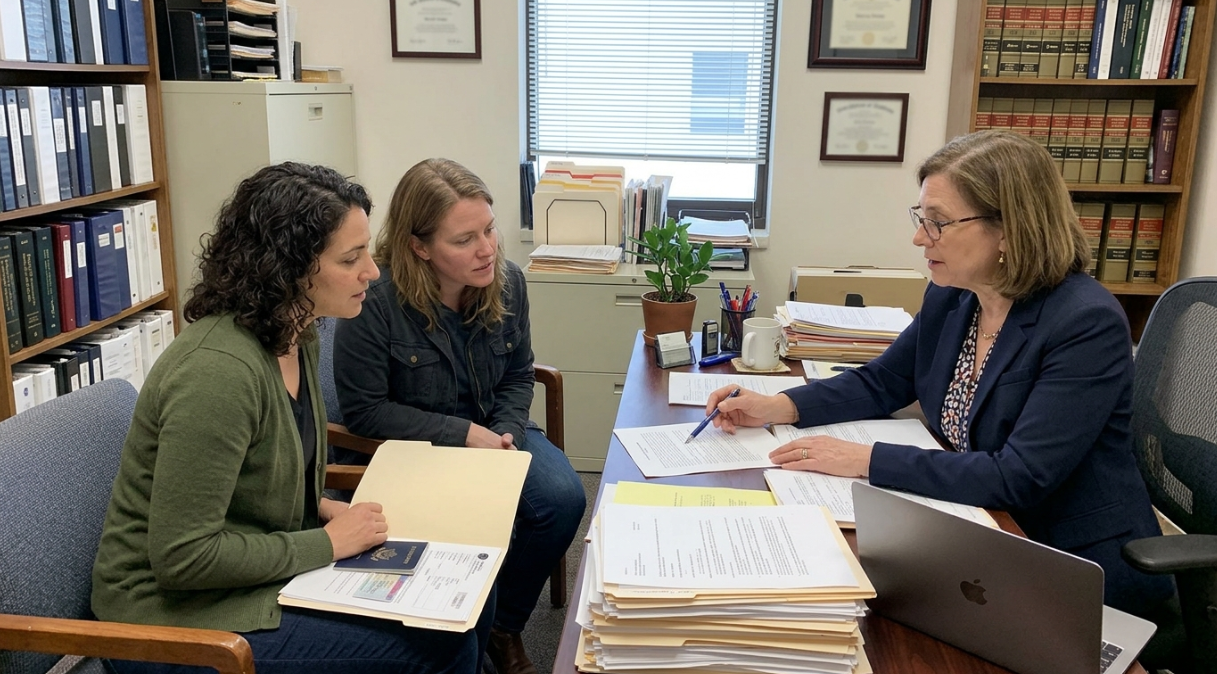
An apostilled same-sex marriage certificate can serve as supporting evidence in an international immigration or spousal visa application. However, an apostille does not guarantee that an immigration authority will recognize the marriage or approve the application.
Immigration authorities generally examine three separate issues:
Whether the marriage was legally valid under the applicable marriage laws.
Whether the marriage certificate satisfies document authentication and translation requirements.
Whether the applicant and sponsoring spouse meet the immigration program's eligibility requirements.
Can an Apostilled Same-Sex Marriage Certificate Be Used for a Spousal Visa?
In countries that recognize the relevant marriage, an authenticated marriage certificate may be used as evidence of the relationship in a spousal visa or residency application.
However, the receiving authority may request additional documentation, such as:
Certified marriage certificate.
Apostille or authentication certificate.
Certified translation.
Passport copies.
Evidence of identity and relationship history.
Additional civil or immigration records.
The required documents vary by country and immigration category.
Important: Online Marriages May Have Additional Immigration Restrictions
An online marriage can be legally valid where it was performed but may not qualify for immigration purposes in every destination country.
Canada provides an important example. IRCC generally does not recognize marriages performed outside Canada by proxy, telephone, fax, or internet when one or both spouses were not physically present at the ceremony, subject to limited exceptions.
The U.S. immigration rules have a different approach to proxy marriages. Under U.S. immigration guidance, a proxy marriage that was not initially attended by both parties can qualify as a marriage for immigration purposes if it is subsequently consummated.
These examples demonstrate why couples should check the immigration rules of their specific destination instead of relying on the apostille alone.
Does a Country Have to Recognize a Same-Sex Marriage for Immigration?
The answer depends on the destination country's immigration laws.
Some countries recognize same-sex spouses for immigration purposes even when domestic same-sex marriage laws differ. Other countries may not recognize the relationship as a qualifying marriage.
For U.S. visa adjudication, the U.S. Department of State recognizes same-sex marriages that are valid in the place where they were celebrated, including when the applicant resides in a country where same-sex marriage is illegal.
Before submitting an application, review the destination country's official immigration guidance and consider consulting an immigration attorney familiar with same-sex marriage and cross-border marriage recognition.
If you are planning to marry online for immigration purposes, read Courtly's online marriage for immigration guide before choosing a marriage procedure.
How to Check Whether Your Destination Country Will Accept Your Same-Sex Marriage Certificate
Before ordering an apostille, verify the requirements of the country where you intend to use your marriage certificate.
A country may accept an apostilled document but still have separate rules about recognizing same-sex marriages, registering foreign marriages, and accepting online ceremonies.
Use this checklist before submitting your documents.
1. Check Same-Sex Marriage Recognition
Find out whether the destination country:
Allows same-sex marriage domestically.
Recognizes same-sex marriages performed abroad.
Recognizes foreign marriages for immigration but not necessarily for every civil or financial purpose.
Has additional registration requirements for foreign couples.
2. Verify the Authentication Requirements
Check whether the destination country requires:
An apostille.
A certificate of authentication.
Embassy or consular legalization.
A certified translation.
A physical or electronic document.
3. Confirm Whether Online Marriages Are Accepted
If your marriage was performed online, confirm whether the destination country recognizes the ceremony format.
Some immigration systems have separate rules for remote or proxy marriages, even when the marriage is legally valid where it was performed.
4. Check Registration and Submission Deadlines
Ask whether there are deadlines for registering your foreign marriage or submitting the certificate with an immigration application.
Also check whether the document must have been issued within a specific period.
5. Confirm Requirements With the Receiving Authority
Whenever possible, obtain confirmation directly from the destination country's civil registry, immigration authority, embassy, or consulate.
Final reminder: An apostille establishes the authenticity of the document. It does not guarantee that the receiving country will grant your marriage legal recognition or approve an immigration application.
Frequently Asked Questions
Can I Apostille a Same-Sex Marriage Certificate From Utah?
Yes. A legally issued Utah same-sex marriage certificate can generally be submitted for authentication through the Utah Lieutenant Governor's Office. The apostille process does not differ based on the spouses' genders. The receiving country's recognition requirements remain a separate consideration.
Can I Get an Apostille for an Online Marriage Certificate?
Yes. An officially issued marriage certificate from a legally performed online marriage may qualify for apostille authentication. The document must meet the issuing authority's requirements. However, the destination country may have separate restrictions on online or remote marriages.
Does an Apostille Guarantee That Another Country Will Recognize My Same-Sex Marriage?
No. An apostille verifies the authenticity of the public document. It does not establish whether the destination country recognizes same-sex marriage or grants the couple specific legal rights.
Can I Use a Utah Online Marriage Certificate for Immigration?
It depends on the destination country's immigration rules. Some countries accept legally valid remote marriages, while others restrict marriages conducted by internet, telephone, or proxy. Canada, for example, generally does not recognize foreign internet marriages when one or both spouses were not physically present at the ceremony, subject to limited exceptions.
Can I Get a Digital Apostille for My Marriage Certificate?
Some jurisdictions offer electronic apostilles. Utah introduced online ordering and digital delivery for eligible authentication requests in 2026. However, not every document qualifies, and the receiving authority must accept the relevant digital format.
Do I Need to Translate My Apostilled Marriage Certificate?
Possibly. Some countries require a certified translation into their official language before accepting a foreign marriage certificate. Translation requirements vary by receiving authority. An apostille does not replace a translation.
Should I Get an Apostille Before Applying for a Spousal Visa?
Check the immigration authority's document requirements first. Some authorities require an apostilled marriage certificate, while others use different authentication procedures. You should also confirm that the marriage itself qualifies under the destination country's immigration rules before ordering additional documentation.
Does an apostilled same-sex marriage certificate expire?
The marriage certificate itself does not expire. The apostille also has no built-in expiration date under the Hague Convention. However, some destination countries or institutions may require the apostille to be “recent” (within 3 to 12 months). Check with the receiving authority.
Can one apostille be used in multiple countries?
Yes. If all the destination countries are Hague Convention members, a single apostille is valid across all of them. You do not need a separate apostille for each country.
Does the marriage certificate show that the wedding was performed online?
U.S. marriage certificates do not typically indicate how the ceremony was conducted. For more detail on this, Courtly addresses the question on their FAQ page.
Will an apostilled same-sex marriage certificate work for a spousal visa?
It depends on the country. In jurisdictions that recognize same-sex marriage, an apostilled certificate is generally accepted as proof of marriage for visa and immigration purposes. In countries that don’t recognize same-sex unions, the certificate may be rejected regardless of the apostille. One Courtly user from Russia shared that “same-sex marriage is impossible in Russia, so we tried to find any workarounds,” highlighting why many couples seek a U.S. marriage specifically for use in countries with broader recognition.
What if my destination country is not a Hague Convention member?
You’ll need embassy authentication instead of an apostille. This involves a longer chain of verification through the U.S. Department of State and the destination country’s embassy. Courtly’s document legalization page outlines the process and typical costs.
Is there anything different about the apostille itself for a same-sex marriage?
No. The apostille looks identical. It certifies the document’s authenticity without reference to the content of the marriage. The sticker, seal, or certificate attached to your marriage document is the same one attached to every other apostilled public document from that state.
How much does an apostille cost?
Costs vary by state and provider. Through Courtly, the apostille add-on starts at $50 plus shipping when bundled with a marriage package. Standalone apostille processing through Courtly’s legalization service typically runs $150 to $200.
Getting an apostille on a same-sex marriage certificate is straightforward. The real work, and the real anxiety, comes from understanding what happens next: whether your destination country will honor the marriage that the apostille authenticates. Do your research on the destination, confirm current laws, and don’t assume that authentication equals acceptance. If you’re ready to start the process, you can get married online through Courtly and add apostille services directly to your order.
Let us handle the paperwork.
Getting married is complicated. Courtly simplifies the process and provides everything necessary to get married online, including providing a licensed officiant who can perform a remote ceremony.
Get Married

Get married online.
Getting married is complicated. Courtly simplifies the process and provides everything necessary to get married online.

