

TL;DR
A Utah online marriage can serve as the legal basis for filing a CR1 spousal visa petition with USCIS, thanks to the place-of-celebration rule. The CR1 visa grants conditional permanent residency to spouses married less than two years. The biggest sticking point is the consummation requirement under INA Section 101(a)(35), which immigration attorneys disagree about when it comes to virtual ceremonies. Couples should gather strong post-ceremony evidence of meeting in person before filing Form I-130.
You got married online, or you’re thinking about it, and now you want to bring your spouse to the United States on a CR1 visa. The problem is that every resource you find covers only part of the picture. One blog explains the visa. Another explains Utah marriage law. A third mentions consummation but doesn’t tell you what evidence to collect.
This glossary puts it all in one place. Every term you’ll encounter when researching an online marriage CR1 visa path is defined, explained, and connected to practical next steps.
Important: This is educational content, not legal advice. Immigration law is complex and changes frequently. Consult a qualified immigration attorney for guidance on your specific situation.
Explore online marriage for immigration to understand how the process works before diving into the terminology below.
Online Marriage CR1 Visa at a Glance
Question | Answer |
|---|---|
Is an online marriage valid for immigration? | Yes |
Which state allows fully virtual marriages? | Utah |
Is consummation recommended? | Yes |
When should couples meet in person? | After the ceremony |
When should Form I-130 be filed? | After the post-ceremony meeting |
Average processing time | 12-25 months |
Green card issued on arrival? | Yes |
Quick Answer: Can You Get a CR1 Visa After an Online Marriage?
Yes. A Utah online marriage can qualify as the legal basis for a CR1 or IR1 spousal visa because USCIS generally recognizes marriages that are legally valid where they were performed.
However, there is one major issue: consummation.
Although Utah treats a virtual ceremony as legal presence, many immigration attorneys still recommend that couples meet in person after the wedding and before filing Form I-130.
The safest approach is:
1. Complete the Utah online marriage.
2. Meet in person after the ceremony.
3. Collect evidence of that visit.
4. File Form I-130.
5. Complete consular processing.
Couples who skip step two face a higher risk of additional scrutiny, Requests for Evidence (RFEs), or possible denial.
Online Marriage CR1 Visa Process: Step-by-Step Timeline
Step | Action | Estimated Time |
|---|---|---|
1 | Complete a Utah online marriage | 1-3 days |
2 | Meet in person after the ceremony | Variable |
3 | Gather evidence | 1-2 weeks |
4 | File Form I-130 | 1 day |
5 | USCIS review | 11-25 months |
6 | National Visa Center processing | 1-3 months |
7 | Consular interview | 1-4 months |
8 | Enter the United States | Immediately after visa issuance |
Online Marriage
An online marriage is a legally binding wedding ceremony conducted via video platform, where both parties participate remotely in real time.
Currently, Utah is the only U.S. state that allows fully virtual marriage ceremonies. The officiant must be physically present in Utah, but neither spouse needs to be a Utah resident or physically located in the state. Since the Utah County Clerk’s Office began offering online marriage licenses and ceremonies in January 2020, thousands of couples from around the world have used this service.
This matters for the online marriage CR1 visa path because USCIS follows the “place-of-celebration rule,” meaning it recognizes any marriage that is legally valid in the jurisdiction where it took place. A Utah online marriage satisfies this standard.
2026 Utah Legislative Update
In early 2026, Utah Senate Bill 110 (later folded into SB257) initially included language that could have restricted fully remote marriages for non-residents. After significant attention from the international marriage community, the restrictive language was substituted with updated provisions that preserved remote appearance marriages while adding new disclosure requirements. Specifically, the county issuing the license must post a warning on its website, and the officiant must state a warning during the ceremony. These changes took effect May 6, 2026.
The bottom line: Utah online marriages remain fully available as of mid-2026. No ranking competitor page currently covers this update, so if you’ve seen outdated warnings about Utah restricting online marriages, they don’t reflect the final legislation.
For a detailed walkthrough of how the online marriage license process works in Utah, including document requirements and timelines, that resource covers the mechanics step by step.
2026 Takeaway
Despite concerns surrounding Utah Senate Bill 110, fully remote marriages remain legal in Utah.
The only major changes implemented in 2026 were additional disclosure requirements during the licensing and ceremony process.
Couples can still legally marry online through Utah and use that marriage as the basis for a CR1 petition.
Proxy Marriage
A proxy marriage is a ceremony where one or both parties are not present and are instead represented by stand-ins.
This distinction is critical for immigration. USCIS treats proxy marriages differently from online marriages because in a proxy ceremony, the absent party never personally participates. Under immigration law, a proxy marriage is only valid if the couple consummates the marriage afterward.
A Utah virtual wedding is not a proxy marriage. Both partners attend the ceremony live via video, which Utah law treats as legal “presence.” This is why understanding the difference between remote and proxy marriages matters so much for immigration planning.
However, as discussed in the consummation section below, whether USCIS truly treats virtual marriages differently from proxy marriages in practice is a matter of genuine debate among immigration attorneys.
CR1 Visa (Conditional Resident Visa)
The CR1 visa is a U.S. immigrant visa issued to the spouse of a U.S. citizen when the couple has been married for less than two years at the time of visa issuance.
The U.S. citizen spouse initiates the process by filing Form I-130, Petition for Alien Relative. Once approved and processed through the National Visa Center and a consular interview abroad, the foreign spouse enters the United States as a conditional permanent resident. They receive a two-year green card and must later file Form I-751 to remove the conditions on their residency.
CR1 Processing Times
As of August 2024, USCIS estimated the wait time for a Form I-130 CR1 spousal visa application to range from 11.4 to 25 months. When processing entirely from outside the United States through consular processing, the average timeline is roughly 14.5 months.
CR1 Approval Rates
The CR1 visa has a notably higher approval rate than the K-1 fiancé visa. According to government data, CR1 visas have an average denial rate of around 8 to 9 percent, compared to approximately 25 percent for K-1 visas. This is one reason many couples who can legally marry before their spouse enters the U.S. choose the online marriage CR1 visa route instead of the K-1.
What Happens When You Arrive
A significant advantage of the CR1 path: your spouse arrives in the United States with permanent resident status already in hand. There is no need to file a separate adjustment of status application after arrival, which the K-1 route requires.
IR1 Visa (Immediate Relative Visa)
The IR1 visa is issued to spouses who have been married for more than two years, granting unconditional (10-year) permanent residency.
The distinction between CR1 and IR1 is purely about timing. If your marriage has passed the two-year mark by the time the visa is issued, you receive an IR1 instead of a CR1. The practical difference is significant: IR1 holders skip the conditional residency period entirely and don’t need to file Form I-751.
Here’s a useful detail that most guides miss: if you are granted a CR1 visa at your consular interview but by the time you actually enter the United States your marriage has passed the two-year anniversary, the admitting officers will likely process your entry as an IR1 holder. Given that online marriage CR1 visa processing can stretch well past a year, this conversion happens more often than people expect.
Factor | CR1 | K-1 |
|---|---|---|
Marriage required before filing | Yes | No |
Green card on arrival | Yes | No |
Work authorization | Immediate | Delayed |
Adjustment of status required | No | Yes |
Average denial rate | 8-9% | ~25% |
Additional government filing | No | Yes |
Total paperwork | Lower | Higher |
Form I-130 (Petition for Alien Relative)
Form I-130 is the petition a U.S. citizen or lawful permanent resident files with USCIS to establish the qualifying family relationship for immigration purposes.
This is the form that triggers USCIS scrutiny of your marriage’s validity. When you file an I-130 based on an online marriage, the adjudicating officer will evaluate whether the marriage is legally valid and whether it is bona fide (genuine). The form asks for details about how you met, your relationship history, and supporting documentation.
For couples who married online, the I-130 stage is where the quality of your evidence matters most. Weak documentation of a genuine relationship, or missing consummation evidence for a virtual ceremony, can result in a Request for Evidence (RFE) or denial.
If you’re preparing to file and want attorney guidance specific to spouse visa petitions, a spouse visa consultation with an immigration attorney can help you assess your evidence package before submitting.
Evidence Checklist for an Online Marriage CR1 Visa
Before filing Form I-130, collect evidence from each of these categories.
Marriage Evidence
Utah marriage certificate
Certified copy of the marriage license
Apostille (if required)
Post-Ceremony Meeting Evidence
Boarding passes
Flight itineraries
Hotel receipts
Photos together
Relationship Evidence
Chat history
Video call records
Financial records
Money transfers
Joint accounts
Future Plans Evidence
Insurance policies
Lease agreements
Travel plans
Beneficiary designations
Consummation Requirement
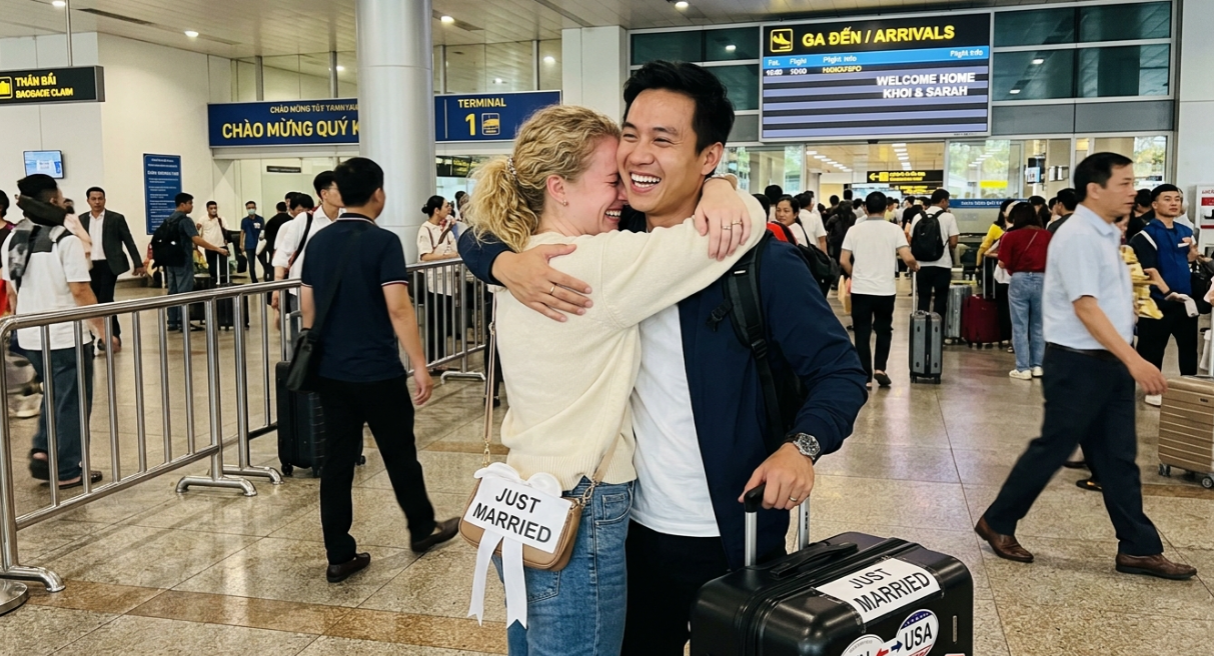
Under INA Section 101(a)(35), U.S. immigration law does not consider a marriage valid for immigration purposes if the parties were not physically present together, unless the marriage has been consummated.
This is the single most discussed, debated, and misunderstood aspect of the online marriage CR1 visa process. The statute was originally written to address proxy marriages, but its application to virtual ceremonies is where things get complicated.
The Two Sides of the Debate
Position 1: Consummation is not required for Utah virtual marriages. Because both spouses participate in the ceremony live via video, Utah law considers them legally “present.” Under this interpretation, INA 101(a)(35) doesn’t apply because the statute only kicks in when the parties were not physically present. Immigration attorney blogs like Chodorow Law’s analysis of Utah Zoom marriages support this reading.
Position 2: USCIS practically treats virtual marriages like proxy marriages. Several immigration attorneys argue that regardless of what Utah law says about “presence,” USCIS adjudicators will apply the consummation requirement anyway. As one attorney on the Immigration for Couples podcast put it, the concern is that “the immigration process takes so long. Say that, ‘We’ve consummated our relationship.’ Obviously, we don’t have evidence of that.” The risk of filing without clear consummation evidence is a multi-year gamble.
Practitioners on VisaJourney forums echo this tension. A July 2025 thread shows a poster who completed a legal Utah online marriage and filed I-130 but had not yet met the foreign spouse in person after the ceremony. This scenario, filing before meeting post-ceremony, is the most common source of anxiety in online marriage CR1 visa cases.
The Timing Rules
The timing requirements are strict and often misunderstood:
Consummation must occur after the marriage ceremony (prior relations do not count)
Consummation must occur before filing the I-130 petition with USCIS
This means if you marry online and want to take the safest possible approach, you need to travel to meet your spouse in person after the ceremony and before you submit your paperwork.
Evidence of Consummation
Immigration officials accept affidavits and documentary evidence to prove the couple met in person after the ceremony. A strong evidence package for an online marriage CR1 visa case includes:
Flight itineraries and boarding passes showing travel to your spouse’s location after the wedding date
Hotel reservations or apartment leases in the same city during the same dates
Photos of the couple together with visible date stamps or location metadata
Joint activity receipts (restaurants, tours, events)
Affidavits from both spouses describing the visit
Birth certificates of children conceived after the wedding (if applicable)
One immigration attorney on JustAnswer (a platform where experts answer legal questions) noted an important edge case: if you were physically together with your spouse when you used the virtual ceremony service, you’re in the strongest possible position. There’s no consummation issue because you were in the same room during the ceremony and can easily document your time together afterward.
For a deeper look at how getting married online affects your immigration case, that guide covers additional risk factors and mitigation strategies.
How Risky Is an Online Marriage for a CR1 Visa?
Scenario | Risk Level |
|---|---|
Married online and met in person after the ceremony | Low |
Married online while physically together | Very low |
Married online but never met after the ceremony | High |
Filed I-130 without post-ceremony evidence | Very high |
No attorney can guarantee approval because USCIS officers evaluate cases individually.
However, most practitioners agree that couples who document an in-person meeting after the wedding place themselves in the strongest possible position.
Place-of-Celebration Rule
USCIS recognizes a marriage as valid for immigration purposes if it is legally recognized in the jurisdiction where it was performed.
This rule is the legal foundation that makes the online marriage CR1 visa path possible. Because Utah legally permits and recognizes fully virtual marriage ceremonies, and because USCIS follows the place-of-celebration rule, a Utah online marriage satisfies the validity requirement for a CR1 petition.
There is one important caveat: your spouse’s home country may not recognize the Utah marriage. Recognition varies significantly by country. Some nations require an apostille on the marriage certificate before they will register it. Others may not recognize online marriages at all. Check with local authorities in the foreign spouse’s country early in the process.
For couples wondering whether their online marriage will hold up to immigration scrutiny, the resource on whether online marriages are recognized by immigration authorities addresses country-specific considerations.
Bona Fide Marriage
A bona fide marriage is one where the couple genuinely intends to build a life together, not one constructed solely to gain immigration benefits.
USCIS looks at the “subjective good faith intent of the couple to establish a lasting relationship at the inception of the marriage.” This standard matters even more for online marriage CR1 visa cases because the virtual ceremony format can invite additional scrutiny.
Evidence categories that demonstrate a bona fide marriage include:
Communication history (call logs, chat transcripts, video call screenshots)
Photos together from visits, with dates and locations
Financial commingling (joint bank accounts, shared expenses, money transfers)
Travel records showing visits to each other
Affidavits from family and friends who know the relationship
Joint plans (lease agreements, insurance policies, future travel bookings)
Practitioners on Reddit’s r/immigration subreddit frequently emphasize that the strength of your bona fide evidence package is what separates smooth approvals from Requests for Evidence. One commenter on the VisaJourney forums noted that USCIS can also look for things like a honeymoon, a reception with close friends and family, and international travel together to solidify the marriage’s legitimacy.
Apostille
An apostille is an international certification that authenticates a U.S. public document (like a marriage certificate) for use in countries that are members of the Hague Apostille Convention.
When you marry online through Utah, you receive a U.S. marriage certificate. If your spouse’s country requires that certificate to be authenticated before they can register the marriage locally, you’ll need an apostille. Some countries that are not Hague Convention members require embassy authentication instead, which is a different process.
Getting the apostille right matters for the online marriage CR1 visa timeline because some consulates require an apostilled marriage certificate as part of the visa interview documentation. Delays in legalization can slow down your entire case.
Courtly offers document legalization services including apostille and embassy authentication, with expedited options for couples on tight timelines. For a detailed comparison of when you need an apostille versus embassy authentication, see the guide on apostille vs. authentication.
Does Every Country Recognize a Utah Online Marriage?
No.
A Utah marriage certificate may be legally valid in the United States while still encountering recognition problems abroad.
Common scenarios include:
Country Recognition Issue | Possible Solution |
|---|---|
Country requires an apostille | Obtain document legalization |
Country requires embassy authentication | Complete consular authentication |
Country does not recognize virtual marriages | Consult a local attorney |
Marriage must be registered locally | Register the marriage after legalization |
Always verify requirements with your spouse's civil registry office and the U.S. embassy before filing immigration paperwork.
K-1 Fiancé Visa (Comparison Term)
The K-1 is a non-immigrant visa that allows a U.S. citizen’s fiancé to enter the United States, with the requirement to marry within 90 days of arrival.
The K-1 is the main alternative to the online marriage CR1 visa path, and understanding the tradeoff is essential for making the right decision.
Factor | CR1 Spouse Visa | K-1 Fiancé Visa |
|---|---|---|
Marriage timing | Must marry before filing | Marry after arrival in U.S. |
Status on arrival | Permanent resident (green card) | Non-immigrant (must adjust status) |
Work authorization | Immediate | Months-long wait after arrival |
Average denial rate | ~8-9% | ~25% |
Total time to green card | Longer wait to enter, but green card on arrival | Faster entry, but additional 8-14 months for green card |
The key insight: if you’ve already married online, the K-1 is no longer an option. It’s only available to unmarried fiancés. Couples who marry via a Utah virtual ceremony are committed to the CR1 (or IR1) path.
One practical advantage of going the online marriage CR1 visa route: your spouse arrives in the U.S. with a green card and can work immediately. K-1 holders face a significant gap between arrival and receiving work authorization, which creates financial strain for many couples.
Adjustment of Status vs. Consular Processing
Adjustment of status (AOS) is the process of applying for a green card from within the United States. Consular processing is the process of obtaining an immigrant visa at a U.S. embassy or consulate abroad.
For the online marriage CR1 visa, the standard path is consular processing. Your spouse attends an interview at a U.S. embassy or consulate in their home country, receives the visa, and enters the U.S. as a permanent resident.
Adjustment of status is relevant if the foreign spouse is already in the United States on a valid visa. In that case, the couple can file Form I-130 and Form I-485 concurrently, and the average processing time drops to around 8.2 months compared to 14.5 months for consular processing.
Form I-751 (Removal of Conditions)
Form I-751 is the petition a conditional permanent resident files to remove the conditions on their green card, typically filed 90 days before the two-year green card expires.
If your spouse enters the U.S. on a CR1 visa, their green card is valid for two years. Before it expires, you must jointly file Form I-751 with evidence that the marriage is still genuine and ongoing. Failure to file on time can result in loss of permanent resident status.
This is another reason the online marriage CR1 visa timeline matters. If processing takes long enough that you’ve been married over two years by the time your spouse enters, they may receive IR1 status instead, which skips the I-751 requirement entirely.
Common Mistakes When Filing a CR1 After an Online Marriage
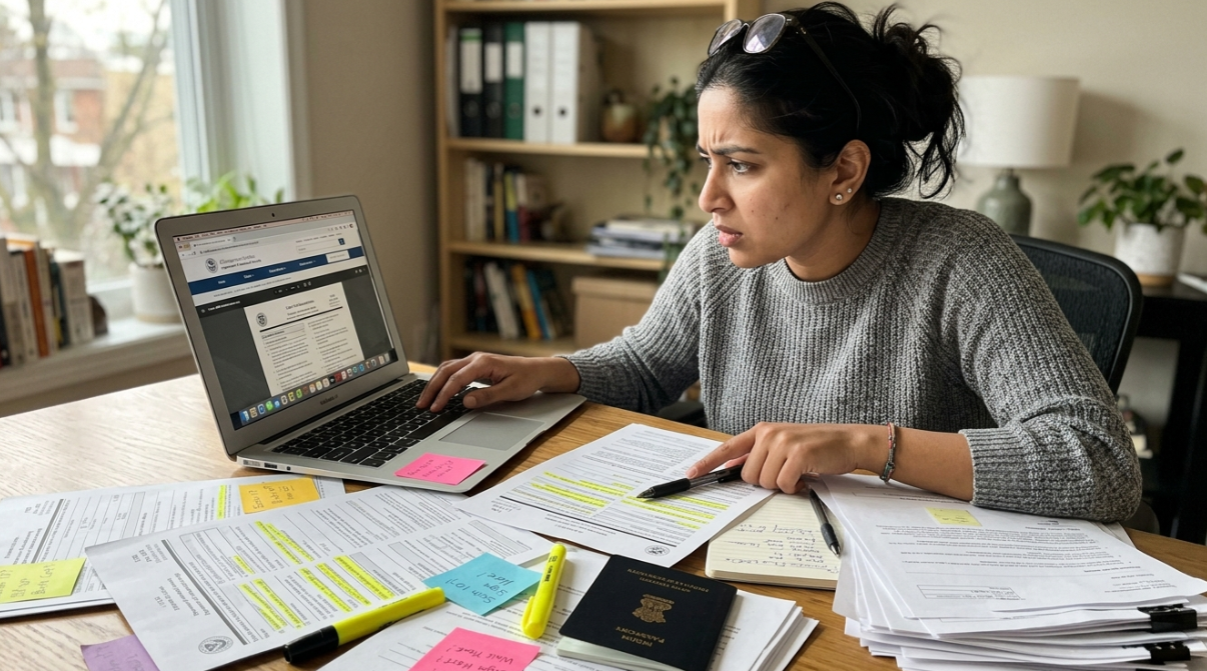
Avoid these pitfalls that practitioners report seeing repeatedly in forums and attorney consultations:
Filing I-130 before meeting in person after the ceremony. Even if you believe the consummation requirement doesn’t technically apply to virtual marriages, filing without post-ceremony meeting evidence is risky. The safest approach is to travel, meet, document everything, then file.
Relying on pre-marriage evidence of the relationship. USCIS specifically looks for consummation evidence dated after the marriage ceremony. Photos from a trip you took together six months before the online wedding don’t satisfy INA 101(a)(35).
Skipping the apostille. If you plan to register the marriage in the foreign spouse’s country (which many consulates expect), you’ll need an apostilled marriage certificate. Waiting until the last minute creates unnecessary delays.
Underestimating the bona fide evidence burden. Online marriages face higher scrutiny. A thin evidence package, even with a legally valid marriage, can trigger an RFE that adds months to your timeline.
Not consulting an immigration attorney. The intersection of Utah marriage law and federal immigration law is genuinely unsettled in some areas. A lawyer who regularly handles online marriage CR1 visa cases can assess your specific situation and advise on evidence strategy.
For a broader list of mistakes couples make with online marriages, including visa-related errors, the guide on common online marriage pitfalls covers additional scenarios.
Ready to Start?
If you’re considering an online marriage as the foundation for a CR1 spousal visa petition, the process begins with a legally valid ceremony. See Courtly’s pricing and service tiers to understand what’s included at each level, from the basic ceremony to packages with witnesses, video recording, and rush processing.
Frequently Asked Questions
Can I file an I-130 without meeting my spouse in person after an online marriage?
Technically, some attorneys argue it’s possible because both parties were “present” via video during a Utah ceremony. Practically, it’s risky. The safest approach, and the one most immigration attorneys recommend, is to meet in person after the ceremony, document the visit thoroughly, and then file. Filing without this evidence is gambling with a process that takes over a year.
Is a Utah online marriage the same as a proxy marriage for immigration purposes?
No. In a proxy marriage, one or both parties are absent and represented by stand-ins. In a Utah online marriage, both parties attend live via video. Utah law treats this as legal presence. However, USCIS adjudicators may still apply heightened scrutiny similar to what proxy marriages receive, which is why consummation evidence remains strongly recommended.
What if we were physically together when we did the online ceremony?
This is actually the strongest possible position for an online marriage CR1 visa case. If both spouses were in the same room while using a Utah virtual ceremony service, there’s no question about physical presence or consummation. An immigration attorney on JustAnswer confirmed this interpretation, noting that the marriage clearly meets all criteria when the parties are together during the ceremony.
Will my Utah online marriage be recognized in my spouse’s home country?
It depends on the country. Many nations recognize foreign marriages if they’re accompanied by a properly authenticated (apostilled) marriage certificate. Some countries, however, do not recognize online or virtual marriages regardless of documentation. Check with your spouse’s local civil registry or consulate early in the process to avoid surprises.
How long does the online marriage CR1 visa process take from start to finish?
From the date of your online marriage through I-130 filing, NVC processing, consular interview, and entry, expect roughly 12 to 25 months total. The wide range depends on your specific embassy’s backlog, USCIS processing times, and how quickly you gather and submit documentation. If processing pushes past your two-year marriage anniversary, you may enter as an IR1 instead of CR1, which is actually an advantage.
Is the CR1 visa better than the K-1 for couples who can marry online?
For most couples, yes. The CR1 has a lower denial rate (roughly 8 to 9 percent versus 25 percent for K-1), and your spouse arrives with a green card and immediate work authorization. The tradeoff is a longer wait before your spouse can enter the U.S. But once they arrive, there’s no additional adjustment of status process to worry about.
What documents do I need to prove my online marriage is bona fide?
Build the most comprehensive package you can. Include communication records (call logs, chat history, video call screenshots), photos together from visits with dates, financial records showing shared expenses or transfers, travel itineraries, joint plans like leases or insurance, and affidavits from family and friends. For online marriage CR1 visa cases specifically, also include all consummation evidence: post-ceremony flight records, hotel bookings, photos together after the wedding date, and signed affidavits from both spouses.
Did Utah change its online marriage laws in 2026?
Utah considered restricting online marriages for non-residents through Senate Bill 110, which caused concern among international couples. The final legislation (effective May 6, 2026) preserved the right to marry remotely but added new disclosure requirements. County websites must post a warning, and officiants must state a warning during ceremonies. Online marriages through Utah remain valid and available.
Let us handle the paperwork.
Getting married is complicated. Courtly simplifies the process and provides everything necessary to get married online, including providing a licensed officiant who can perform a remote ceremony.
Get Married

Get married online.
Getting married is complicated. Courtly simplifies the process and provides everything necessary to get married online.

