

A US citizen can marry a foreigner online through Utah, the only state that allows fully remote, legally binding marriage ceremonies with no residency or citizenship requirement. The marriage produces a valid U.S. marriage certificate that USCIS generally accepts for spouse visa petitions, provided the couple meets the consummation requirement afterward. This glossary breaks down every legal term you will encounter across state marriage law, federal immigration law, and international document authentication.
Quick Answer: Can a U.S. Citizen Marry a Foreigner Online?
Yes. A U.S. citizen can marry a foreign national through Utah's remote marriage process, provided the couple meets Utah's marriage requirements. However, getting legally married online does not automatically qualify the foreign spouse for U.S. immigration. For a marriage performed when the spouses were not physically together, U.S. immigration law generally requires the couple to have been physically together and to have consummated the marriage after the ceremony before relying on the marriage for immigration purposes. The couple must then choose the appropriate immigration process, typically an IR-1/CR-1 spouse visa if the foreign spouse is outside the United States.
The basic process is:
Apply for a Utah marriage license.
Complete the legally valid remote ceremony.
Obtain the certified marriage certificate.
Meet your spouse in person after the ceremony.
Consummate the marriage after the ceremony.
Gather evidence showing the relationship and post-ceremony meeting.
File Form I-130 if pursuing a spouse-based immigration case.
Complete consular processing or adjustment of status, depending on the spouse's circumstances.
Obtain an apostille or other authentication if the marriage certificate must be used outside the United States.
The important distinction is that a valid online marriage and an immigration-qualifying marriage are related but not identical questions. Utah law determines whether the marriage itself is valid, while federal immigration law determines whether USCIS and the Department of State can use that marriage as the basis for immigration benefits.
Online Marriage vs. Immigration: What Each Rule Controls
Question | Who controls it? | What matters? |
|---|---|---|
Can we legally marry online? | Utah/state marriage law | Marriage license, remote ceremony, officiant, declarations of intent, and witnesses |
Is the marriage legally valid? | Utah law | The ceremony must satisfy Utah's statutory requirements |
Can the marriage support immigration? | Federal immigration law | The marriage must qualify under federal immigration rules |
Were we physically together for the ceremony? | Federal immigration law | If the parties were not physically together, the post-ceremony consummation rule becomes important |
Do we need to meet after the wedding? | Federal immigration law | Couples relying on a marriage performed while physically apart generally need to meet and consummate the marriage afterward |
Which immigration form starts the spouse process? | USCIS | Form I-130 is generally the first step for a U.S. citizen petitioning for a foreign spouse |
Does the foreign country recognize the marriage? | Foreign country's law | Recognition rules vary by country and may require additional documents |
Do we need an apostille? | Destination country's document rules | A Utah document may need state certification/apostille or another authentication route depending on where it will be used |
This distinction is essential: Utah determines whether the marriage was properly performed; federal immigration authorities determine whether the marriage qualifies for immigration benefits; the foreign country determines whether it recognizes the U.S. marriage for its own legal purposes.
Online Marriage vs. Immigration: What Each Rule Controls
Question | Who controls it? | What matters? |
|---|---|---|
Can we legally marry online? | Utah/state marriage law | Marriage license, remote ceremony, officiant, declarations of intent, and witnesses |
Is the marriage legally valid? | Utah law | The ceremony must satisfy Utah's statutory requirements |
Can the marriage support immigration? | Federal immigration law | The marriage must qualify under federal immigration rules |
Were we physically together for the ceremony? | Federal immigration law | If the parties were not physically together, the post-ceremony consummation rule becomes important |
Do we need to meet after the wedding? | Federal immigration law | Couples relying on a marriage performed while physically apart generally need to meet and consummate the marriage afterward |
Which immigration form starts the spouse process? | USCIS | Form I-130 is generally the first step for a U.S. citizen petitioning for a foreign spouse |
Does the foreign country recognize the marriage? | Foreign country's law | Recognition rules vary by country and may require additional documents |
Do we need an apostille? | Destination country's document rules | A Utah document may need state certification/apostille or another authentication route depending on where it will be used |
This distinction is essential: Utah determines whether the marriage was properly performed; federal immigration authorities determine whether the marriage qualifies for immigration benefits; the foreign country determines whether it recognizes the U.S. marriage for its own legal purposes.
Why This Glossary Exists
When a US citizen wants to marry a foreigner online, they walk into a three-way collision of legal systems. State marriage law governs the ceremony itself. Federal immigration law decides whether that marriage qualifies for a spouse visa. And international document authentication determines whether the foreign partner’s home country will recognize the union.
Each system has its own vocabulary. The terms overlap, contradict each other, and confuse even seasoned attorneys. Practitioners on Reddit regularly report that couples mix up “proxy marriage” with “virtual marriage,” a mistake that can torpedo an immigration petition. Others discover the word “consummation” has a specific, non-negotiable meaning at USCIS that differs from common usage.
Utah is currently the only U.S. state that permits fully remote, legally binding marriages with no citizenship or residency requirement. Since January 2020, the Utah County Clerk’s Office has performed over 3,500 virtual weddings for international couples from countries including Azerbaijan, Kenya, Finland, and Madagascar. That single office has become the gateway for thousands of cross-border couples worldwide.
This glossary covers every term from the marriage application through the immigration petition and foreign recognition process. Bookmark it. You will come back.
Get married online through Courtly’s service to start the process with a guided, end-to-end experience.
U.S. Citizen Marrying a Foreigner Online: 2026 at a Glance
Term | What it means | Why it matters |
|---|---|---|
Utah remote marriage | A marriage ceremony conducted remotely under Utah law | Provides a legal marriage framework for couples who cannot attend the ceremony together physically |
Virtual marriage | Common term for a remote marriage where both spouses participate live | Often confused with proxy marriage |
Proxy marriage | A marriage where one or both parties are represented by another person | Federal immigration rules impose special requirements on marriages performed while the parties were not physically together |
Marriage certificate | Official record showing the marriage took place | Used for immigration, name changes, apostille requests, and other legal purposes |
Consummation | Post-ceremony physical marital relations | Important for certain marriages performed when the spouses were not physically together at the ceremony |
Bona fide marriage | A genuine marital relationship entered in good faith | USCIS may require evidence that the marriage was not entered into for immigration purposes |
Form I-130 | Petition for Alien Relative | Generally starts the U.S. citizen's spouse-based immigration case |
IR-1/CR-1 | Immigrant visa categories for spouses of U.S. citizens | Common immigration route when the foreign spouse lives outside the United States |
Consular processing | Immigration processing through a U.S. embassy or consulate | Generally used when the foreign spouse is outside the United States |
Form I-485 | Application to Register Permanent Residence or Adjust Status | May be used by eligible applicants already in the United States |
Apostille | Authentication certificate used for qualifying international documents | May be required when using the marriage certificate abroad |
Authentication/legalization | Alternative document-authentication process for countries outside the Hague Apostille system | Requirements depend on the destination country |
The terminology can overlap, but these terms are not interchangeable. In particular, virtual marriage, proxy marriage, consummation, marriage certificate, and bona fide marriage describe different legal concepts.
Marriage and Ceremony Terms
Does USCIS Recognize a Utah Online Marriage?
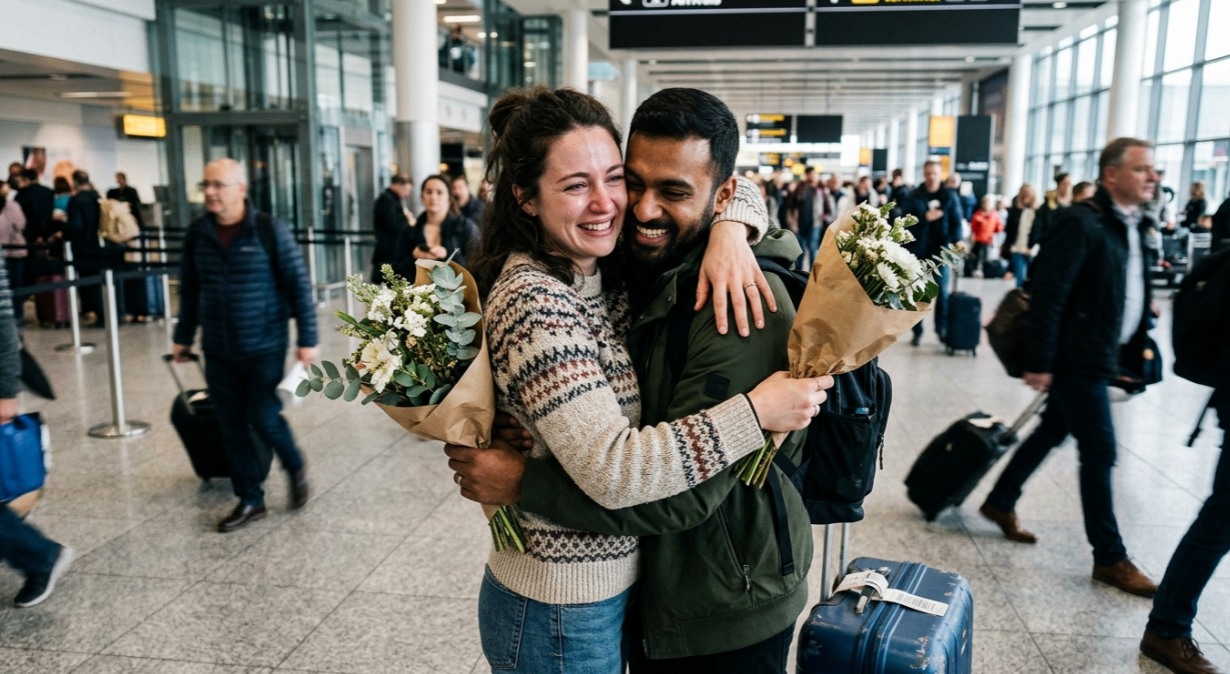
A Utah online marriage can potentially be used as the basis for a U.S. immigration case, but legal validity under Utah law does not by itself guarantee immigration eligibility.
Federal immigration law contains a specific rule for marriages in which the parties were not physically present together during the ceremony. Under INA Section 101(a)(35), a spouse relationship generally does not qualify for immigration purposes based on such a ceremony unless the marriage has been consummated afterward. USCIS guidance also applies the place-of-celebration rule when determining whether a marriage is legally valid.
For couples considering a Utah remote marriage specifically for immigration, the practical sequence is therefore:
Legal online ceremony → certified marriage certificate → in-person meeting → post-ceremony consummation → evidence collection → immigration filing.
This is why couples should not treat the Utah marriage certificate as the end of the immigration analysis.
For a deeper comparison, see this guide on remote vs. proxy marriage.
Proxy Marriage
A proxy marriage is a marriage ceremony in which one or both parties are not physically present and another person participates on the absent person's behalf.
For U.S. immigration purposes, the important issue is not simply whether a ceremony is called a “proxy marriage” or “virtual marriage.” Federal law focuses on whether the spouses were physically present together at the ceremony. When they were not, the marriage generally must be consummated afterward before it can qualify as a spouse relationship for immigration purposes.
This distinction is important because a Utah remote ceremony can involve both spouses participating live by video while still occurring without the spouses being physically together. The immigration analysis therefore cannot be based solely on the label “virtual marriage.”
Utah's 2024 legislation also addressed power-of-attorney marriages by specifying that a marriage license application may not be made through a power of attorney.
Remote Appearance Ceremony
This is the legal phrase used in Utah statute. It refers to a marriage ceremony conducted via live audio-video communication where the parties, officiant, and witnesses are not all in the same physical location. When you see “remote appearance” in Utah County paperwork, it means the same thing as an online or virtual marriage.
Solemnization
Solemnization is the formal legal act of performing the marriage ceremony. It is what transforms a marriage license (permission to marry) into an actual marriage. Without solemnization, a license is just a piece of paper that expires.
In Utah’s online marriage process, solemnization happens during the video ceremony when the officiant conducts the ceremony and the couple exchanges their vows. Learn more about how online marriage works from application through solemnization.
Declaration of Intent
As of May 1, 2024, Utah law requires a verbal declaration of intent during the ceremony. Each party must state their willingness to marry out loud, on camera. A nod or written statement is not sufficient.
This was one of several 2024 updates to Utah’s online marriage laws. If you are watching older YouTube walkthroughs of the process, be aware that this requirement did not exist before May 2024.
Marriage License
A marriage license is the government’s permission for a couple to marry. It is issued before the ceremony and has an expiration date. In Utah, the license is issued by the county clerk and can be obtained entirely online, with no need to visit a courthouse.
The license is not proof of marriage. It is authorization to proceed. After the ceremony, the signed license is returned to the clerk’s office, which then issues the marriage certificate.
For details on Utah’s online marriage license process, including what documents you will need, Courtly provides a step-by-step walkthrough.
Marriage Certificate
The marriage certificate is the official document proving that a marriage took place. It is issued after the ceremony by the county clerk. This is the document you will use for everything: immigration petitions, name changes, apostille requests, and foreign government submissions.
When a US citizen marries a foreigner online through Utah, the marriage certificate is a standard Utah County document. It looks the same as any other Utah marriage certificate. There is no special designation marking it as an “online” marriage.
Officiant
An officiant is the person legally authorized to perform the marriage ceremony. In Utah, this includes religious leaders, judges, county clerks, and others authorized under state law.
For online marriages, the officiant must be authorized to perform ceremonies in Utah. They do not need to be physically in the same location as the couple, but they must meet Utah’s legal requirements. Courtly provides a licensed officiant as part of every service tier.
Witnesses
Utah requires two witnesses for a marriage ceremony. Both witnesses must be able to see and hear the proceedings in real time, but they can attend remotely via video, just like the couple.
Finding two people willing to log on during your ceremony might sound simple, but time zone coordination across countries makes it surprisingly difficult. This is why many couples use provided witnesses rather than coordinating their own.
Immigration and Visa Terms
This section covers the vocabulary that matters most to couples where a US citizen plans to marry a foreigner online and then petition for their spouse’s immigration to the United States. For a comprehensive immigration overview, Courtly offers a dedicated immigration page explaining how online marriage connects to the visa process.
Online Marriage and the K-1 vs. CR-1 Decision
A couple that completes a legally valid marriage before pursuing U.S. immigration generally looks at a spouse-based immigration route rather than the K-1 fiancé(e) visa.
The K-1 is designed for an eligible foreign fiancé(e) who intends to enter the United States and marry the U.S. citizen within 90 days. By contrast, the IR-1/CR-1 categories are for spouses who are already legally married. The Department of State lists IR-1 and CR-1 as the immigrant visa categories for spouses of U.S. citizens.
Therefore, the important question is not which category has the higher “approval rate.” The question is whether the couple is already legally married and, if so, whether the marriage meets all applicable federal immigration requirements.
K-1 Visa (Fiancé Visa)
The K-1 visa allows a foreign fiancé to enter the United States for the purpose of marrying their U.S. citizen partner. The couple must marry within 90 days of the fiancé’s arrival.
There is a key prerequisite: the couple must have met in person at least once within the two years before filing the petition (with limited exceptions for extreme hardship or cultural reasons).
Here is the strategic insight that most couples miss. If a US citizen marries a foreigner online through Utah, the K-1 fiancé visa becomes unnecessary. The couple is already married, so they can file directly for the CR-1 spouse visa instead. Given the CR-1’s higher approval rate and immediate work authorization, this route is often the smarter choice.
Form I-130 (Petition for Alien Relative)
Form I-130 is the first immigration form a U.S. citizen files after marrying a foreign spouse. It establishes the legal relationship between the petitioner (U.S. citizen) and the beneficiary (foreign spouse).
Filing the I-130 is the starting gun for the immigration process. Without it, nothing else moves. The form requires the marriage certificate, evidence of the petitioner’s U.S. citizenship, and evidence that any prior marriages were legally terminated.
Form I-485 (Adjustment of Status)
If the foreign spouse is already physically present in the United States on a valid visa, they may be eligible to adjust their status to permanent resident without leaving the country. Form I-485 is the application for this process.
Not everyone qualifies. The foreign spouse generally must have entered the U.S. legally and must be eligible to adjust status under current immigration law. Many couples go through consular processing (defined below) instead.
The Post-Ceremony Consummation Rule: Why It Matters
For a couple who was not physically together during the marriage ceremony, the most important federal immigration rule is that the marriage generally must be consummated after the ceremony before it can qualify as a spouse relationship for immigration purposes.
The key points are:
The physical meeting must occur after the marriage ceremony.
The consummation must occur after the ceremony.
A physical meeting before the wedding does not satisfy the post-ceremony requirement.
Evidence should be retained showing that the spouses were physically together after the ceremony.
The Utah marriage certificate establishes the marriage under state law, but it does not by itself establish that the federal immigration requirement has been satisfied.
What Evidence Can Help?
Depending on the circumstances, couples may retain evidence such as:
Passport entry and exit records
Airline tickets and boarding passes
Hotel reservations
Photos taken together after the ceremony
Travel itineraries
Joint residence records
Other documents showing the spouses were physically together after the wedding
The evidence should tell a consistent timeline: the marriage occurred first, the spouses subsequently met in person, and the marriage was consummated afterward.
Couples should consult an immigration attorney if their circumstances are unusual or if they are uncertain whether their evidence satisfies federal requirements.
Consummation
This is probably the most misunderstood term in the entire process. In the USCIS context, consummation means the couple must have sexual relations after the marriage ceremony. Not before. After.
The USCIS Policy Manual states this explicitly: “For the marriage to be valid for immigration purposes, the parties also must consummate the marriage after the ceremony if the parties were not physically together for the ceremony.”
This means the couple must physically meet and consummate the marriage at some point after their online wedding. Having children together before the ceremony does not count. Living together before the ceremony does not count. The consummation must be post-ceremony.
Acceptable evidence includes airline tickets or passport stamps showing both parties were in the same location after the wedding, hotel reservations, joint lease agreements, photos together, or the birth certificate of a child born after the ceremony.
Practitioners on Reddit stress that this is the single most important requirement to get right. One immigration attorney’s blog (which ranks #1 for related searches) confirms that “a Utah video conference wedding will be valid for U.S. immigration law purposes once consummated.”
For a thorough walkthrough of this requirement, see the consummation and immigration guide.
Do You Have to Meet Your Foreign Spouse in Person Before or After an Online Marriage?
For immigration purposes, the critical meeting is the one that occurs after the online marriage ceremony when the spouses were not physically together during the ceremony.
A couple may have met before the wedding, but a pre-wedding meeting does not replace the federal post-ceremony requirement that applies to marriages where the parties were not physically present together during the ceremony.
The practical timeline is:
Online ceremony → marriage certificate → in-person meeting → consummation → immigration filing
Couples should preserve evidence of the post-wedding trip and time together because the immigration case may require documentation showing that the spouses satisfied the applicable federal marriage requirements.
Place-of-Celebration Rule
Under this rule, the legal validity of a marriage is determined by the law of the place where the marriage was performed. If the marriage is valid in Utah, USCIS will generally accept it as valid for immigration purposes.
This is the legal principle that makes online marriage work for immigration. Utah law allows virtual ceremonies. The marriage is therefore valid under Utah law. USCIS applies the place-of-celebration rule and recognizes it.
The rule has one caveat: the marriage cannot violate the public policy of the state where the couple resides or plans to reside. Since same-sex marriage and virtual marriage do not violate public policy in any U.S. state, this is rarely an issue domestically.
Bona Fide Marriage
USCIS uses “bona fide marriage” to mean a marriage entered in good faith, not for the purpose of evading immigration laws. The burden of proof falls on the couple to demonstrate their relationship is genuine.
Evidence of a bona fide marriage includes joint bank accounts, shared lease or mortgage, photos together over time, communications records, affidavits from friends and family, and evidence of shared financial responsibilities.
For online marriages specifically, couples should begin collecting evidence from the earliest stages of their relationship: chat logs, video call screenshots, flight itineraries for visits, and anything showing the relationship’s progression over time.
Consular Processing
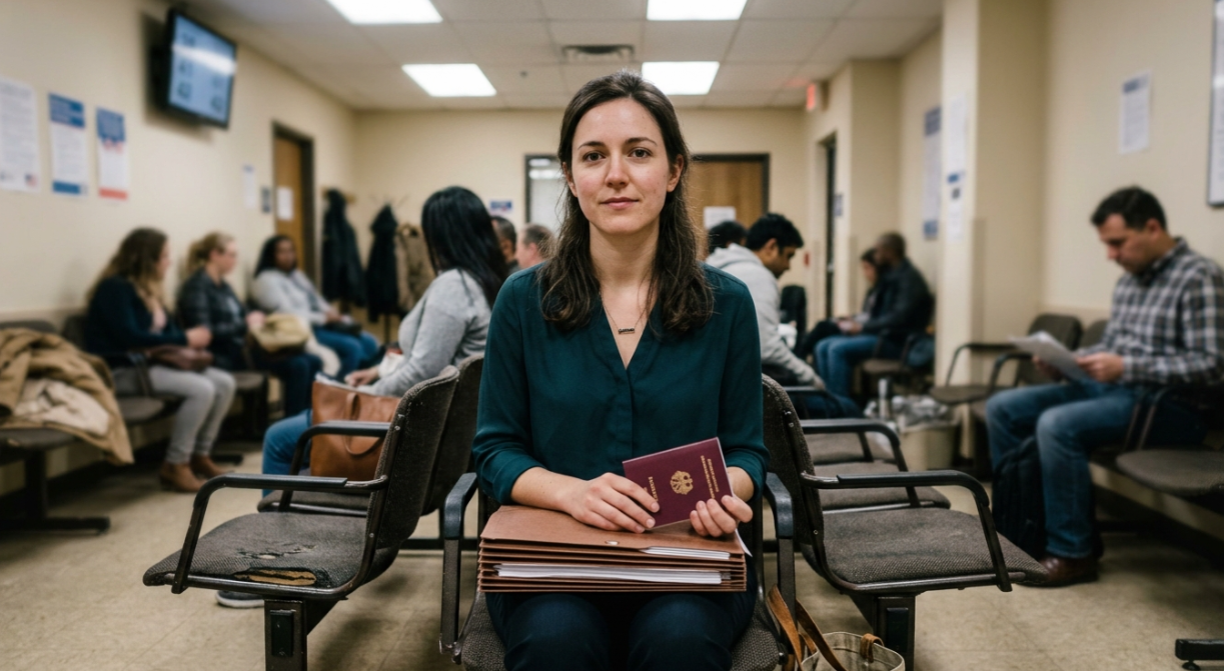
When the foreign spouse is outside the United States, the immigration case is processed through a U.S. embassy or consulate in their home country (or country of residence). This is called consular processing.
After the I-130 petition is approved, the case transfers to the National Visa Center, which forwards it to the appropriate embassy. The foreign spouse attends an in-person interview, submits medical examinations, and, if approved, receives a visa to enter the United States.
The current processing time for consular cases varies significantly by embassy. Some embassies have backlogs of many months.
Marriage Fraud
Marriage fraud, meaning entering a marriage solely to circumvent immigration laws, carries severe penalties. Conviction can result in up to five years in prison, fines up to $250,000, or both. The foreign spouse faces deportation and a permanent bar on future immigration benefits.
USCIS officers are trained to detect fraudulent marriages. Red flags include large age gaps with no other evidence of a genuine relationship, inability to answer basic questions about each other, and lack of shared financial history.
If you are considering Courtly’s spouse visa consultation, their partner attorneys can help you understand what evidence USCIS expects and how to organize it.
Document Legalization Terms
After a US citizen marries a foreigner online, the marriage certificate often needs to be authenticated for use in the foreign spouse’s home country. This section covers the vocabulary of that process.
Marriage Certificate vs. Apostille vs. Authentication
These documents and certifications serve different purposes:
Document or certification | What it proves | When you may need it |
|---|---|---|
Marriage license | Permission to marry | Before the ceremony |
Marriage certificate | Official record that the marriage occurred | Immigration, name changes, government records |
Certified copy | Official copy issued by the records custodian | When an authority requires an official copy |
Apostille | Authenticates a qualifying public document for use in another Hague Convention country | When the destination country uses the Hague Apostille system |
Authentication certificate | Authenticates a qualifying document for use in a country outside the Hague Apostille system | When the destination country requires authentication/legalization |
Translation | Converts the document into the language required by the receiving authority | When the destination authority requires a translated document |
The U.S. Department of State explains that the destination country determines whether an apostille or authentication route applies. State-issued documents generally follow the state-level authentication process, while federal documents are handled through the appropriate federal authentication authority.
Apostille
An apostille is a standardized certificate attached to a document to verify its authenticity for use in another country. It is essentially an international notarization.
For a Utah marriage certificate, the apostille must be issued by the state of Utah. You cannot get a Utah apostille from another state.
Over 120 countries are members of the Hague Apostille Convention and accept apostilled documents. For these countries, an apostille on your marriage certificate is usually sufficient for foreign registration.
For a full explanation, read Courtly’s guide on apostilles and marriage certificates.
Embassy Authentication / Legalization
For countries that are not members of the Hague Convention, a more complex process called embassy authentication (or legalization) is required. This involves getting the document authenticated by the U.S. Department of State and then legalized by the foreign country’s embassy or consulate in the United States.
The process takes longer and costs more than an apostille. Typical costs range from $250 to $500 depending on the destination country. Courtly offers document legalization services covering both apostille and embassy authentication pathways.
Hague Apostille Convention
The Hague Convention Abolishing the Requirement of Legalisation for Foreign Public Documents (commonly called the Hague Apostille Convention) is a treaty signed by over 120 countries. Member countries agree to accept apostilled documents from other member countries without additional authentication.
If the foreign spouse’s country is a Hague member, the process is straightforward: get a Utah apostille, and the marriage certificate is ready for foreign use. If not, embassy authentication is needed.
To understand the difference between the two paths, see this comparison of apostille vs. authentication.
Certified Copy
A certified copy is an official reproduction of a document (like a marriage certificate) issued by the custodial government office and stamped or sealed to confirm its authenticity.
Apostilles and embassy authentications require certified copies. A photocopy, scan, or printout will not work. When ordering your Utah marriage certificate, make sure you request a certified copy specifically.
Full Faith and Credit Clause
Article IV, Section 1 of the U.S. Constitution requires every state to recognize the public acts, records, and judicial proceedings of every other state. This means a marriage validly performed in Utah must be recognized in all 50 states.
This clause is the reason a US citizen in Texas, Florida, or New York can marry a foreigner online through Utah and have that marriage recognized in their home state. No state can refuse to honor a valid Utah marriage certificate.
Foreign Recognition and Practical Terms
Foreign Recognition
Foreign recognition refers to whether a country outside the United States will accept an online marriage performed in Utah as legally valid.
Most countries follow the place-of-celebration principle and will recognize a marriage that is valid where it was performed. In a landmark 2023 decision, the Israel Supreme Court ruled that thousands of Israeli marriages performed virtually through Utah County would be recognized by the state.
However, some countries may not recognize online marriages. Known exceptions include Germany, Hungary, Australia, Norway, France, Sweden, Poland, Taiwan, and Finland, though policies can change. Couples should always verify with the foreign spouse’s local civil registry or a local attorney before relying on foreign recognition.
Same-sex couples face additional complexity, since many countries still do not recognize same-sex marriages regardless of how they were performed. Courtly maintains a dedicated page for LGBTQ+ couples with information on same-sex marriage recognition by country.
Conditional Green Card
When the marriage is less than two years old at the time the foreign spouse’s green card is approved, USCIS issues a conditional green card valid for two years instead of the standard ten.
This is not a punishment or a sign of suspicion. It is a standard procedure applied to all recent marriages. The couple must file to remove the conditions before the card expires.
Form I-751 (Remove Conditions on Residence)
Form I-751 is filed jointly by both spouses during the 90-day window before the conditional green card expires. It asks USCIS to remove the two-year condition and issue a standard ten-year green card.
The form requires evidence that the marriage is ongoing and bona fide: joint tax returns, shared bank statements, lease agreements, insurance policies, and photos of the couple together over the two-year period.
Affidavit of Support (Form I-864)
The Affidavit of Support is a legally binding contract in which the U.S. citizen sponsor promises to financially support their foreign spouse. It is required for virtually all family-based immigration petitions.
The sponsor must demonstrate that their household income meets or exceeds 125% of the federal poverty guidelines. If they fall short, a joint sponsor can co-sign the affidavit.
This obligation does not end when the marriage does. It continues until the sponsored spouse becomes a U.S. citizen, earns 40 qualifying quarters of Social Security work credits, permanently leaves the U.S., or dies.
Name Change After Marriage
Changing your name after marriage is not automatic. In the United States, the marriage certificate provides the legal basis for a name change, but you must separately update your records with the Social Security Administration, the DMV, the U.S. Passport Agency, banks, and other institutions.
For couples who married online, the process is identical to any other marriage. The Utah marriage certificate is your foundation document. Courtly offers a name change kit with prefilled forms, checklists, and prepaid envelopes to simplify the process.
Putting It All Together
The vocabulary in this glossary maps directly to the steps a US citizen takes when marrying a foreigner online:
Apply for a Utah online marriage license.
Complete the virtual ceremony (solemnization, declaration of intent, witnesses, officiant).
Receive your marriage certificate.
Meet your spouse in person and consummate the marriage.
File Form I-130 to start the immigration process.
Get the marriage certificate apostilled or authenticated for foreign use.
Complete consular processing or adjustment of status.
Handle practical steps like name changes and evidence collection for the bona fide marriage requirement.
Each step has its own terms, its own requirements, and its own potential pitfalls. Having this vocabulary at your fingertips makes the difference between confident planning and costly mistakes.
Ready to start the process? See Courtly’s pricing and plans to find the right option for your situation.
Frequently Asked Questions
Is a virtual marriage the same as a proxy marriage?
No. In a virtual marriage, both parties are present and participating via live video. In a proxy marriage, one or both parties are absent and a stand-in appears in their place. USCIS treats them as different categories, though both require post-ceremony consummation for immigration purposes. Utah’s current system enables virtual marriages, not proxy marriages.
Does USCIS accept an online marriage performed in Utah?
Yes, generally. USCIS applies the place-of-celebration rule: if the marriage is valid under Utah law, it is valid for immigration purposes. The critical requirement is that the couple must consummate the marriage after the ceremony and provide evidence of having been physically together post-wedding.
What proof of consummation does USCIS accept?
USCIS accepts various forms of documentary evidence showing the couple was in the same physical location after the ceremony. Examples include airline tickets or passport stamps, hotel reservations, photos of the couple together, joint lease agreements, utility bills at a shared address, or the birth certificate of a child born after the marriage.
Can a US citizen skip the K-1 fiancé visa by marrying a foreigner online?
Yes. By marrying online first, the couple is already legally married and can file directly for a CR-1 spouse visa instead of the K-1 fiancé visa. The CR-1 has a higher approval rate (roughly 91-92% compared to about 75% for K-1) and grants immediate work authorization upon the foreign spouse’s arrival.
Will my spouse’s home country recognize a Utah online marriage?
It depends on the country. Most countries follow the place-of-celebration principle and accept marriages that are valid where performed. However, countries including Germany, Hungary, Australia, Norway, France, Sweden, Poland, Taiwan, and Finland have historically raised questions about online marriage recognition. Always verify with local authorities before relying on foreign recognition.
Do we need to meet in person before or after the online marriage?
For USCIS purposes, you must meet after the ceremony. Consummation before the marriage does not satisfy the requirement. The timing distinction is strict: the physical meeting and consummation must occur post-ceremony, and you need evidence to prove it.
What is an apostille, and do I need one?
An apostille is an international certification that verifies a document’s authenticity for use in foreign countries. If your spouse’s country is a member of the Hague Apostille Convention (over 120 countries), you will likely need an apostille on your Utah marriage certificate for it to be recognized abroad. For non-Hague countries, you need embassy authentication instead.
How long does the immigration process take after an online marriage?
Processing times vary. As of recent data, K-1 visa applications take approximately 8-11 months and CR-1 spouse visas take about 14.5 months from initial filing to visa issuance. These timelines fluctuate based on USCIS workload and the specific embassy handling consular processing. Starting the I-130 petition as soon as possible after the marriage is the best way to minimize wait times.
Let us handle the paperwork.
Getting married is complicated. Courtly simplifies the process and provides everything necessary to get married online, including providing a licensed officiant who can perform a remote ceremony.
Get Married

Get married online.
Getting married is complicated. Courtly simplifies the process and provides everything necessary to get married online.

