


Same sex couples can legally marry online through Utah's remote appearance marriage process, regardless of where they live or their citizenship. The marriage is valid across all 50 U.S. states under the Obergefell ruling and the Respect for Marriage Act. International recognition varies, with 38 countries now recognizing same sex marriage. For immigration purposes, USCIS accepts Utah online marriages as long as the couple meets in person after the ceremony. This same-sex online marriage FAQ breaks down everything couples need to know before, during, and after the process.
Getting legally married shouldn't require fleeing your country or hiding who you are. But for millions of LGBTQ+ couples worldwide, that's still the reality. Same sex online marriage through Utah has become a lifeline, giving couples in restrictive countries a path to a real, legally binding U.S. marriage certificate from their living rooms.
This same-sex online marriage FAQ covers every key term, legal concept, and practical question that matters. Whether you're trying to understand what an apostille is, whether your marriage will hold up for a U.S. visa, or what the Respect for Marriage Act actually protects, you'll find clear answers here.
Explore Courtly's same sex marriage options to see how the process works for LGBTQ+ couples specifically.
Can same sex couples get married online?
Yes. Same sex couples can legally marry through Utah County's remote appearance marriage process, even when neither partner is a U.S. citizen or Utah resident. The couple applies for a Utah marriage license online, appears together by live video with an authorized Utah officiant, and has two witnesses present by video. The officiant must be physically located in Utah when the ceremony takes place. Utah County then issues an official marriage certificate.
However, a Utah online marriage is not automatically recognized in every country outside the United States. Couples who plan to use the marriage abroad may need an apostille or other legalization, and some countries may not recognize marriages performed through remote appearance. For U.S. immigration purposes, additional rules can apply when the spouses were not physically together during the ceremony, including the requirement that the marriage be consummated afterward.
Same-Sex Online Marriage FAQ at a Glance
The table below summarizes the most common same-sex online marriage FAQ topics in a quick reference format. Each question is explored in greater depth throughout the article.
| Question | Short answer |
|---|---|
| Can same sex couples marry online? | Yes, through Utah's remote appearance marriage process. |
| Do both partners need to be in Utah? | No. The couple can appear remotely; the officiant must be physically in Utah. |
| Do we need to be U.S. citizens? | No. Utah County states there is no citizenship or residency requirement. |
| Do both partners need to be in the same location? | No. Partners can participate from different locations. |
| Are witnesses required? | Yes. Utah requires two witnesses who can see and hear the ceremony. |
| Is the marriage legally recognized in the U.S.? | A valid Utah marriage is a legal marriage under Utah law and receives federal recognition subject to applicable law. |
| Is it automatically recognized overseas? | No. Recognition depends on the law of the country where you intend to use it. |
| Do we need an apostille? | Often, if you need to present the Utah certificate to a foreign government, but requirements vary by country. |
| Can it be used for U.S. immigration? | Potentially yes, but special federal rules apply when the spouses were not physically together during the ceremony. |
| Do we have to meet in person? | For certain U.S. immigration purposes involving a marriage where the spouses were not physically present together at the ceremony, a post ceremony physical meeting is important because of the federal consummation rule. |
| Is there a special affidavit requirement? | Since 2024, Utah requires a sworn affidavit for virtual marriage license applications confirming identity and eligibility. |
How Does Online Same Sex Marriage in Utah Work?

Utah County allows couples to apply for a marriage license digitally and participate in a marriage ceremony by remote appearance. The process can be used by same sex couples and does not require either partner to be a U.S. citizen or Utah resident.
The basic process is:
1. Apply for a Utah marriage license
Both partners complete the online application and provide government issued identification. Utah County's current online system allows each partner to access the same application from different devices and locations.
2. Complete the affidavit and identity verification
Starting in 2024, Utah added a sworn affidavit requirement for virtual marriage license applications. Each applicant must sign an affidavit confirming their identity, eligibility, and that the information provided is truthful. This affidavit is completed electronically as part of the online application process and is notarized remotely. The requirement was introduced to strengthen fraud prevention in the virtual license process and ensure that remote applicants meet the same evidentiary standards as those applying in person.
Applicants also provide the required identification and complete the county's identity verification process. For international applicants, a valid passport is the most commonly accepted document.
3. Schedule the ceremony
The couple schedules a remote ceremony with an authorized officiant. For a remote appearance ceremony, the officiant must be physically located in Utah.
4. Join the ceremony by live video
Both partners participate through a live video connection. The officiant, couple, and witnesses must be able to see and hear one another.
5. Have two witnesses present
Utah law requires two witnesses who are at least 18 years old. The witnesses can participate remotely and do not necessarily have to be in the same location as the couple.
6. Receive the marriage certificate
After the ceremony and completion of the officiant's submission, Utah County issues the marriage certificate. Couples can then order additional certified copies or document services if they need them for immigration or international use.
To understand the full step by step flow, see how Courtly works.
Important distinction
An online Utah marriage is not simply an informal virtual wedding. It is a marriage performed under Utah law through a legally authorized remote appearance process. However, the fact that Utah recognizes the marriage does not guarantee that another country will recognize it for every purpose.
Legal Foundations: The Laws That Protect Your Marriage
Understanding the legal framework is essential for anyone reading this same-sex online marriage FAQ with serious intent to marry. Here are the foundational laws that make the process possible and enforceable.
Obergefell v. Hodges (2015)
This is the Supreme Court case that made same sex marriage legal across the entire United States. In a 5 to 4 decision, the Court held that the 14th Amendment's Due Process Clause guarantees the right to marry as a fundamental liberty, regardless of the gender of the people getting married.
Why it matters for same sex online marriage: Every online marriage performed through Utah, including same sex marriages, rests on this constitutional foundation. Without Obergefell, states could refuse to issue marriage licenses to same sex couples.
Current status (2026): Obergefell remains the law of the land. The Supreme Court has not revisited it. However, in his concurring opinion in Dobbs v. Jackson Women's Health Organization (2022), Justice Clarence Thomas called for the Court to reconsider Obergefell, which raised legitimate concerns. That said, no case challenging Obergefell has reached the Court, and the Respect for Marriage Act (below) provides an additional layer of protection.
Respect for Marriage Act (RFMA, 2022)
Signed into law in December 2022 with 61 Senate votes, the RFMA requires the federal government and every state to recognize same sex and interracial marriages that were validly performed in any state. Think of it as a federal safety net.
The critical protection: Even if a future Supreme Court were to overturn Obergefell, marriages already performed would remain legally valid under the RFMA. States couldn't refuse to recognize your existing marriage.
What it doesn't do: The RFMA doesn't force states to perform same sex marriages if Obergefell fell. It protects recognition of existing marriages, not the ongoing right to obtain new marriage licenses. This distinction matters, and it's one reason many advocates encourage LGBTQ+ couples to marry sooner rather than later.
Full Faith and Credit Clause
This clause in the U.S. Constitution requires every state to honor the legal acts of every other state. A marriage validly performed in Utah must be recognized in Texas, Florida, New York, and everywhere else.
Practical meaning: Your Utah online marriage certificate doesn't become "less valid" because you live in a different state. It carries the same legal weight as a marriage performed at your local courthouse. For a deeper explanation, see this guide on what makes online marriage legal.
Same Sex Marriage in Utah
Utah has permitted same sex marriage since October 6, 2014, even before Obergefell made it nationwide. This matters because some couples wonder whether Utah itself is "friendly" to same sex marriages. It is, both legally and practically.
Utah Online Marriage: Key Terms and How It Works
Remote Appearance Marriage
Utah is unique among U.S. states in offering a fully legal, government recognized pathway to marry remotely. The state allows couples to obtain a marriage license through an online application system and complete their ceremony via live two way video. This is not a workaround or a loophole. It's codified in Utah law.
Key requirement: The wedding officiant must be physically located in Utah during the ceremony. The couple can be anywhere in the world, and they don't even need to be in the same location as each other.
Since 2021, roughly 200 Chinese and Hong Kong same sex couples alone have used Utah's virtual wedding process to get legally married. The total number of international virtual weddings facilitated through Utah County has exceeded 3,500.
Utah's 2024 Affidavit Requirement for Virtual Licenses
In 2024, Utah County implemented a new affidavit requirement specifically for couples applying for a marriage license through the virtual (remote appearance) pathway. This is a sworn statement, completed and signed electronically during the online application, in which each applicant affirms under penalty of perjury that:
- They are who they claim to be
- They are legally eligible to marry (at least 18, not currently married, etc.)
- All information provided in the application is accurate
The affidavit is notarized remotely as part of the digital workflow. Practitioners on Reddit have noted that this step adds a few minutes to the application but hasn't created significant delays. One user in a thread on r/wedding described it as "basically an extra form you sign on screen."
The practical impact for same sex couples is minimal. The affidavit doesn't add any new substantive eligibility requirements. It simply formalizes an identity and truthfulness confirmation that was previously handled less formally. However, it's worth knowing about because the affidavit becomes part of the official record and could serve as supporting documentation if the marriage's validity is ever questioned, whether for immigration or international recognition purposes.
Marriage License vs. Marriage Certificate
These two documents get confused constantly, so here's the simple breakdown:
Marriage license: Permission to get married. You apply for it before the ceremony. In Utah, this can be done entirely online. The government processing fee is approximately $70.
Certificate of marriage: Proof that the marriage happened. It's issued after the ceremony is completed. This is the document you'll use for everything: immigration petitions, name changes, registering your marriage abroad.
Both documents come from Utah County. The license is the starting point; the certificate is what you'll actually use going forward. For more detail on the license process specifically, read about online marriage licenses.
Officiant
A certified individual legally authorized to perform (solemnize) the marriage. For a Utah online marriage, the officiant must be physically present in Utah during the ceremony, even though the couple joins by video.
Witnesses
Utah law requires two witnesses for the marriage to be valid. Couples can bring their own (friends or family joining the video call) or use witnesses provided by the service.
Eligibility Requirements
The eligibility rules are straightforward. Both partners must be:
- 18 years of age or older
- Not currently married to anyone else
- Of sound mind and acting of their own free will
- Not divorced within the last 60 days
Neither party needs to be a U.S. citizen or resident. Both need a device with a camera and a stable internet connection. The system accepts government issued IDs from over 200 countries. There is no requirement that the couple be in the same physical location during the ceremony.
International Recognition: What Works and What Doesn't
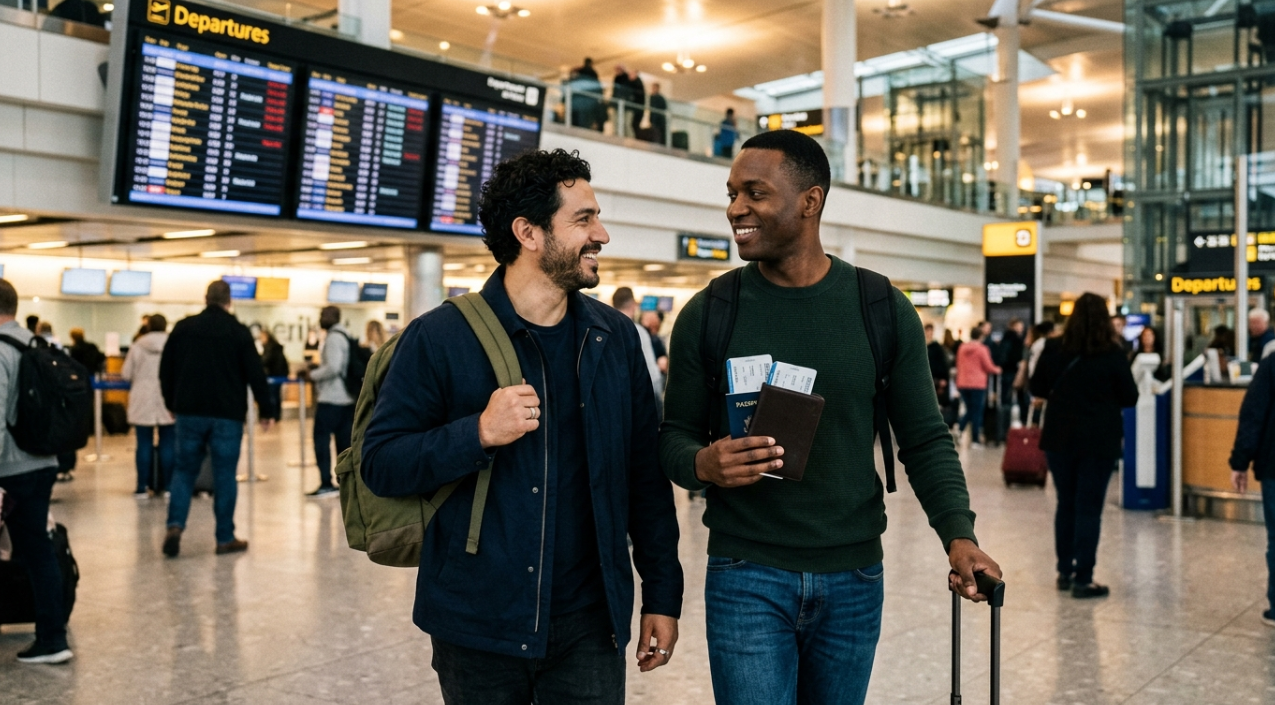
This is the section where same-sex online marriage FAQ searches get most complicated, because recognition outside the United States depends on the laws of each individual country.
What Is an Apostille and Do You Need One?
An apostille is a certificate used to authenticate certain public documents for use in another country that participates in the Hague Apostille Convention.
If you need to use a Utah marriage certificate outside the United States, the receiving government may require an apostille, authentication, legalization, certified translation, or another form of document verification.
The exact requirement depends on:
- The country where the document will be used
- Whether that country participates in the Hague Apostille Convention
- The type of legal transaction involved
- Whether the receiving authority requires additional authentication
- Whether a certified translation is required
Apostille vs. Legalization
| Situation | Typical document process |
|---|---|
| Destination accepts apostilles | Obtain an apostille from the appropriate authority |
| Destination is not covered by the Hague Apostille Convention | Authentication and/or embassy or consular legalization may be required |
| Destination requires another language | A certified translation may also be required |
| Immigration use | Follow the immigration authority's specific document rules |
Important: An apostille authenticates the origin of a document. It does not guarantee that the destination country will recognize the underlying marriage.
Before ordering an apostille, confirm the requirements of the specific government agency that will receive your marriage certificate. Courtly offers both apostille and embassy authentication through its document legalization services.
Apostille Requirement for Israel Registration
Israel is one of the most frequently cited success stories for Utah online marriage recognition, and it has specific documentation requirements worth understanding.
In July 2022, Israel's Central District Court ruled that marriages performed via Utah's online process, including same sex marriages, are legal in Israel. This removed the previous requirement for Israeli couples to leave the country to marry. However, registering the marriage in Israel requires a properly apostilled Utah marriage certificate.
The process for Israeli registration works like this:
- Obtain your certified Utah marriage certificate
- Get a Utah state apostille affixed to the certificate
- Have the apostilled certificate translated into Hebrew by a certified translator
- Submit the apostilled and translated certificate to the Israeli Population and Immigration Authority (Misrad HaPnim) for registration
Practitioners on Reddit and in Israeli legal forums have reported that the Population Authority generally processes these registrations smoothly once the documentation is complete, but delays can happen if the apostille or translation doesn't meet their exact formatting requirements. One immigration attorney blogging about the process noted that couples should request an original certified copy (not a photocopy) from Utah County before applying for the apostille, since the Population Authority has been known to reject apostilles attached to duplicates.
For same sex couples specifically, the Israeli court ruling was groundbreaking because Israel does not perform same sex marriages domestically. The Utah online marriage with proper apostille documentation has become the standard pathway. For a detailed walkthrough, see the online marriage Israel guide.
Embassy or Consular Legalization (Authentication)
For countries that are NOT part of the Hague Apostille Convention, your marriage certificate must go through a different process: authentication by the U.S. Department of State, followed by legalization at the destination country's embassy or consulate. This takes longer and costs more than a standard apostille. For a breakdown of the differences, read about apostille vs. authentication.
Countries That Recognize Same Sex Marriage (2026 Updated List)
As of 2026, 38 countries legally recognize same sex marriage. This means that if you marry online through Utah, these countries should, in principle, accept your marriage. However, "should" and "will" are different things when bureaucracy gets involved.
The full list: Andorra, Argentina, Australia, Austria, Belgium, Brazil, Canada, Chile, Colombia, Costa Rica, Cuba, Denmark, Ecuador, Estonia, Finland, France, Germany, Greece, Iceland, Ireland, Liechtenstein, Luxembourg, Malta, Mexico, Nepal, Netherlands, New Zealand, Norway, Portugal, Slovenia, South Africa, Spain, Sweden, Switzerland, Taiwan, Thailand, United Kingdom, United States, and Uruguay.
Notable recent additions include Thailand (January 2025), Liechtenstein (January 2025), Greece, Estonia, Slovenia, and Nepal. For country specific guidance, check the country recognition guides.
Countries With Known Online Marriage Recognition Issues
This is where transparency matters more than optimism. Some countries have a track record of not accepting marriages performed via remote appearance, regardless of whether they recognize same sex marriage. Known problem areas include Germany, Hungary, Australia (varies by state), Norway, France, Sweden, Poland, Taiwan, Finland, and Turkmenistan.
Utah County itself posts a warning in six languages (English, Spanish, Mandarin Chinese, Tagalog, Portuguese, and French) on its marriage application page: a marriage solemnized through online remote appearance in Utah may be invalid in the country where the parties reside.
This doesn't mean your marriage is fake. It means some foreign governments haven't updated their laws to account for remote ceremonies. Always check with local authorities or an attorney before assuming your specific country will accept the certificate.
Practitioners on Reddit confirm this pain point is real. In one thread on r/LGBTWeddings, a same sex couple discussed concerns about Australian recognition after marrying online through a Utah based service. The consensus was to consult an Australian immigration lawyer before relying on the certificate for any official purpose there.
The ECJ Trojan Ruling (November 25, 2025)
This is a major development for same sex couples in Europe. On November 25, 2025, the European Court of Justice ruled in the Trojan case that EU member states may not refuse to recognize a same sex marriage lawfully performed in another EU member state. This matters enormously for couples in countries like Poland, Hungary, and Romania that don't perform same sex marriages domestically.
The important caveat: This ruling applies to marriages performed within the EU. A Utah online marriage is performed under U.S. law, not EU law. So the Trojan ruling doesn't automatically mean Poland will accept your Utah marriage certificate. What it does is signal a strong trend toward recognition across Europe and could influence how courts in individual EU countries interpret their obligations when presented with any valid foreign same sex marriage.
The ruling does not force member states to legalize same sex marriage domestically. National laws remain national laws. But when a couple marries legally in another EU country, that marriage must be recognized for practical purposes like residence rights, inheritance, and social benefits.
For same sex couples in EU countries where domestic marriage isn't available, exploring both Utah online marriage and the possibility of marrying in a friendly EU member state (then invoking Trojan for recognition at home) is worth discussing with a local attorney.
Immigration and Visa Terms
For many same sex couples, the primary reason for marrying online isn't the ceremony itself. It's immigration. This section of the same-sex online marriage FAQ covers the terms and requirements that matter most.
CR 1 / IR 1 Spouse Visa
These are the immigrant visa categories for spouses of U.S. citizens. CR 1 (Conditional Resident) applies when you've been married less than two years at the time of visa issuance. IR 1 (Immediate Relative) applies when you've been married two years or more.
A Utah online marriage certificate can absolutely be used to file the I 130 petition that starts this process. Practitioners on Reddit's r/NationalVisaCenter have discussed this exact scenario, with same sex couples noting they can't register their Utah marriage in their home country (because same sex marriage is illegal there) but plan to use the certificate for U.S. immigration purposes.
Immigration attorney blogs like Kaza Law have confirmed: "Two adults, regardless of gender or physical location, can apply for a marriage license and get legally married via Zoom as long as they follow the steps. For immigration purposes, the U.S. government recognizes Utah virtual marriages."
For detailed guidance, see online marriages and immigration.
Proxy Marriage Consummation Requirement
This is a critical distinction that trips up many couples researching immigration options. Under the Immigration and Nationality Act (INA), a "proxy marriage" where one or both spouses were not physically present at the ceremony is not recognized for immigration purposes unless the marriage has been consummated afterward.
The consummation requirement exists in federal immigration law specifically because of proxy marriages. Utah online marriages are technically "remote appearance" ceremonies, not proxy marriages, since both partners are personally present via live video. However, because neither spouse is physically in the same room as the officiant (or necessarily each other), USCIS often applies the same consummation analysis it would to a proxy marriage.
The practical result: whether your ceremony is classified as proxy or remote appearance, you should plan to meet your spouse in person after the ceremony before filing any immigration petition. This removes any ambiguity about whether the consummation requirement has been satisfied.
As immigration attorney Chodorow (Law and Border) explains: "A Utah marriage over Zoom, once consummated, would be recognized as a valid marriage under the Immigration and Nationality Act."
For a full comparison of how immigration law treats these two ceremony types, read about proxy marriage vs. virtual marriage.
Evidence of Consummation After a Virtual Ceremony
This is the single most practical question same sex couples face when using an online marriage for immigration. "What evidence do we actually need?" It's also the most searched consummation question within any same-sex online marriage FAQ resource.
USCIS does not require explicit proof of sexual intimacy. The term "consummation" in this context is interpreted as evidence that the couple physically met in person after the ceremony and established a genuine marital relationship. Here's what practitioners and immigration attorneys recommend documenting:
Travel evidence:
- Flight itineraries and boarding passes showing travel to the same location after the wedding date
- Hotel or rental bookings in both names
- Passport stamps showing entry into the same country at overlapping dates
Photographic evidence:
- Photos of the couple together at identifiable locations with timestamps or metadata
- Photos showing the couple at landmarks, restaurants, or with friends and family during the visit
Third party evidence:
- Affidavits from friends or family members who saw the couple together during the post ceremony visit
- Receipts from shared activities (restaurant bills, tours, events) dated after the ceremony
Communication continuity:
- Messaging history before and after the in person meeting, showing the relationship continued
- Joint planning for the meeting (messages arranging travel, discussing accommodations)
On Reddit's r/USCIS, same sex couples have shared that immigration officers during interviews asked straightforward questions about when and where they first met in person after the ceremony. Nobody reported being asked invasive questions about physical intimacy. The focus was on establishing that a real, in person meeting took place and that the relationship is genuine.
One immigration attorney on YouTube walked through a case where a same sex couple married via Utah's online process, then met in a third country (neither partner's home country) for a week before filing the I 130. The petition was approved without issue because they had thorough documentation of the trip.
The consummation guide breaks this down in more depth, including specific document checklists.
Bona Fide Marriage (Good Faith)
USCIS looks closely at whether a marriage was entered into genuinely, meaning the couple intends to build a life together, not solely to obtain immigration benefits. This applies to all marriages used for immigration, not just online ones.
Evidence that supports a bona fide marriage:
- Communication history (messages, call logs, video chat records)
- Photos together (from visits, trips, or daily life)
- The ceremony recording itself
- Joint financial accounts or shared expenses
- Travel records showing visits to each other
- Affidavits from friends and family who know the relationship
The ceremony video recording serves as one piece of this evidence puzzle.
USCIS Recognition of Same Sex Marriages
Since the Obergefell decision in 2015, USCIS has recognized all same sex marriages performed in jurisdictions where they are legal. A same sex marriage performed in Utah, whether online or in person, receives identical treatment to any opposite sex marriage for every immigration benefit: spouse visas, adjustment of status, derivative benefits, and more.
On Reddit's r/Philippines_Expats, same sex couples have discussed using online marriage as a path to U.S. immigration, with the caveat that immigration scrutiny can be thorough. The key takeaway from practitioners: document everything, meet in person after the ceremony, and consider consulting an immigration attorney.
Explore spouse visa consultations if you're planning to use your marriage for immigration.
L 2 Dependent Visa
The L 2 visa is for spouses and dependents of L 1 visa holders (intracompany transferees). Immigration attorney blogs report that same sex couples from Asian countries where their marriages aren't recognized domestically have successfully used Utah online marriage certificates for L 2 visa petitions. The same consummation and bona fide marriage requirements apply.
Practical Questions About Same Sex Online Marriage
This section of the same-sex online marriage FAQ addresses the everyday concerns couples raise most often about eligibility, logistics, cost, and recognition.
Can Same Sex Couples Actually Get Married Online?
Yes. Same sex marriage is 100% legal in the United States, and Utah's remote appearance process is available to all couples regardless of gender. Many same sex couples use this path specifically to bypass anti LGBTQ+ laws in their home countries.
One reviewer from Russia shared: "Same sex marriage is impossible in Russia, so we found Courtly." Another couple in Singapore wrote: "As a same sex couple in Singapore, it meant everything to be seen." A couple from the Philippines noted: "Same sex marriage isn't legal in the Philippines, but Courtly made our wedding possible."
These aren't edge cases. Since 2021, hundreds of Chinese and Hong Kong LGBTQ+ couples have married through Utah's virtual process. The service has been described as "life changing for LGBTQ+ couples in countries where same sex marriage isn't yet legal."
For country specific guidance, see dedicated guides for couples in China, Singapore, Hong Kong, and the Philippines.
Do Both Partners Need to Be in the Same Location?
No. Each partner can join the video ceremony from a completely different location, even different countries. Both must appear via live video at the same time, but physical proximity is not required. This is one of the most important features for long distance and international same sex couples.
What Identification Do I Need?
The system accepts government issued photo IDs from over 200 countries. A passport is the most common, but national ID cards are also accepted in many cases. Both partners submit their identification as part of the online application.
How Quickly Can We Get Married?
Standard processing typically allows scheduling within the same week. Rush processing options include a 24 hour scheduling guarantee after license approval (with a money back guarantee if the window can't be met). The government fee for the Utah marriage license is approximately $70, paid separately.
Is an Online Marriage a "Real" Marriage?
Legally, yes. A marriage performed through Utah's remote appearance process produces the same official marriage certificate as an in person ceremony at a Utah courthouse. It is recorded in state records, recognized by the federal government, and valid in all 50 states. For a fuller treatment of this question, read about whether online weddings are legal.
Will My Home Country Recognize It?
This depends entirely on your country. If your country recognizes same sex marriage (38 countries do as of 2026), the chances are good, but you'll likely need an apostille or embassy legalization. If your country doesn't recognize same sex marriage, your certificate will still be valid under U.S. law and for U.S. immigration purposes, but your home country may not honor it for domestic purposes like property rights or next of kin status.
Utah County's own application warns in six languages that a marriage solemnized through online remote appearance may be invalid in the country where the parties reside. This isn't meant to discourage you. It's a legal disclosure that reflects reality.
What Does It Cost?
Check current pricing for the latest plan details. Plans start at $199, with higher tiers including ceremony recording, witnesses, rush processing, and marriage recognition guidance. The Utah County government fee (approximately $70) is separate. Add ons like apostille, translation, and witness services are available at additional cost.
Protecting Your Marriage: Legal Stability in 2026
Is Obergefell at Risk?
This is the question behind many same-sex online marriage FAQ searches. The honest answer: Obergefell is currently stable, but not invulnerable.
Justice Thomas's Dobbs concurrence naming Obergefell as a precedent worth reconsidering was alarming. But no case challenging same sex marriage has reached the Supreme Court since, and the Court declined to hear the Kim Davis appeal in November 2025, which some legal observers interpret as reluctance to revisit the issue.
The RFMA as a Federal Backstop
The Respect for Marriage Act exists precisely for this concern. Even in a worst case scenario where Obergefell is overturned, the RFMA guarantees that marriages already performed will continue to be recognized by the federal government and all states. This is why many advocates recommend that same sex couples who intend to marry should do so now rather than waiting.
Documentation as Defense
Keep copies of everything:
- Your marriage certificate (digital and physical)
- The apostille, if obtained
- The ceremony recording
- Communication records with your spouse
- Any evidence of your relationship's history
These documents serve dual purposes. They support immigration petitions and they provide a paper trail that protects your legal rights if recognition is ever challenged. The ceremony recording alone, showing both parties present and consenting via live video, is a uniquely strong piece of evidence that in person marriages don't automatically produce.
Frequently Asked Questions
Below are the most common questions from our same-sex online marriage FAQ, answered in detail.
Is a Utah online marriage the same as a proxy marriage?
No. In a proxy marriage, one or both parties are absent and represented by someone else. In Utah's remote appearance marriage, both partners are personally present via live video. This distinction matters for immigration, because USCIS treats remote appearance marriages more favorably than proxy marriages. Both types require consummation for immigration purposes, but the remote appearance format provides stronger evidence of genuine participation.
Can I use my Utah online marriage certificate for a U.S. green card?
Yes, provided you meet the consummation requirement (a physical in person meeting after the ceremony) and can demonstrate a bona fide marriage. USCIS has recognized same sex marriages for all immigration benefits since 2015.
What evidence of consummation does USCIS actually need?
USCIS is looking for proof that the couple met in person after the ceremony. This typically means travel records (flight bookings, passport stamps), photos together at identifiable locations, and affidavits from people who saw the couple together. USCIS does not ask for proof of sexual intimacy. The focus is on demonstrating that a real, in person meeting occurred and that the relationship is genuine.
Does the ECJ Trojan ruling mean my Utah marriage will be recognized in Poland or Hungary?
Not directly. The Trojan ruling requires EU member states to recognize same sex marriages performed in other EU member states. A Utah marriage is a U.S. document, not an EU one. The ruling represents a positive shift in European recognition norms, but it doesn't automatically apply to marriages performed outside the EU.
Do we need to meet in person before the online ceremony?
No. There is no legal requirement to have met in person before the marriage. However, for U.S. immigration purposes, you must meet in person after the ceremony before filing immigration petitions.
What is the 2024 affidavit requirement?
Utah now requires each applicant for a virtual marriage license to complete a sworn affidavit confirming their identity and eligibility. This is done electronically during the online application and adds no new substantive eligibility criteria. It's a formalization of identity verification that strengthens the legal record.
What if my country doesn't recognize same sex marriage at all?
Your Utah marriage certificate will still be valid under U.S. law. It can be used for U.S. immigration, federal tax filing, and any U.S. based legal purpose. Your home country may not recognize it for domestic purposes, but the marriage itself doesn't become invalid. It simply may not be enforceable in that specific jurisdiction.
Can two non U.S. citizens marry through this process?
Yes. Neither partner needs to be a U.S. citizen or resident. Any two consenting adults who meet the eligibility requirements (18+, not currently married, not divorced in the last 60 days) can marry through Utah's online process regardless of nationality.
How do I get my marriage certificate recognized in another country?
You'll typically need an apostille (for Hague Convention countries) or embassy legalization (for non Hague countries). After obtaining the apostille or authentication, you'll present the documents to your local civil registry or relevant government office. For Israel specifically, the apostille must be attached to an original certified copy, and a certified Hebrew translation is required for registration.
Is my online marriage certificate different from an in person one?
No. The marriage certificate issued after a Utah remote appearance ceremony is the same official document issued for any Utah marriage. It does not indicate whether the ceremony was conducted online or in person.
This same-sex online marriage FAQ reflects the legal reality as of 2026: same sex online marriage through Utah is real, legal, and life changing for thousands of couples worldwide. The legal protections are strong, the process is accessible, and the certificate carries genuine weight for both U.S. and international purposes. What matters most is understanding the nuances of recognition in your specific situation, getting the right documentation, and not waiting longer than you need to.
Get started with Courtly to begin your marriage process today.
Let us handle the paperwork.
Getting married is complicated. Courtly simplifies the process and provides everything necessary to get married online, including providing a licensed officiant who can perform a remote ceremony.
Get Married

Get married online.
Getting married is complicated. Courtly simplifies the process and provides everything necessary to get married online.

